
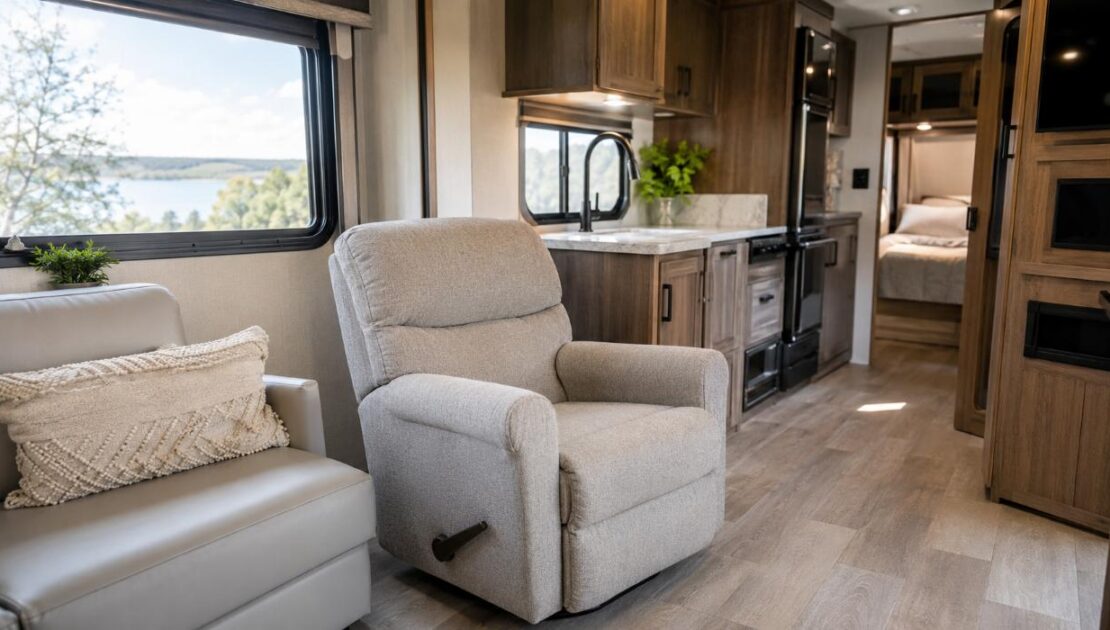
Yes, you can put a regular recliner in an RV, but it is not always a good idea. The main issues are weight, size, anchoring, slide-out
A regular home recliner can be used inside an RV, motorhome, fifth wheel, or travel trailer, but it should be chosen and installed carefully. RV furniture is usually lighter, narrower, and designed for limited space. A household recliner may be heavier, wider, and harder to secure.
The most important rule is simple: a regular recliner is fine for relaxing when the RV is parked, but it should not be used as a passenger seat while driving unless it is properly designed, mounted, and equipped as a legal travel seating position.
What to Check Before Installing a Regular Recliner
First, measure the space. Recliners need room behind them and in front of them. In an RV, that can interfere with slide-outs, cabinets, dinettes, doors, walkways, or emergency exits.
Check these points:
- Width of the recliner
- Depth when upright
- Full depth when reclined
- Clearance behind the chair
- Clearance in front of the footrest
- Slide-out movement
- Doorway size for bringing it inside
- Weight of the chair
- Floor strength and mounting area
Many residential recliners are difficult to get through an RV entry door. Sometimes the back can be removed, which helps a lot.
Weight Matters
A regular recliner may be much heavier than RV furniture. One chair may not seem like a big problem, but every pound counts in an RV.
Before adding heavy furniture, think about cargo carrying capacity. Too much weight can affect handling, braking, tire load, fuel economy, and suspension wear.
If you remove an old RV sofa or dinette and replace it with a recliner, compare the weight difference. Do not guess if the RV is already loaded close to its limit.
You Need to Secure It
A recliner should not just sit loose on the floor. During hard braking, a sharp turn, or an accident, unsecured furniture can move.
For a safe installation, the recliner should be anchored to the floor or mounted in a way that prevents sliding and tipping. This is especially important in motorhomes.
Do not drill into the floor without checking what is underneath. RV floors may have wiring, plumbing, tanks, ducts, or structural members below.
Manual vs Power Recliner
A manual recliner is usually simpler for an RV. It does not need electricity and has fewer things to fail.
A power recliner can work, but you need to think about:
- 120V outlet location
- Inverter use when not plugged into shore power
- Battery draw
- Cord routing
- Tripping hazards
- Access if the motor fails while reclined
For boondocking, a manual recliner is often the cleaner choice.
Can You Use It While Driving?
Usually, no.
A regular household recliner is not automatically safe as a travel seat. It is not designed as a certified vehicle seating position, and it usually does not have proper seat belt mounting.
If passengers will sit there while the RV is moving, you need a proper RV travel seat with approved anchoring and seat belt setup. This is not the place to improvise.
Best Type of Recliner for an RV
For most RVs, the best option is not a big residential recliner. A compact wall-hugger recliner is usually better.
Look for:
- Wall-hugger design
- Lightweight construction
- Narrow width
- Removable back
- Manual reclining mechanism
- Easy-clean material
- Strong base
- Good support
- Enough clearance for slide-outs
RV-specific recliners from brands like RecPro, Thomas Payne, or similar RV furniture lines are often easier to fit than standard home recliners.
When a Regular Recliner Makes Sense
A regular recliner can work well if:
- The RV has enough space
- The chair fits through the door
- It does not block walkways
- It does not interfere with slide-outs
- It is not used as a travel seat
- It can be secured properly
- The weight is acceptable
It is a good option for a parked camper, destination trailer, or motorhome where comfort is the main goal.
When It Is a Bad Idea
Avoid a regular recliner if:
- It blocks an emergency exit
- It prevents the slide-out from closing
- It makes the walkway too narrow
- It is too heavy for the RV
- It cannot be secured
- Someone wants to ride in it while driving
- It stresses a weak floor area
A comfortable chair is not worth creating a safety problem.
Custom way Can Help!
At Custom way, we can help with RV furniture replacement, recliner installation, floor inspection, anchoring, layout changes, interior upgrades, electrical work for power recliners, and many other RV services.
A recliner upgrade sounds simple, but in an RV it should fit the layout, weight limits, slide movement, and safety requirements.
Short Answer
Yes, you can put a regular recliner in an RV, but only if it fits, does not overload the RV, does not block movement, and is properly secured. It is fine for use while parked, but it should not be used as a passenger seat while driving unless it is a proper travel-rated seating position with correct seat belt anchoring.