
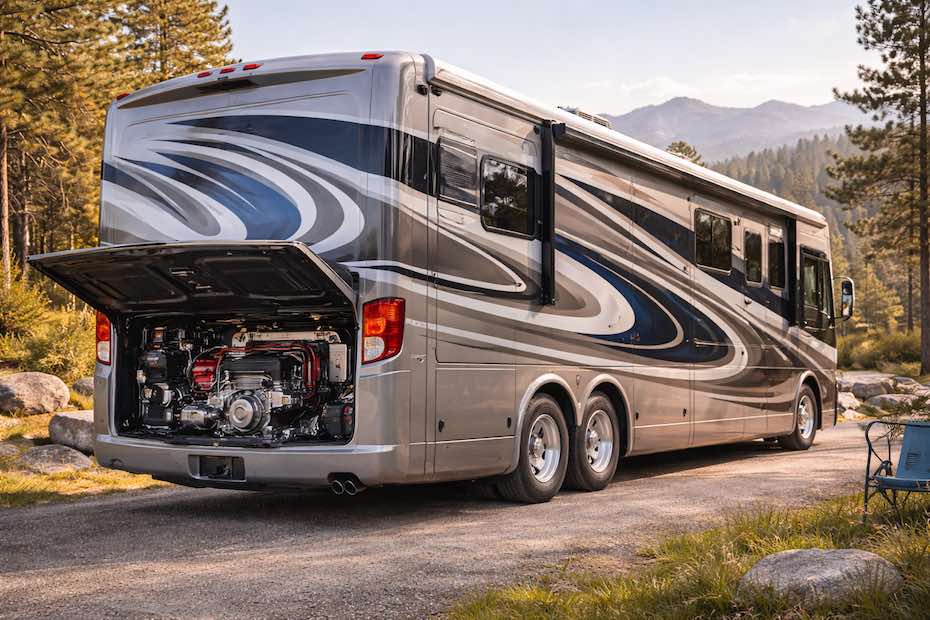
A diesel pusher motorhome is a Class A motorhome with a diesel engine mounted in the rear of the coach. The engine sits behind the living space and literally pushes the motorhome forward. This layout is what defines a diesel pusher and separates it from gas motorhomes and front-engine diesel models.
The engine placement is not just a technical detail. It affects noise levels, driving feel, weight distribution, interior layout, and long-term durability. Because of that, diesel pushers are usually considered the premium segment of Class A motorhomes.
Why the engine is mounted in the rear
Noise and driving comfort
With the engine located behind the living area, the driver and passenger sit far away from the drivetrain. This makes the cockpit noticeably quieter compared to gas motorhomes, where the engine is directly under or in front of the driver. Long driving days feel less tiring, conversations are easier, and overall driving stress is lower.
The rear engine also allows a flat front floor without an engine cover between the seats. This improves both comfort while driving and freedom in interior design.
Weight distribution and stability
Placing the engine over the rear axle improves balance. The motorhome feels more planted at highway speeds and more stable in crosswinds. When towing a car or trailer, this balanced layout helps maintain predictable handling and reduces sway.
How a diesel pusher drives compared to gas motorhomes
Torque instead of high RPM
Diesel engines are designed to produce strong torque at low RPM. A diesel pusher accelerates smoothly and steadily without revving hard. Hills are climbed calmly, even when towing, and the engine does not feel strained.
This relaxed power delivery is one of the biggest differences owners notice after switching from a gas motorhome.
Highway behavior
At cruising speed, diesel pushers feel heavier and more stable. Passing trucks, uneven pavement, and long stretches of highway affect them less. This is partly due to the engine placement and partly because diesel pushers are built on heavier chassis.
Chassis, suspension, and brakes
Air suspension and ride quality
Most diesel pushers are built on commercial-grade chassis equipped with air suspension. Air suspension absorbs road imperfections far better than leaf springs, reducing vibration throughout the coach. The result is a smoother ride for both driver and passengers.
Air brakes and control
Diesel pushers typically use air brakes instead of hydraulic brakes. Air brakes provide consistent stopping power and better control on long descents, especially when towing. Larger diesel pushers may also have a tag axle, which further improves braking performance and stability.
Interior layout and storage advantages
Quieter living space
Because the engine is at the rear, interior noise is lower throughout the motorhome, including the bedroom. Heat from the drivetrain is easier to isolate, which improves comfort in both hot and cold conditions.
Basement storage
Diesel pushers usually offer large basement storage compartments under the floor. These pass-through bays are deeper and taller than what is typically found on gas motorhomes, making it easier to carry tools, outdoor gear, and long items.
Fuel efficiency and engine lifespan
Diesel pushers are large vehicles, but diesel engines tend to be more efficient under heavy load than gasoline engines. Mileage is often slightly better compared to similarly sized gas motorhomes.
More importantly, diesel engines are built for longevity. With proper maintenance, they are expected to run for hundreds of thousands of miles. For owners who travel frequently or live full-time in their motorhome, this long service life is a major advantage.
Maintenance and ownership expectations
What maintenance is really like
Owning a diesel pusher requires a different mindset. Service access is usually from the rear or through an interior hatch. Oil changes involve more oil, and systems like air suspension and air brakes require regular inspection.
Maintenance costs are higher than for gas motorhomes, but service intervals are longer. Many owners rely on professional service centers rather than doing all maintenance themselves.
Diesel pusher vs other diesel motorhomes
Not every motorhome with a diesel engine is a diesel pusher. The defining feature is the rear-mounted engine. Front-engine diesel motorhomes exist, but they do not offer the same noise reduction, balance, or ride quality that a true diesel pusher provides.
Who a diesel pusher is best suited for
Diesel pushers are best suited for people who travel long distances, tow vehicles regularly, or plan extended or full-time motorhome living. They cost more to purchase and maintain, but they offer comfort, stability, and durability that gas motorhomes rarely match.
For inspection, maintenance, or upgrades, Custom-way works with diesel pusher motorhomes, including chassis inspection, air suspension service, brake systems, and drivetrain maintenance. Proper service is what keeps a diesel pusher driving smoothly for years.