Do You Need Insurance for a Pop Up Camper?
In many cases, a pop up camper does not need its own separate insurance policy if it is a towable camper and you own it outright. But that does not mean you should ignore insurance completely.
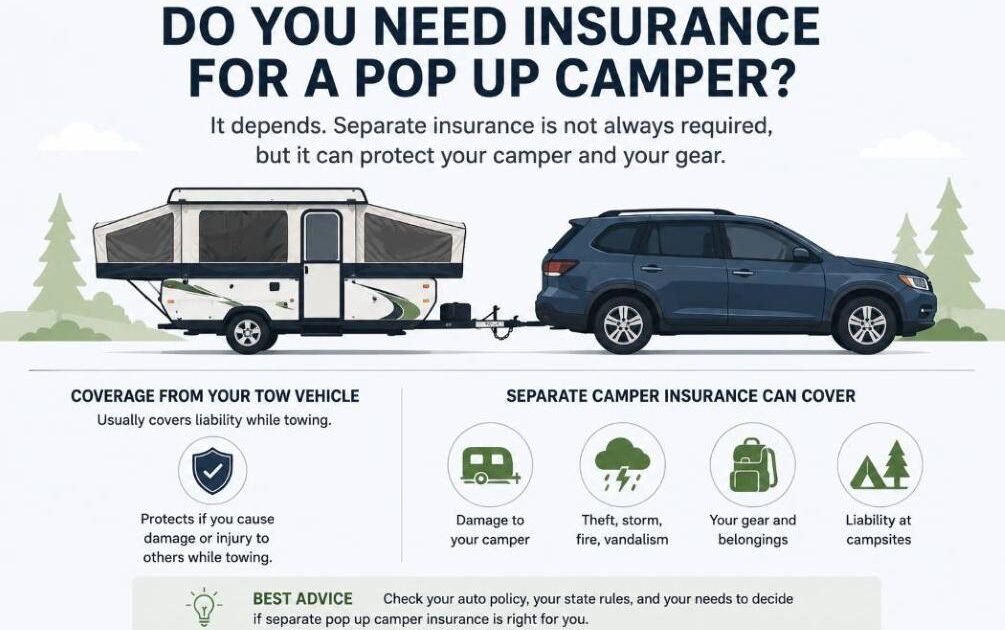
A pop up camper is usually a non-motorized trailer. It is pulled by a car, SUV, or truck, so the legal insurance situation is different from a motorhome. A motorhome has its own engine and usually must be insured like a vehicle. A pop up camper is towed, so liability coverage often comes from the tow vehicle’s auto policy while the camper is attached.
The important part is this: your tow vehicle insurance may cover damage you cause to other people while towing, but it usually does not fully protect the camper itself.
Is Pop Up Camper Insurance Legally Required?
Usually, separate insurance is not required for a pop up camper if it is a towable trailer and there is no loan or lease on it.
But rules can vary by state, camper weight, registration type, and how the camper is used. Some states require trailers to be registered and titled even when separate trailer insurance is not required.
So the safest answer is:
You may not be legally required to carry a separate policy, but you should check your state DMV rules and your auto insurance policy before towing.
Your Tow Vehicle Insurance May Not Be Enough
Many owners think, “My truck is insured, so my camper is covered.”
That is only partly true.
When the pop up camper is attached to your insured tow vehicle, your auto liability coverage may extend to the trailer. That can help if the trailer causes injury or property damage to someone else while being towed.
But liability is not the same as full coverage.
Your tow vehicle policy may not pay for:
- Damage to your own pop up camper
- Theft of the camper
- Hail damage
- Storm damage
- Fire damage
- Vandalism
- Damage while parked
- Personal belongings inside the camper
- Campsite liability when the camper is unhitched
This is where a separate pop up camper or RV trailer policy becomes useful.
When You Definitely Need Insurance
You will probably need pop up camper insurance if:
- The camper is financed
- The camper is leased
- Your lender requires comprehensive and collision coverage
- You store it at a facility that requires insurance
- A campground or RV park requires proof of insurance
- The camper is expensive enough that you cannot easily replace it yourself
- You carry valuable gear inside
- You travel often
- You want protection while it is parked or stored
If there is a loan on the camper, the lender usually wants the camper protected because they still have a financial interest in it.
What Coverage Makes Sense for a Pop Up Camper?
For many pop up camper owners, the most useful coverages are:
Comprehensive Coverage
This can help protect the camper from things like theft, vandalism, hail, fire, falling branches, and storm damage.
This matters because pop up campers are often stored outside, parked at campsites, or left in driveways for long periods.
Collision Coverage
This can help pay for damage to your camper if it is damaged in a road accident, backing mistake, jackknife situation, or impact while towing.
Personal Effects Coverage
A pop up camper may contain camping gear, tools, electronics, bedding, cooking supplies, chairs, and outdoor equipment.
Your auto policy may not cover all of that. Personal effects coverage can help protect items kept inside the camper.
Campsite Liability
This can matter when the camper is parked and being used at a campground. For example, if someone gets hurt around your camper setup, campsite liability coverage may help depending on the policy.
Roadside Assistance
This can be useful for towing problems, tire issues, lockouts, dead batteries, or breakdowns while traveling.
What If the Camper Is Cheap or Older?
If your pop up camper is old and low-value, you may decide that a separate policy is not worth it. Some owners choose to self-insure, meaning they accept the risk and would pay out of pocket if something happens.
That can make sense for a very inexpensive camper.
But if the camper is newer, renovated, customized, or valuable, insurance becomes much more important. Even a small pop up camper can be expensive to repair after hail, water damage, theft, or a road accident.
Do You Need Insurance While It Is Stored?
This is one of the biggest reasons to consider a separate policy.
Your tow vehicle liability coverage generally matters while towing. But when the camper is parked at home, in storage, or at a campsite, coverage may be different.
A separate camper policy can help protect it while it is not attached to the tow vehicle.
This is important because many claims happen when the camper is parked:
- Storm damage
- Tree damage
- Theft
- Vandalism
- Fire
- Water intrusion
- Animal damage
- Storage lot damage
Registration Is Different From Insurance
Do not confuse trailer registration with trailer insurance.
Many states require towable campers or trailers to be registered and titled. That does not automatically mean they require a separate insurance policy.
You may need plates and registration for the pop up camper even if separate insurance is optional.
Best Practical Advice
Before taking your pop up camper on the road, call your auto insurance company and ask very specific questions:
- Does my tow vehicle liability coverage extend to my pop up camper while towing?
- Does my policy cover damage to the camper itself?
- Is the camper covered when parked or stored?
- Are personal belongings inside covered?
- Do I need separate comprehensive and collision coverage?
- Is coverage different if the camper is financed?
- Do I need to list the camper on my policy?
Do not assume. Policy details matter.
Custom way Can Help With Pop Up Camper Repairs and Upgrades
At Custom way, we help camper and RV owners repair, renovate, and upgrade their vehicles so they are safer, cleaner, and more comfortable for travel.
For pop up campers and other RVs, we can help with:
- Flooring replacement
- Soft floor repair
- Roof leak repair
- Electrical upgrades
- Battery and solar systems
- Lighting installation
- Water system repair
- Door and latch repair
- Interior remodeling
- Custom storage solutions
- Exterior repairs
- Full camper renovation projects
Insurance can help protect your camper financially, but maintenance helps prevent problems before they become claims. Water leaks, weak floors, bad wiring, and damaged seals should be fixed early.
A pop up camper usually does not need its own separate insurance policy if it is a towable camper that you own outright. In many cases, liability while towing comes from the insured tow vehicle.
But separate camper insurance is still a smart idea if the camper is financed, valuable, stored outside, used often, or full of gear. Your car insurance may protect other people from damage caused while towing, but it may not cover damage to your camper, theft, storm damage, personal belongings, or campsite-related issues.
The safest move is to check your state rules and your exact auto policy before towing. Then decide whether a separate pop up camper policy makes sense for your risk and budget.