How Can RV and Mobile Service Businesses Finance Heavy Equipment?
Running an RV repair, remodeling, transportation, or mobile service business often requires more than hand tools and a workshop. Service trucks, trailers, lifts, generators, towing equipment, compressors, specialized machinery, and other commercial assets can represent a significant investment. Paying for all of that equipment upfront is not always the best option, especially for a growing company that needs to preserve cash for payroll, inventory, repairs, and everyday operating expenses.
For businesses planning to purchase or replace expensive machinery, heavy equipment financing can provide a practical way to acquire the equipment they need while spreading the cost over time. Financing can be particularly useful when new equipment creates additional capacity, allows a company to take on larger projects, or replaces older machinery that has become expensive to maintain.
What Equipment Can an RV-Related Business Need?
An RV business can require surprisingly substantial equipment. The exact needs depend on the type of work performed.
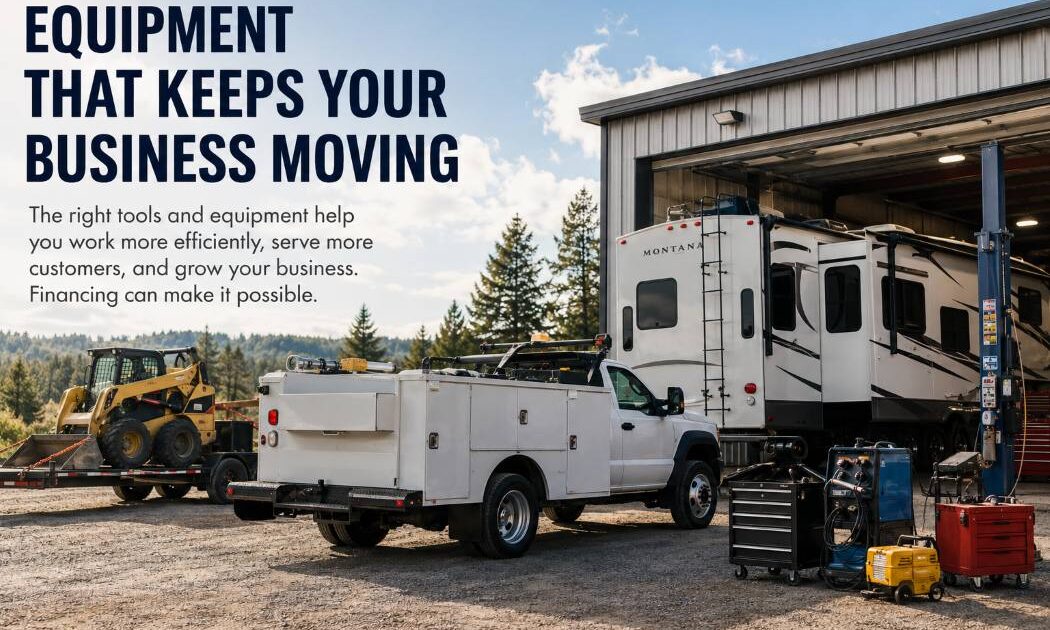
A stationary RV repair or remodeling facility may use vehicle lifts, forklifts, industrial air compressors, generators, welding equipment, shop machinery, and material-handling equipment. Companies performing body repairs, roof replacements, interior renovations, or major structural work may need even more specialized tools.
Mobile RV repair businesses have different requirements. A properly equipped service truck or van needs enough capacity to carry tools, spare parts, electrical equipment, batteries, diagnostic devices, compressors, and other supplies. Expanding a mobile fleet may therefore involve purchasing additional commercial vehicles and trailers.
Transportation businesses working with RVs can also require tow vehicles, flatbed trailers, enclosed trailers, and other commercial transportation equipment.
These assets allow a business to operate, but they can also tie up a large amount of working capital if purchased entirely with cash.
Why Finance Equipment Instead of Paying Cash?
Paying cash has one obvious advantage: there are no future loan or lease payments. However, using a large portion of a company’s available cash for equipment can create other problems.
An RV service business still needs money for parts, materials, wages, insurance, fuel, rent, marketing, and unexpected repairs. Keeping sufficient working capital can be especially important when business activity changes seasonally.
Equipment financing allows the purchase price to be divided into scheduled payments rather than paid all at once. This can make budgeting easier and allow the company to put revenue-generating equipment to work before its full cost has been paid.
For example, an additional service truck might allow a mobile repair company to serve more customers each week. A larger trailer could expand transportation capacity. New shop machinery may reduce the amount of work that needs to be outsourced.
In situations like these, the important question is not simply how much the equipment costs, but how much productive value it can add to the business.
Loans and Leasing Are Different Options
Businesses generally have more than one way to finance equipment.
An equipment loan is commonly used when the goal is to purchase an asset and eventually own it outright. The business makes scheduled payments according to the agreed financing terms.
Equipment leasing offers another approach. Depending on the structure of the lease, it may provide businesses with additional flexibility when acquiring machinery or vehicles.
Thirty3 Capital offers both equipment loan and leasing programs and works with businesses purchasing new and used equipment. Its programs cover industries including transportation, construction, and agriculture, which can be relevant to companies purchasing trucks, trailers, machinery, and other commercial equipment.
The right structure depends on the equipment being purchased, the financial position of the company, cash flow, expected period of use, and long-term business plans.
New Equipment vs. Used Equipment
New equipment is not automatically the best choice for every business.
A new truck, trailer, or machine may provide updated technology, manufacturer support, and a longer remaining service life. On the other hand, purchasing quality used equipment can significantly reduce the initial investment.
For an RV service company, a well-maintained used commercial vehicle or piece of shop equipment may perform the required job perfectly well while costing considerably less than a new equivalent.
Financing programs that cover both new and used equipment therefore give business owners more freedom to choose based on operational needs rather than limiting the decision to new assets.
Before purchasing used machinery, the buyer should still evaluate its condition, maintenance history, expected repair costs, availability of replacement parts, and remaining useful life.
Consider the Return the Equipment Can Generate
Before financing any major asset, it is useful to estimate what that equipment can realistically contribute to the business.
Consider a mobile RV repair company purchasing another service vehicle. The vehicle itself creates an additional monthly expense, but it may also allow another technician to complete several additional service calls every week.
Similarly, a repair shop purchasing specialized machinery might be able to perform work internally that was previously subcontracted. This could reduce outside labor costs and shorten turnaround times.
Business owners should compare the expected additional revenue or savings with the monthly financing payment, maintenance expenses, insurance, fuel, and other operating costs associated with the equipment.
An asset that looks expensive in isolation can make financial sense if it consistently generates enough additional business.
Plan for Growth Without Draining Working Capital
Equipment is often one of the largest expenses involved in expanding an RV repair, mobile service, towing, or transportation business. The challenge is acquiring the tools and machinery needed for growth without creating unnecessary pressure on day-to-day cash flow.
Financing gives businesses another option besides postponing an equipment purchase or paying the entire cost upfront. Loans and leases can help spread equipment costs over time while allowing the asset to begin contributing to operations immediately.
The best decision will depend on the company’s financial situation, the equipment being purchased, and how quickly that equipment can produce measurable value. For a growing business, carefully structured equipment financing can be a useful part of expanding capacity while maintaining enough working capital to keep everyday operations running smoothly.