
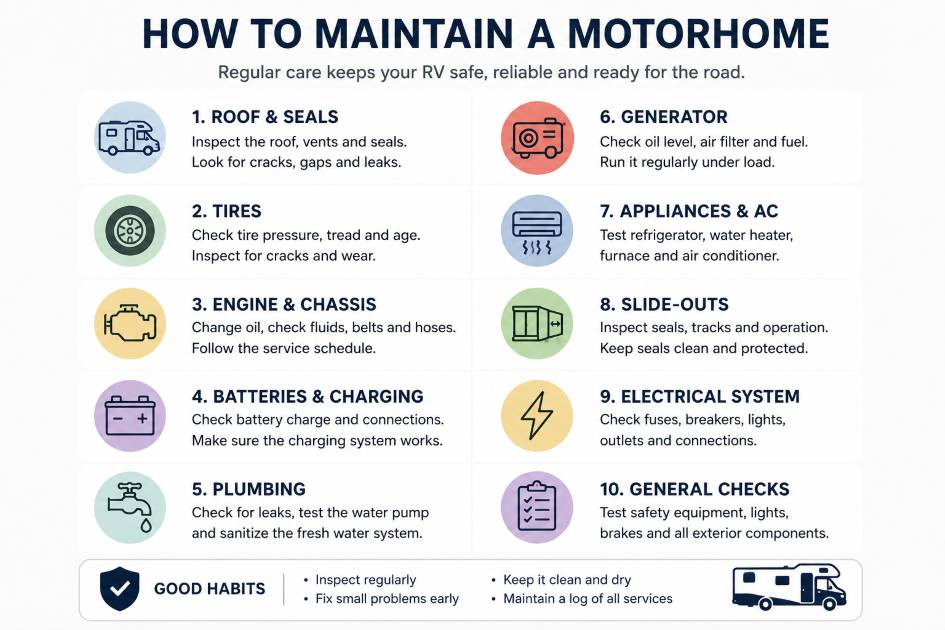
How Do You Maintain a Motorhome?
Maintaining a motorhome is about preventing expensive problems before they happen. A motorhome is not just a vehicle and not just a small home. It is both at the same time, which means you have to care for the engine, tires, roof, plumbing, electrical system, batteries, appliances, seals, interior, and exterior.
A well-maintained motorhome is safer, more reliable, more comfortable, and easier to sell later. A neglected motorhome can quickly turn small issues into major repairs.
The best approach is simple: inspect it regularly, fix leaks early, keep the mechanical systems serviced, and do not ignore small warning signs.
Start With the Roof
The roof is one of the most important parts of any motorhome. Many expensive RV repairs begin with a small roof leak that was ignored.
Check the roof at least a few times per year and after heavy storms or long trips.
Look for:
- Cracked sealant
- Loose roof vents
- Damaged skylights
- Soft spots
- Tears in the roof membrane
- Gaps around antennas or solar mounts
- Water stains inside the ceiling
- Loose trim around roof edges
Even a tiny opening can let water into the ceiling, walls, insulation, cabinets, and flooring. If you find cracked sealant or a suspicious area, repair it before the next rain.
Inspect All Seals and Exterior Openings
Water can enter from many places, not just the roof.
Check around:
- Windows
- Entry door
- Storage compartment doors
- Slide-outs
- Clearance lights
- Exterior vents
- Utility hookups
- Awning mounts
- Ladder mounts
- Roof edges
- Front and rear caps
Old sealant can shrink, crack, or separate from the surface. If water gets behind fiberglass panels, it can cause delamination, wall damage, mold, and soft flooring.
Good sealing is one of the cheapest ways to protect a motorhome.
Take Care of the Tires
Motorhome tires carry a lot of weight and often age out before they wear out. Even if the tread looks good, old tires can become unsafe.
Check:
- Tire pressure
- Sidewall cracks
- Uneven wear
- Valve stems
- Tire age
- Load rating
- Spare tire condition
- Lug nut condition
Always inflate tires according to the correct load and manufacturer guidance. Underinflated tires can overheat. Overloaded tires can fail. Tire problems on a motorhome can be dangerous and expensive.
If your motorhome sits for long periods, tire care becomes even more important. Use proper storage practices and inspect before every trip.
Service the Engine and Chassis
A motorhome needs regular mechanical maintenance just like a truck or bus.
Depending on the model, maintenance may include:
- Engine oil and filter change
- Transmission service
- Brake inspection
- Coolant check
- Belt and hose inspection
- Air filter replacement
- Fuel filter service
- Steering inspection
- Suspension inspection
- Differential service
- Exhaust system check
Gas and diesel motorhomes have different service needs, so always follow the correct schedule for your chassis.
If you own a diesel pusher, pay special attention to cooling system maintenance, air filters, fuel filters, and chassis service.
Do Not Ignore the Brakes
A motorhome is heavy, so the braking system is critical.
Watch for:
- Longer stopping distance
- Brake noise
- Vibration when braking
- Soft brake pedal
- Burning smell
- Warning lights
- Uneven pulling
- Brake fluid leaks
Brakes should be inspected regularly, especially before long trips through mountains or hot weather.
Maintain the Generator
The generator is one of the most useful systems in a motorhome, but it does not like sitting unused for months.
Basic generator maintenance includes:
- Checking oil level
- Changing oil on schedule
- Replacing air filter
- Inspecting spark plug on gas models
- Checking fuel system
- Running the generator under load
- Listening for unusual vibration or noise
A generator that is never exercised may develop fuel problems, carburetor issues, moisture buildup, and starting problems.
Run it regularly and test it with real loads like air conditioning or battery charging.
Check the Batteries
Motorhomes often have two battery systems:
- Chassis battery for starting the engine
- House batteries for lights, pump, inverter, fridge controls, fans, and living systems
Check battery condition regularly.
Look for:
- Low voltage
- Corrosion
- Loose terminals
- Swollen battery case
- Weak charging
- Fast discharge
- Battery monitor errors
- Old or mismatched batteries
If you have lead-acid batteries, check water levels if applicable. If you have lithium batteries, make sure the charger, solar controller, and inverter charger are configured correctly.
A good battery monitor makes motorhome ownership much easier because you can see real state of charge instead of guessing.
Maintain the Charging System
Your motorhome battery system may charge from shore power, generator, alternator, solar, or a DC-DC charger.
If one part is not working, you may not notice until the battery is low.
Check:
- Converter charger
- Inverter charger
- Solar charge controller
- Alternator charging
- DC-DC charger
- Battery disconnect switch
- Fuses and breakers
- Ground connections
- Shore power cord
- Surge protector or EMS
If the battery does not charge properly while plugged in or while driving, the system needs diagnosis.
Inspect the Plumbing System
Motorhome plumbing is compact and exposed to vibration, freezing, pressure changes, and aging plastic fittings.
Check regularly for:
- Leaks under sinks
- Water pump cycling when faucets are closed
- Loose fittings
- Wet flooring
- Musty smells
- Slow drains
- Water heater leaks
- Toilet base leaks
- Shower leaks
- Cracked hoses
- Fresh water tank issues
A small hidden leak can cause soft floor damage. Do not ignore moisture around the shower, toilet, kitchen, or storage compartments.
Sanitize the Fresh Water System
The fresh water system should be sanitized regularly, especially after storage, after buying a used motorhome, or when the water smells stale.
Use plain unscented household bleach in the correct ratio, run the solution through the lines, let it sit, then drain and flush thoroughly with clean water.
Also keep your drinking water hose clean and store it separately from sewer equipment.
Service the Water Heater
The water heater needs regular inspection.
Depending on the type, check:
- Burner area
- Electric heating element
- Anode rod if applicable
- Pressure relief valve
- Bypass valves
- Leaks
- Rust
- Sediment buildup
- Exterior access panel
If hot water smells bad, runs out quickly, or the heater makes unusual noise, it may need service.
Maintain the Air Conditioner
Roof air conditioners work hard in hot weather, especially in the USA during summer travel.
Basic maintenance includes:
- Cleaning return air filters
- Checking airflow
- Inspecting roof gasket
- Cleaning coils when needed
- Checking for water intrusion around the unit
- Listening for unusual noise
- Making sure vents are open and clear
Weak cooling can be caused by dirty filters, low airflow, electrical issues, thermostat problems, or aging equipment.
Check Slide-Outs
Slide-outs add space, but they also add maintenance.
Inspect:
- Slide seals
- Slide roof
- Tracks or rails
- Motors
- Hydraulic lines if equipped
- Alignment
- Floor condition
- Water stains
- Debris before retracting
Keep seals clean and check for leaks after rain. A slide-out leak can damage flooring and walls quickly.
Keep the Interior Dry and Ventilated
Moisture is a major enemy inside a motorhome.
To reduce humidity:
- Use roof vents
- Run fans when cooking or showering
- Wipe condensation from windows
- Use a dehumidifier when needed
- Check closets and corners
- Keep air moving during storage
Musty smell is often a warning sign. It can come from hidden leaks, poor ventilation, old carpet, wet insulation, or plumbing problems.
Inspect Floors and Soft Spots
Walk through the motorhome and feel for soft areas.
Check especially near:
- Entry door
- Shower
- Toilet
- Kitchen sink
- Slide-outs
- Windows
- Exterior storage compartments
- Driver and passenger area
- Rear corners
Soft flooring usually means moisture damage or subfloor failure. Fixing it early is much better than waiting until the damage spreads.
Clean and Protect the Exterior
Exterior maintenance helps protect fiberglass, paint, decals, roof edges, and seals.
Do this regularly:
- Wash the motorhome
- Remove bugs and road grime
- Inspect fiberglass cracks
- Check decals
- Clean awnings
- Wax or protect exterior surfaces when appropriate
- Inspect compartment doors
- Check exterior lights
Sun, heat, rain, and road debris all age the exterior. Keeping it clean makes inspection easier and helps preserve value.
Maintain the Awning
Awnings are convenient but easy to damage.
Check:
- Fabric tears
- Mold or mildew
- Arms and hardware
- Motor operation
- Manual crank function
- Wind sensor if equipped
- Mounting points
- Drainage after rain
Never leave the awning out in strong wind. Many awning repairs happen because owners underestimate weather changes.
Test Safety Equipment
Safety systems should never be ignored.
Check:
- Smoke detector
- Carbon monoxide detector
- Propane detector
- Fire extinguisher
- Emergency exit windows
- Entry door lock
- Step operation
- Exterior lights
- Brake lights
- Turn signals
- Backup camera
Replace batteries in detectors when needed. Replace expired detectors and fire extinguishers.
Keep a Maintenance Log
A simple maintenance log helps you track what was done and when.
Record:
- Oil changes
- Tire service
- Roof inspections
- Sealant repairs
- Generator hours
- Battery replacements
- Water system service
- Appliance repairs
- Mileage
- Parts installed
- Dates and notes
This helps you plan future work and improves resale confidence.
Pre-Trip Motorhome Checklist
Before a trip, check:
- Tire pressure
- Engine fluids
- Battery charge
- Lights
- Brakes
- Generator
- Shore power cord
- Water pump
- Refrigerator
- Propane level
- Roof and exterior condition
- Door locks
- Slide-outs
- Awning
- Safety equipment
A quick inspection before departure can prevent many roadside problems.
After-Trip Maintenance
After returning, do not just park and forget it.
Do a quick check:
- Empty tanks if needed
- Clean refrigerator
- Remove food
- Check for leaks
- Recharge batteries
- Inspect roof and seals
- Clean interior
- Dry wet areas
- Note repairs needed before the next trip
This keeps problems from sitting unnoticed for weeks or months.
Storage Maintenance
If the motorhome will sit for a while, prepare it properly.
Storage steps may include:
- Cleaning interior
- Removing food
- Disconnecting or maintaining batteries
- Protecting tires
- Checking roof and seals
- Winterizing plumbing if needed
- Covering or protecting exterior
- Ventilating interior
- Using moisture control
- Running generator periodically if recommended
- Checking for pests
Motorhomes often develop problems while sitting, not only while traveling.
Custom way Can Help Maintain and Upgrade Your Motorhome
At Custom way, we help motorhome owners repair, maintain, renovate, and upgrade their RVs for real travel conditions.
We can help with:
- Roof leak repair
- Roof sealing and coating
- Flooring replacement
- Soft floor repair
- Custom cabinets
- Electrical upgrades
- Battery and solar systems
- Inverter installation
- Generator service
- Plumbing repairs
- Shower replacement
- Faucet replacement
- Toilet replacement
- Door repair and replacement
- TV mount installation
- Exterior fiberglass repair
- Interior remodeling
- Full RV renovation projects
A motorhome has many connected systems. Sometimes a small issue, like a leak near a shower or door, can affect flooring, walls, cabinets, and electrical components. Our team can inspect the real cause and repair it properly.
To maintain a motorhome, focus on regular inspections, roof and seal care, tire safety, engine service, battery health, plumbing checks, generator maintenance, and moisture control.
Do not wait for small problems to become expensive repairs. A motorhome is easier and cheaper to maintain when issues are caught early.
A clean, dry, well-serviced motorhome is safer, more reliable, and much more enjoyable to travel in.