
How Do You Organize a Motorhome?
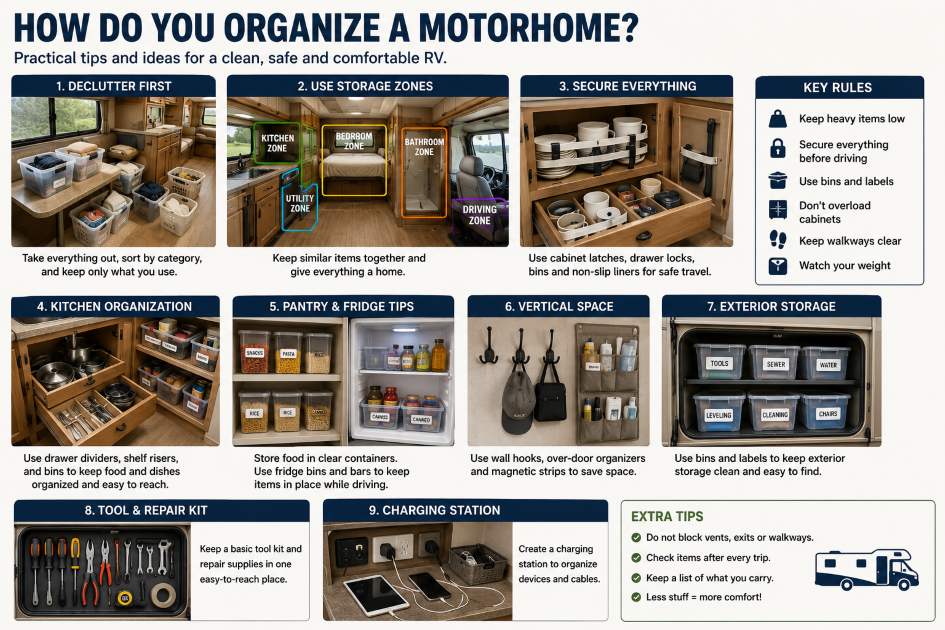
Organizing a motorhome is not only about making it look clean. It is about making the space easier to live in, safer to drive, and more comfortable on long trips. A motorhome has limited storage, moving parts, narrow walkways, and weight limits, so every item needs a smart place.
The best way to organize a motorhome is to divide everything by use, keep heavy items low, secure loose objects before travel, use storage zones, and avoid carrying things you rarely use.
A well-organized motorhome feels bigger, quieter, and easier to enjoy.
Start With What You Actually Use
Before buying bins, baskets, shelves, or organizers, take everything out and sort your items.
Create simple groups:
- Daily-use items
- Kitchen items
- Bathroom items
- Tools and repair supplies
- Cleaning supplies
- Outdoor gear
- Clothing
- Bedding
- Emergency equipment
- Items you rarely use
If you have not used something in several trips, ask whether it really needs to travel with you. Motorhome storage fills up fast, and unnecessary items create clutter, weight, and frustration.
Organize by Zones
A motorhome works better when each area has a clear purpose.
Good storage zones include:
- Kitchen zone
- Bathroom zone
- Bedroom zone
- Driving zone
- Utility zone
- Outdoor storage zone
- Tool and maintenance zone
- Electronics and charging zone
Do not scatter similar items all over the RV. If every item has a “home,” cleanup becomes much easier.
Keep Heavy Items Low
Weight matters in a motorhome. Heavy items should be stored low and secure.
Store heavier items like tools, bottled water, cookware, spare parts, and outdoor equipment in lower cabinets or exterior storage compartments.
Avoid putting heavy objects in overhead cabinets. They can shift while driving, damage cabinet doors, or become dangerous if they fall.
Secure Everything Before Driving
A motorhome moves, vibrates, turns, brakes, and bounces. Anything loose can slide, fall, rattle, or break.
Before driving, secure:
- Dishes
- Coffee maker
- Small appliances
- Chairs
- Table items
- Pantry food
- Bathroom bottles
- Electronics
- Refrigerator items
- Cabinet contents
Use cabinet latches, bins, non-slip mats, tension rods, drawer dividers, and soft storage bags to keep things in place.
A quiet motorhome usually means a well-organized motorhome.
Use Clear Bins and Labels
Clear bins make storage much easier because you can see what is inside without opening everything.
Use clear bins for:
- Pantry food
- Cleaning supplies
- First aid
- Spare parts
- Electrical adapters
- Plumbing fittings
- Pet supplies
- Outdoor accessories
Labels help even more, especially in exterior storage compartments. When something breaks or you need a tool quickly, you do not want to search through five boxes.
Organize the Kitchen First
The kitchen is usually the busiest area in a motorhome.
To keep it practical:
- Use drawer dividers for utensils
- Store plates vertically if possible
- Use nesting cookware
- Keep only essential appliances
- Use bins for snacks and dry goods
- Store spices in a small rack or drawer
- Use non-slip liner inside cabinets
- Keep heavy pots in lower cabinets
A good motorhome kitchen should be easy to use even when space is tight.
Make the Pantry Travel-Friendly
Food storage becomes messy fast if you do not control it.
Use small containers, bins, and shelf dividers so food does not slide around.
Good pantry organization ideas:
- One bin for breakfast items
- One bin for snacks
- One bin for canned food
- One bin for pasta, rice, and dry goods
- One small box for coffee and tea
- One container for cooking oils and sauces
Do not overload high shelves with heavy cans or glass jars.
Organize the Refrigerator for Travel
The RV refrigerator needs special attention because items shift while driving.
Use:
- Small bins
- Fridge bars
- Non-slip liners
- Short containers
- Door shelf limits
Keep heavy bottles out of the door. Put them low and toward the back. Before travel, make sure the refrigerator door latch is closed.
Use Vertical Space
Motorhomes have limited floor space, so vertical storage is valuable.
You can use:
- Wall hooks
- Over-door organizers
- Magnetic strips
- Hanging baskets
- Shelf risers
- Cabinet door pockets
- Shower organizers
- Foldable wall-mounted storage
But do not overload walls or doors. RV panels are lighter than house walls, so anything mounted must be attached properly.
Bathroom Organization
RV bathrooms are small, and bottles fall easily during travel.
Keep the bathroom simple:
- Use wall-mounted dispensers
- Store toiletries in small bins
- Use a shower caddy
- Keep cleaning supplies together
- Use hooks for towels
- Avoid glass containers
- Keep only daily-use items inside
If the bathroom feels crowded, it becomes uncomfortable quickly. Less is better.
Bedroom and Closet Organization
Motorhome bedrooms can feel tight, especially with limited closet space.
Good solutions include:
- Packing cubes
- Under-bed storage bins
- Vacuum bags for seasonal bedding
- Slim hangers
- Shoe organizers
- Drawer dividers
- Small laundry bag
- Bedside pockets
Do not carry too many clothes. Choose clothing that layers well and works for different weather.
Exterior Storage Compartments
Exterior storage is great, but it can become chaotic.
Organize it by category:
- Tools
- Sewer equipment
- Fresh water equipment
- Electrical cords and adapters
- Leveling blocks
- Outdoor chairs
- Grill or cooking gear
- Cleaning supplies
Keep sewer items separate from fresh water items. Use different bins and never mix hoses or fittings.
Tool and Repair Storage
Every motorhome should have a basic repair kit, but it should be organized.
Useful items include:
- Screwdrivers
- Pliers
- Adjustable wrench
- Socket set
- Flashlight
- Tire pressure gauge
- Fuses
- Electrical tape
- Sealant
- Zip ties
- Gloves
- Basic plumbing fittings
- Multimeter
- Spare batteries
Keep the repair kit easy to reach. When something fails, you do not want your tools buried behind camping chairs.
Create a Charging Station
Phones, tablets, cameras, laptops, flashlights, and small electronics create cable mess.
A simple charging station can solve that.
Set up one area with:
- USB outlets
- Cable organizer
- Small tray
- 12V charger
- Inverter outlet if needed
- Place for phones and small devices
This keeps electronics from spreading across the entire motorhome.
Do Not Block Walkways or Emergency Exits
Organization should never reduce safety.
Do not block:
- Entry door
- Emergency exit windows
- Driver area
- Aisle
- Fire extinguisher
- Electrical panel
- Propane detector
- Carbon monoxide detector
- Slide-out movement
- Furnace vents
- Refrigerator ventilation
A tidy motorhome must still be safe and easy to move through.
Watch the Weight
Motorhome organization is not only about space. It is also about weight.
Too much cargo can affect:
- Braking
- Steering
- Suspension
- Tire load
- Fuel economy
- Handling
- Safety
Heavy items should be balanced and stored low. Do not load one side of the RV much more than the other.
Best Storage Upgrades for a Motorhome
Some upgrades can make a big difference:
- Custom cabinets
- Pull-out drawers
- Under-bed storage
- Pantry slide-outs
- Wall-mounted shelves
- Cabinet lighting
- Soft-close hardware
- Better closet systems
- Exterior compartment dividers
- Hidden storage under seating
Factory storage is often basic. A custom layout can make the motorhome much easier to use.
Custom way Can Help Organize and Upgrade Your Motorhome
At Custom way, we help RV owners improve motorhome interiors so the space works better for real travel.
We can help with:
- Custom RV cabinets
- Storage redesign
- Interior remodeling
- Flooring replacement
- Electrical upgrades
- Lighting installation
- TV mount installation
- Battery and solar systems
- Bathroom upgrades
- Shower replacement
- Plumbing repair
- Exterior repairs
- Full RV renovation projects
Sometimes organization is not only about buying baskets. The real solution may be better cabinets, smarter drawers, stronger latches, improved lighting, or a full redesign of the space.
A good motorhome interior should feel clean, practical, and comfortable every day.
To organize a motorhome, start by removing what you do not use. Then create clear zones, keep heavy items low, secure everything for travel, use bins and labels, and make sure walkways and emergency exits stay open.
The goal is not to fill every cabinet. The goal is to make the motorhome easier to live in, easier to clean, and safer to travel with.
A well-organized motorhome feels larger, works better, and makes every trip less stressful.