
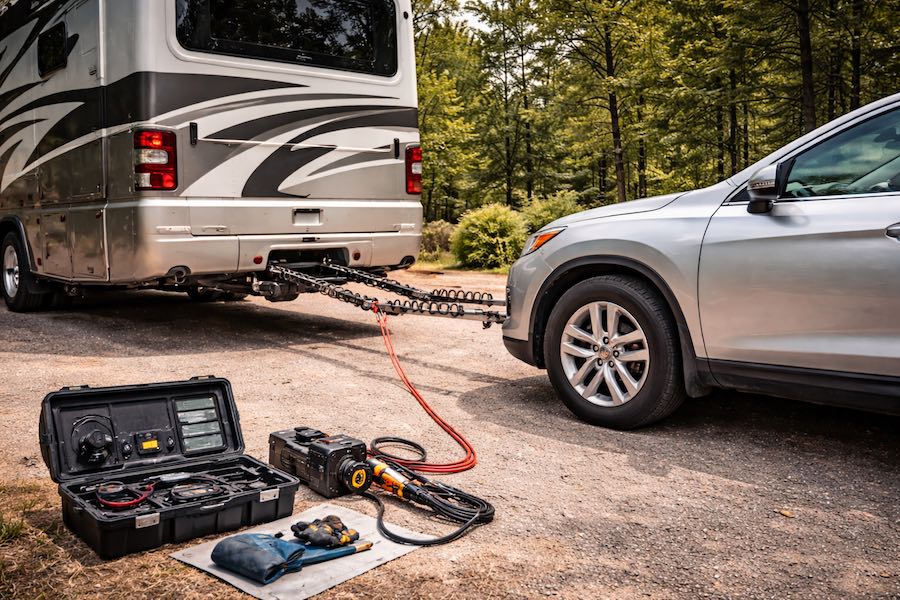
Towing a car behind a motorhome is a common setup for long trips. It allows you to use the motorhome for travel and still have a separate vehicle for daily driving once you arrive. The key point is that towing must match the motorhome, the car, and the towing method. A wrong setup causes drivetrain damage, brake issues, or unsafe handling on the road.
This guide explains how car towing behind a motorhome actually works in practice.
Understand motorhome towing limits first
Before choosing any towing equipment, check the motorhome specifications.
You must confirm:
-
maximum towing capacity
-
hitch receiver rating
-
gross combined weight rating
-
rear axle load
Even if the motorhome can pull the weight, exceeding axle or hitch limits creates serious safety risks.
Choose the correct towing method
There are three accepted ways to tow a car behind a motorhome. Each has specific requirements.
Flat towing (four wheels down)
The car rolls on all four wheels. This is the most popular method but only works with vehicles approved for flat towing by the manufacturer.
Tow dolly
The front wheels are lifted off the ground. This works for many front-wheel-drive cars and does not require vehicle modifications.
Car trailer
The entire car is off the ground. This is the safest and most universal option but adds weight, length, and cost.
The vehicle type usually determines which method is possible.
Flat towing requirements
Flat towing is simple when done correctly and destructive when done wrong.
Flat towing usually requires:
-
vehicle approved for flat towing
-
tow bar rated for the car’s weight
-
base plate installed on the car
-
safety cables
-
supplemental braking system
Some vehicles also require transmission preparation steps before towing.
Tow dolly considerations
Tow dollies are often chosen when flat towing is not possible.
Important points:
-
correct tire placement and straps
-
steering wheel locked or unlocked as required
-
added width during turns
-
separate braking system in some states
Dollies require careful loading every time you tow.
Trailer towing basics
Using a full trailer eliminates drivetrain concerns.
Things to consider:
-
trailer weight adds significantly to total load
-
longer stopping distance
-
more complex backing and parking
-
storage when not in use
This method is popular for heavier or all-wheel-drive vehicles.
Supplemental braking systems
Most states and provinces require a braking system for the towed vehicle.
Common options:
-
portable brake units inside the car
-
permanently installed systems
-
vacuum-assisted or electric actuators
Brakes reduce stopping distance and protect the motorhome braking system.
Electrical and safety connections
A proper tow setup always includes:
-
working tail lights on the towed car
-
breakaway cable for brakes
-
crossed safety chains
-
correct hitch height and alignment
Loose or incorrectly routed cables cause failures during turns or bumps.
Driving differences when towing
Towing changes how a motorhome behaves on the road.
Expect:
-
wider turns
-
longer braking distance
-
slower acceleration
-
more sensitivity to crosswinds
Backing up is usually not possible with flat towing or dollies.
Common towing mistakes
Most towing failures come from:
-
ignoring weight ratings
-
skipping supplemental brakes
-
towing a non-approved vehicle
-
improper hitch setup
-
forgetting transmission preparation
These mistakes often lead to expensive repairs.
Motorhome towing setup by Custom-way
If you are unsure about compatibility or installation, professional setup prevents costly errors. Custom-way provides motorhome towing inspections, tow bar installation, brake system setup, and safety checks.
Custom-way helps with:
-
vehicle compatibility verification
-
proper hitch and tow bar installation
-
brake system integration
-
road-ready safety setup
Correct towing setup protects both vehicles and improves driving confidence.
Towing a car behind a motorhome works best when everything is matched correctly. The motorhome, towing equipment, and vehicle must function as a system. Taking time to set it up properly avoids damage, fines, and unsafe driving conditions.