How Many Batteries Do You Need to Power a Camper?
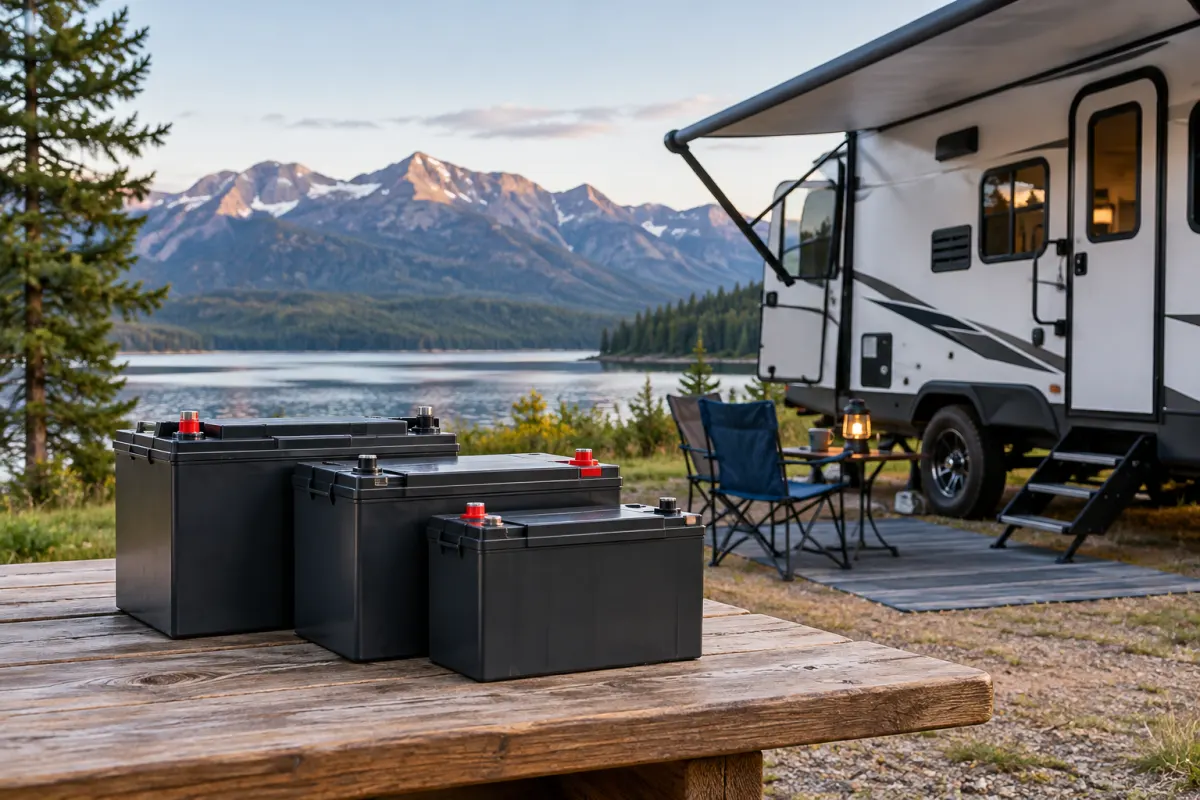
Most campers need one 12-volt deep-cycle battery for basic lighting, water-pump operation, control systems and occasional device charging. For more comfortable off-grid use, two 100 Ah batteries are a practical starting point. Campers running an inverter, microwave, coffee maker, television or other high-consumption appliances may need 300–400 Ah or more.
The correct number depends on your daily electricity use, the number of days you will camp without recharging, battery chemistry, voltage and the capacity of each battery.
Typical camper battery setups
- One 100 Ah battery: suitable for light weekend use with lighting, a water pump, controls and device charging.
- Two 100 Ah batteries: provide a 12-volt, 200 Ah bank and are more suitable for a refrigerator, fans, lights and moderate off-grid use.
- Three or four 100 Ah batteries: often needed when using an inverter and several AC appliances, such as a microwave, coffee maker or television.
These are planning ranges rather than fixed rules. A camper connected to shore power may need only a single battery, while a boondocking setup with heavy electrical loads can require substantially more capacity.
How to calculate the required battery capacity
Start by estimating the energy used by every appliance:
Watts × hours of use = daily watt-hours
For example, an appliance using 60 watts for 5 hours consumes 300 watt-hours per day. Add the watt-hours for the refrigerator, lights, fans, water pump, electronics and other equipment.
Then convert daily watt-hours to amp-hours:
Daily watt-hours ÷ battery-bank voltage = daily amp-hours
For example, 1,200 watt-hours at 12 volts equals approximately 100 Ah before accounting for usable battery capacity and system losses.
Finally, multiply the daily amp-hour requirement by the number of days you expect to stay off-grid between reliable recharges. Planning for two off-grid days is a common starting point for solar-supported RV use; longer or less predictable trips require more capacity.
Why battery chemistry changes the answer
Lead-acid batteries
Lead-acid batteries are commonly sized at roughly twice the calculated amp-hour demand because using only about 50% of their rated capacity helps limit discharge depth. If your calculations show a need for 100 usable Ah, a lead-acid bank rated at approximately 200 Ah may be more appropriate.
Lithium batteries
Lithium batteries generally provide more usable capacity from the same rated amp-hour figure. A 100 Ah lithium battery can therefore deliver more practical energy than a 100 Ah lead-acid battery, although the exact usable capacity depends on the battery specifications and permitted depth of discharge.
How many 100 Ah batteries do you need?
Two matching 12-volt 100 Ah batteries connected in parallel create a 12-volt, 200 Ah battery bank. Parallel wiring increases amp-hour capacity while keeping the voltage at 12 volts.
- 100 Ah total: light weekend use.
- 200 Ah total: refrigerator, fans, lights and moderate off-grid use.
- 300–400 Ah total: heavier boondocking loads and more frequent inverter use.
Use batteries with compatible voltage, chemistry, capacity and charging requirements. Mixing old and new batteries or incompatible battery types can reduce performance and create charging problems.
Account for inverter losses
AC appliances powered through an inverter draw additional energy from the battery. The inverter converts 12-volt DC power into household AC power, and this process is not perfectly efficient. Allowing approximately 10–15% extra capacity for inverter-powered appliances is a useful planning adjustment.
High-demand appliances can also require substantial battery current. A microwave or coffee maker may use more energy in a short period than lights or phone chargers use over several hours, so include both total daily energy and the inverter’s power rating when designing the system.
When to upgrade the camper’s electrical system
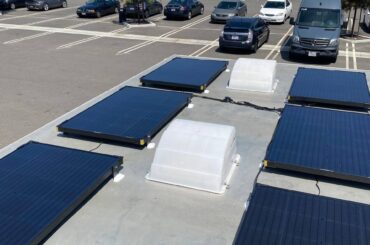
If your camper regularly needs more than 200 Ah, runs several AC appliances or spends multiple days away from shore power, battery replacement alone may not solve the problem. The system may also need suitable solar charging, a properly sized converter or charger, correct wiring and electrical safety checks.
Custom way repairs and renovates RVs and camper vans in California, including electrical repair and solar installation. The company serves Orange County, Los Angeles and Riverside County. For a camper electrical or solar project, contact Custom way at +1 840-205-7314 or customway.ca@gmail.com, or visit 17223 Roseton Ave, Artesia 90701.
Before choosing a battery count, record the wattage and daily operating time of each appliance, identify the battery chemistry and voltage, and decide how many days you need to camp without reliable recharging. That information will show whether one 100 Ah battery, a 200 Ah bank or a larger system is appropriate.