
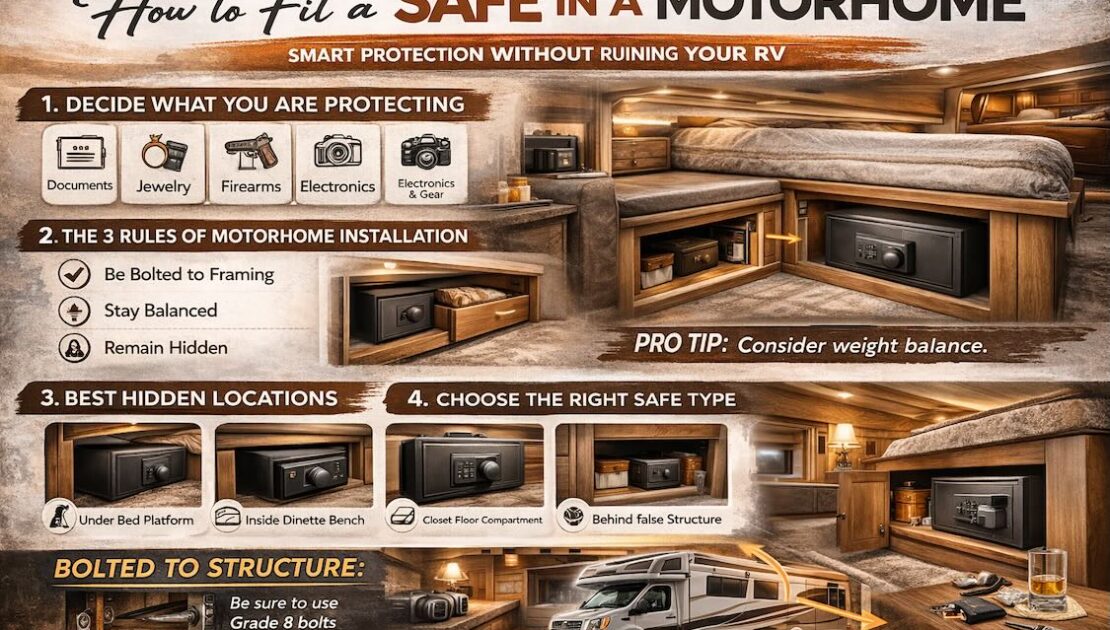
Smart Protection Without Ruining Your RV
A motorhome is freedom. But freedom also means you carry passports, cash, electronics, documents, and sometimes firearms or expensive gear. Installing a safe in a motorhome is not just about security. It is about installing it the right way so it stays hidden, anchored, and structurally safe.
Let’s approach this differently. Not as a basic how-to. Think like a thief. Then build smarter than them.
Step 1: Decide What You Are Protecting
Before buying a safe, ask:
-
Is it for passports and documents?
-
Jewelry and cash?
-
Firearm storage?
-
Electronics?
-
Backup drives?
The answer determines:
-
Safe size
-
Lock type
-
Mounting strength
-
Location
A small document safe is very different from a reinforced firearm safe.
Step 2: The 3 Rules of Motorhome Safe Installation
Unlike houses, motorhomes move. They flex. They vibrate.
So your safe must:
-
Be bolted to structural framing
-
Stay balanced for weight distribution
-
Remain concealed
If you skip any of these, the safe becomes either useless or dangerous.
Step 3: Best Hidden Locations in a Motorhome
Here are smart placement ideas:
Under the Bed Platform
Most beds sit on plywood over a storage cavity. The frame below is ideal for bolting.
Inside a Dinette Bench
Hidden and structurally strong if reinforced properly.
Inside a Closet Floor Compartment
Good for compact safes.
Behind a False Cabinet Panel
For small valuables.
Under a Fixed Sofa
Works well if anchored to frame rails.
Never mount directly to thin RV walls. Fiberglass is not structural support.
Step 4: Choose the Right Safe Type
Mechanical Lock Safe
Reliable. No batteries. Simple.
Electronic Keypad Safe
Fast access. Easy to use. Requires battery monitoring.
Biometric Safe
Quick access. Higher price. Needs reliable power.
For motorhomes, low-profile steel safes with bolt-down options are best.
Step 5: Installation Process
Here is the correct method:
-
Locate structural framing
-
Pre-drill bolt holes
-
Use grade 8 bolts with backing plates
-
Seal bolt penetrations if going through floor
-
Test vibration stability
If mounting through the floor:
-
Confirm no wiring or plumbing below
-
Use sealant to prevent water intrusion
A safe must not shift when the vehicle brakes suddenly.
Step 6: Concealment Strategy
Visibility invites theft.
Avoid:
-
Obvious under-sink mounting
-
Exposed inside cabinets
-
Visible bolt heads
Good concealment includes:
-
Carpet covering
-
False panel installation
-
Matching interior materials
The goal is to make the safe invisible unless someone knows exactly where to look.
Step 7: Weight Distribution Matters
Motorhomes already push axle limits.
If installing:
-
Heavy steel safe
-
Ammo storage
-
Firearm safe
Place it forward of the rear axle whenever possible.
Rear overhang amplifies weight stress.
Common Installation Mistakes
-
Screwing into thin plywood only
-
Blocking access to wiring or plumbing
-
Ignoring moisture protection
-
Overloading rear axle
-
Forgetting ventilation around electronics
Is DIY Safe Installation a Good Idea?
If you:
-
Understand RV framing
-
Can identify structural supports
-
Know where wiring and plumbing runs
DIY may be fine for small safes.
If not, professional installation prevents:
-
Structural damage
-
Hidden system damage
-
Weight imbalance issues
Want It Installed Properly?
At Custom-way, we understand how motorhomes are built.
We know:
-
Where structural members are located
-
How to avoid plumbing and electrical systems
-
How to distribute weight safely
-
How to conceal installation cleanly
We can install your safe securely without compromising your RV structure.
📞 +1 840-205-7314
✉️ customway.ca@gmail.com