
A squeaky RV floor is annoying, but more importantly, it can be an early warning sign of loose fasteners, shifting subfloor, or moisture damage. RV floors flex much more than house floors, so squeaks are common, especially in high-traffic areas. The key is fixing the cause, not just masking the noise.
Below is a practical, RV-specific guide.
Why RV Floors Squeak?
RV floor squeaks usually happen because of:
-
Loose screws or staples between subfloor and frame
-
Floor flexing while driving
-
Subfloor rubbing against framing
-
Delaminated or weakened subfloor
-
Moisture damage causing swelling
-
Slide-out floor movement
Squeaks often appear near entry doors, kitchen areas, hallways, and around slide-outs.
1. Locate the Exact Squeak
Before fixing anything, identify the source.
-
Walk slowly and apply pressure with your heel
-
Mark squeaky spots with tape
-
Check from multiple angles
-
Listen underneath if you can access the underbelly
One squeak can travel, so take your time.
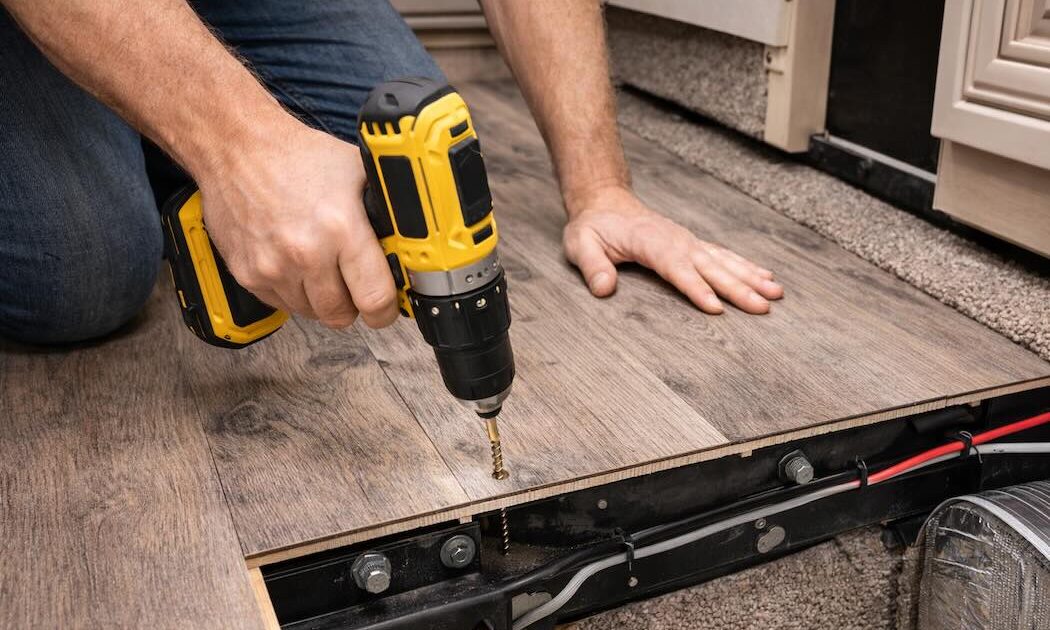
2. Tighten the Subfloor to the Frame
This is the most common and effective fix.
If you can access the subfloor from above:
-
Use short wood or self-drilling screws
-
Drive screws through the floor into the frame or joist
-
Countersink slightly so flooring sits flat
If you have underbelly access:
-
Secure loose areas from below into the subfloor
-
Add screws where factory staples have loosened
Do not over-tighten. RV floors are thinner than house floors.
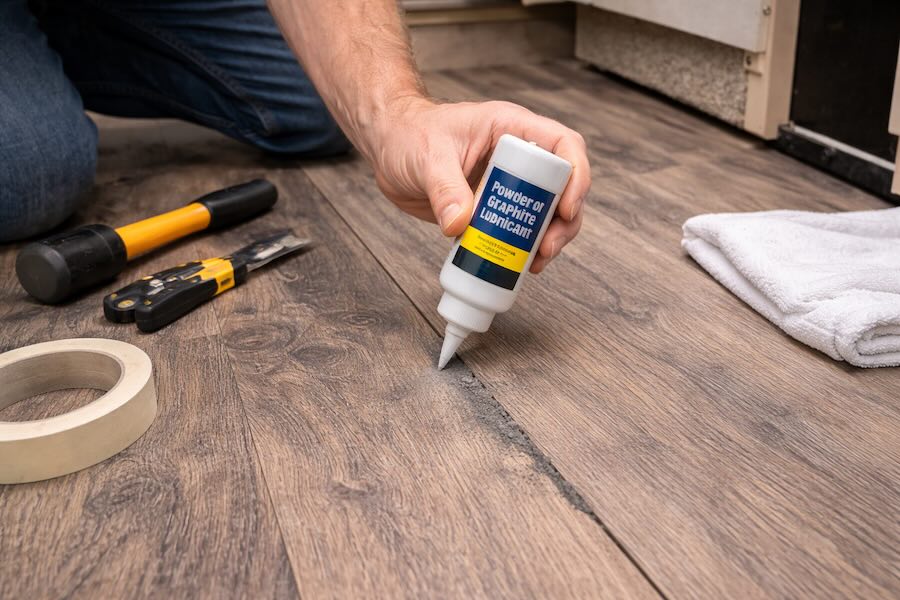
3. Use Squeak-Reducing Products
For finished floors like laminate or vinyl:
-
Apply powdered graphite or talcum powder into seams
-
Work it into joints and wipe off excess
-
This reduces friction between layers
This works well for minor squeaks, not structural issues.
4. Check for Soft or Spongy Areas
If the floor feels soft:
-
Squeaks may be caused by water damage
-
Screws alone will not fix it
Signs of deeper problems:
-
Floor flexes under weight
-
Visible sagging
-
Discoloration or musty smell
In these cases, subfloor repair or replacement is required.
5. Inspect Around Slide-Outs
Slide-outs are a common squeak source.
Check:
-
Transition plates
-
Slide rollers
-
Areas where slide floor meets main floor
Never screw laminate or vinyl flooring through a slide path. This can cause damage and worsen noise.
6. Reinforce From Below if Needed
If accessible:
-
Add blocking between frame members
-
Secure loose plywood sections
-
Reattach insulation and underbelly material properly
This provides long-term stability and noise reduction.
Mistakes to Avoid:
-
Ignoring squeaks caused by water damage
-
Using screws that are too long
-
Driving screws through finished flooring without planning
-
Gluing floors that need to float
-
Fixing noise without checking structural support
RV floor squeaks are common, but they should not be ignored. In many cases, tightening and reinforcement solve the problem. If squeaks are paired with softness or flex, deeper repairs are needed to prevent costly damage later.
We Can Help!
If your RV floor squeaks and you are not sure why, Custom-way can help.
We understand:
-
RV floor construction
-
Frame and subfloor attachment points
-
Slide-out floor systems
-
Hidden moisture damage
We can access floor structures from above or below, identify the real cause, and fix it properly instead of masking the noise.
📞 +1 840-205-7314
✉️ customway.ca@gmail.com