
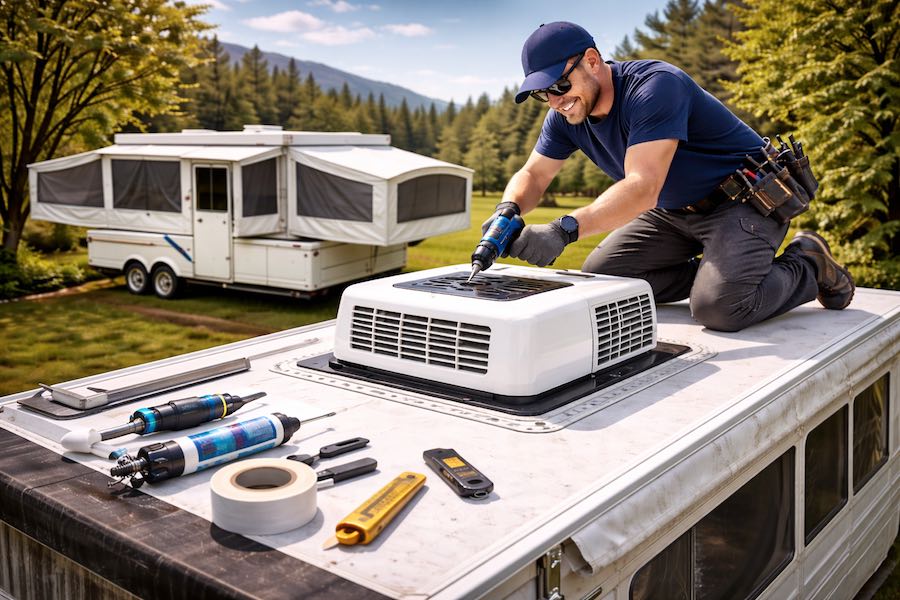
Installing an air conditioner in a pop up camper is one of the most effective upgrades for comfort, especially if you travel in hot climates or camp during summer months. Unlike standard RVs, pop up campers have lighter construction and flexible roofs, so AC installation requires careful planning and the right approach.
Below is a clear, practical overview of how AC installation in a pop up camper usually works and what you should consider before starting.
Can a pop up camper handle an air conditioner?
The first thing to check is whether your pop up camper roof can support an AC unit. Most roof-mounted RV air conditioners weigh between 60 and 100 lbs (27–45 kg). Many pop up campers are not designed for this load without reinforcement.
Key things to verify:
-
Roof material and structural strength
-
Lift system capacity (manual or electric)
-
Manufacturer recommendations for roof loads
In many cases, roof reinforcement is required before installing an AC unit.
Choosing the right AC type for a pop up camper
There are two common options for pop up camper air conditioning:
Roof-mounted AC unit
This is the most powerful solution and works well for larger pop up campers. Installation usually involves cutting a roof opening (often 14×14 inches, similar to a roof vent) and reinforcing the roof structure.
Portable or window-style AC
These units are lighter and easier to install, but they offer less cooling power. They may require custom venting through a window panel or wall insert.
For long-term comfort and resale value, most owners prefer a professionally installed roof-mounted AC.
Step-by-step overview of AC installation
While exact steps vary by camper model, the general installation process looks like this:
-
Roof inspection and measurements
Existing roof vents are often used as the AC opening to avoid extra cutting. -
Roof reinforcement
Aluminum or steel framing is added to distribute weight and prevent roof sagging. -
Electrical preparation
A dedicated 110–120V power line is installed. Many pop up campers also require an upgraded converter or shore power connection. -
AC unit installation
The AC is mounted, sealed, and secured according to manufacturer specifications. -
Sealing and weatherproofing
Proper sealing is critical to prevent leaks. High-quality sealants are applied around the unit and mounting points. -
System testing
The AC is tested for cooling performance, vibrations, and roof stability during lift and lowering.
Common mistakes to avoid
Installing AC in a pop up camper without proper experience often leads to problems. The most common mistakes include:
-
Skipping roof reinforcement
-
Overloading the lift system
-
Poor sealing that causes roof leaks
-
Incorrect electrical wiring
These issues can cause long-term damage and expensive repairs.
Professional installation vs DIY
DIY installation may look cheaper at first, but pop up campers have unique structural limits. Professional installation ensures:
-
Safe roof reinforcement
-
Correct electrical load handling
-
Reliable sealing and leak prevention
-
Long-term durability
This is especially important if you plan to use the camper frequently or travel long distances.
AC installation services by Custom-way
If you are considering how to install AC in a pop up camper and want a reliable solution, Custom-way can help. The company works with camper upgrades, including roof modifications, electrical preparation, and professional AC installation.
Custom-way focuses on practical, long-lasting solutions rather than quick fixes. Proper reinforcement and sealing are treated as essential parts of every installation.
Installing an AC in a pop up camper is absolutely possible, but it must be done correctly. Choosing the right unit, reinforcing the roof, and ensuring proper electrical and sealing work are the keys to success. With professional installation, yo