
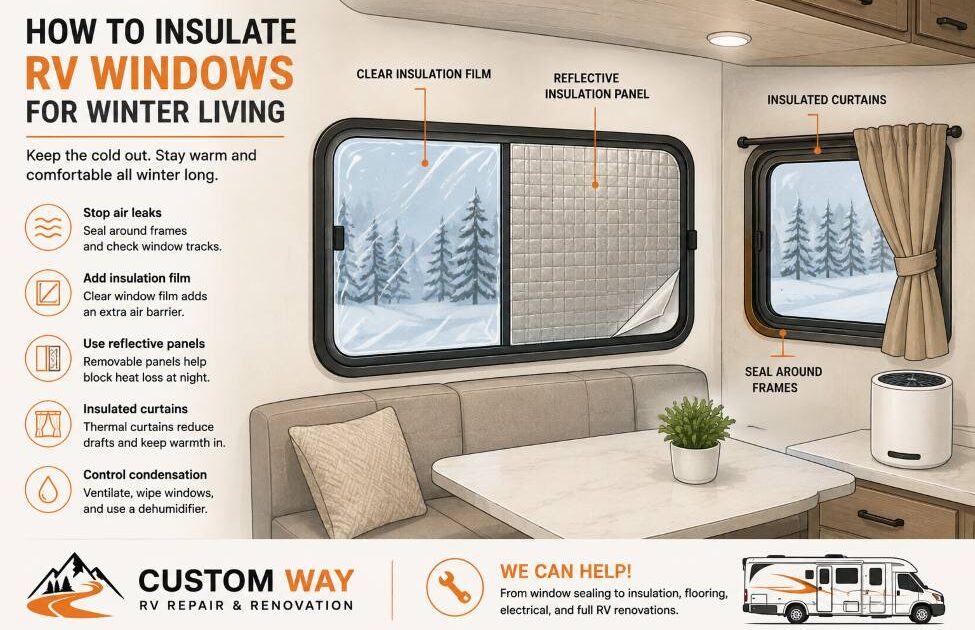
How to Insulate RV Windows for Winter Living
Winter living in an RV is possible, but the windows are one of the first places where comfort is lost. RV windows are usually thinner and less insulated than house windows. Cold glass, air leaks, metal frames, worn seals, and condensation can make the inside feel cold even when the furnace is running.
The best way to insulate RV windows for winter living is to combine several things: stop air leaks, add an insulating layer, control condensation, protect the window frames, and make sure ventilation still works.
Custom way can help with this task partly or as a complete winter comfort upgrade. We can inspect windows, seal air leaks, improve insulation, repair water-damaged areas, upgrade flooring, improve cabinets and interior panels, and help with electrical or heating-related improvements.
Why RV Windows Lose So Much Heat
RV windows are built for travel, low weight, and compact design. They are not usually built like residential winter windows.
Cold air can enter through:
- Old window seals
- Loose window frames
- Gaps around trim
- Sliding window tracks
- Thin glass
- Aluminum frames
- Poor wall insulation around the window
- Cracked sealant outside
- Water-damaged wall panels
Even if the glass itself is not leaking, the frame area may still be cold.
Start With Leak Inspection
Before adding insulation, check whether the window has air or water leaks.
Look for:
- Drafts around the frame
- Moisture on wall panels
- Stains below the window
- Soft wall material
- Loose interior trim
- Mold smell
- Cracked exterior sealant
- Foggy double-pane glass
- Rust or corrosion around the frame
If the window is leaking water, do not just cover it from inside. Insulation can trap moisture and make hidden damage worse.
Custom way can help with leak detection and repair before insulation is installed.
Best Ways to Insulate RV Windows
There is no single perfect solution. The right setup depends on whether you live in the RV full-time, travel in cold weather, or only need temporary winter protection.
1. Use Clear Window Insulation Film
Clear shrink film is one of the simplest ways to reduce drafts and create an extra air barrier.
It works well because it creates a sealed air gap between the room and the cold glass.
Good for:
- Temporary winter use
- Keeping daylight
- Reducing drafts
- Low-cost insulation
The downside is that it is seasonal and can make it harder to open the window.
Clean the surface well before applying the tape. If the wall or frame is dirty, damp, or textured, the film may not seal properly.
2. Add Reflective Insulation Panels
Reflective insulation panels can be cut to fit RV windows. Many RV owners use foil-faced bubble insulation or similar reflective material.
This can help reduce radiant heat loss and block cold from the glass area.
Good for:
- Night insulation
- Very cold weather
- Bedroom windows
- Cab windows
- Storage time
- Boondocking in winter
The downside is that it blocks light and can increase condensation if moisture gets trapped behind it.
For winter living, removable panels are often better than permanent coverage. You can remove them during the day to dry the window area.
3. Use Insulated Curtains
Insulated curtains or thermal curtains can make the RV feel much warmer.
They help block cold air from moving into the living space and make the interior feel less drafty.
Good places for insulated curtains:
- Bedroom
- Living area
- Cab area in motorhomes
- Large side windows
- Window near dinette
- Entry door window
For best results, curtains should cover beyond the window frame, not just the glass. The goal is to block cold air movement around the entire opening.
4. Add Window Track Seals
Sliding RV windows can leak cold air through the tracks.
Check the window channels and weep holes. Dirt, worn felt, damaged rubber, or poor fitment can allow drafts.
Possible fixes include:
- Cleaning window tracks
- Replacing worn seals
- Adding removable draft blockers
- Checking sliding panel alignment
- Inspecting exterior weep holes
- Replacing damaged weatherstripping
Do not permanently block drainage paths. RV windows need proper water drainage.
5. Seal Around the Window Frame
If air is entering around the frame, interior insulation will only partly help.
Window frame sealing may include:
- Removing loose trim
- Checking gaps
- Adding appropriate sealant
- Replacing bad weatherstripping
- Resealing exterior window edges
- Repairing damaged wall material
- Checking for water intrusion
This is where professional work can matter. The wrong sealant or poor installation can trap water or fail after travel vibration.
Custom way can inspect the window frame and reseal it correctly.
6. Insulate the Cab Area
In Class A, Class B, and Class C motorhomes, the cab area is often a major cold zone.
Large windshields and side cab windows lose a lot of heat.
Useful solutions include:
- Insulated windshield cover
- Cab divider curtain
- Reflective window panels
- Thermal curtains behind the driver seats
- Door seal inspection
- Floor insulation improvements near the cab
A cab divider curtain can make a big difference because it reduces the heated living space.
Do Not Ignore Condensation
Window insulation can make condensation worse if moisture gets trapped.
Condensation happens when warm indoor air touches cold glass or metal frames. In winter, this is common in RVs because the living space is small and moisture builds up quickly.
Moisture comes from:
- Breathing
- Cooking
- Showering
- Wet clothes
- Propane combustion appliances
- Poor ventilation
- Humid weather
- Leaks
If condensation sits around windows every day, it can damage wall panels, trim, flooring, and cabinets.
How to Reduce Condensation
To reduce winter window moisture:
- Use roof vents briefly each day
- Run exhaust fan while cooking
- Use bathroom fan after showering
- Wipe window condensation daily
- Use a dehumidifier if needed
- Avoid drying wet clothes inside without ventilation
- Keep air moving behind curtains
- Do not seal every opening too tightly
- Check for hidden leaks
The goal is warmth without trapping moisture.
Should You Cover Every Window?
Not always.
For winter living, it often works better to treat windows by priority.
Best windows to insulate first:
| Window area | Why it matters |
|---|---|
| Bedroom windows | Comfort while sleeping |
| Large living room windows | Big heat loss area |
| Cab windshield | Major cold zone in motorhomes |
| Door window | Drafts near entry |
| Bathroom window | Condensation risk |
| Dinette window | Cold seating area |
You may want heavy insulation at night and lighter insulation during the day.
What About Dual-Pane RV Windows?
Some RVs have dual-pane windows. They are usually better than single-pane windows, but they can still lose heat and develop problems.
Common dual-pane issues include:
- Fogging between panes
- Failed seal
- Moisture inside glass unit
- Drafts around frame
- Cold aluminum frame
If the glass is foggy between panes, that is not normal surface condensation. It usually means the window seal has failed.
Winter Window Insulation and Hidden Water Damage
This is important: if the wall under or around the window already has water damage, insulation can hide the symptoms.
Warning signs include:
- Soft wall panel
- Soft floor near window
- Musty smell
- Stained trim
- Swollen paneling
- Peeling wallpaper
- Mold spots
- Rusted screws
- Loose cabinets near the wall
Custom way can inspect these areas and help with leak detection, wall repair, flooring replacement, and interior renovation if damage has already started.
DIY vs Professional Help
Some window insulation is easy to do yourself. Clear film, curtains, and removable panels are simple seasonal upgrades.
But professional help is better when you have:
- Window leaks
- Water stains
- Soft flooring
- Wall damage
- Loose window frames
- Exterior sealant failure
- Electrical work near the wall
- Need for custom panels or trim
- Full winter-living renovation
- Condensation damage
- Mold smell
A winter insulation project can be simple, or it can reveal a bigger problem.
Custom way Can Help With RV Winter Comfort
Custom way can help with both small insulation improvements and larger winter-living upgrades.
We can help with:
- RV window leak inspection
- Window frame sealing
- Draft reduction
- Custom interior insulation solutions
- Door and window seal repair
- Soft floor repair
- RV flooring replacement
- Wall panel repair
- Cabinet repair and modification
- Electrical upgrades
- Battery and inverter systems
- Lighting upgrades
- Roof leak repair
- Shower and plumbing repairs
- Full RV renovation projects
If you only need help with one window, we can help with that. If you want to prepare the whole RV for winter living, we can inspect the complete interior and recommend a practical plan.
Best Practical Setup for Winter Living
For most RV owners, a good winter window setup looks like this:
- Fix leaks first
- Clean and inspect every window
- Add clear film to windows you do not need to open often
- Use removable reflective panels at night
- Add insulated curtains in main living areas
- Seal drafts around frames
- Keep ventilation under control
- Wipe condensation daily
- Check walls and floors for moisture
This approach improves comfort without blindly trapping moisture inside the RV.
To insulate RV windows for winter living, start by checking for leaks and drafts. Then add clear insulation film, removable reflective panels, insulated curtains, and better seals where needed. Watch condensation carefully because moisture can damage walls, trim, cabinets, and flooring.
If the window area is already damp, stained, soft, or musty, do not cover it and hope for the best. Contact Custom way so we can inspect the real cause, repair leaks, improve insulation, and help make your RV warmer and more comfortable for winter living.