
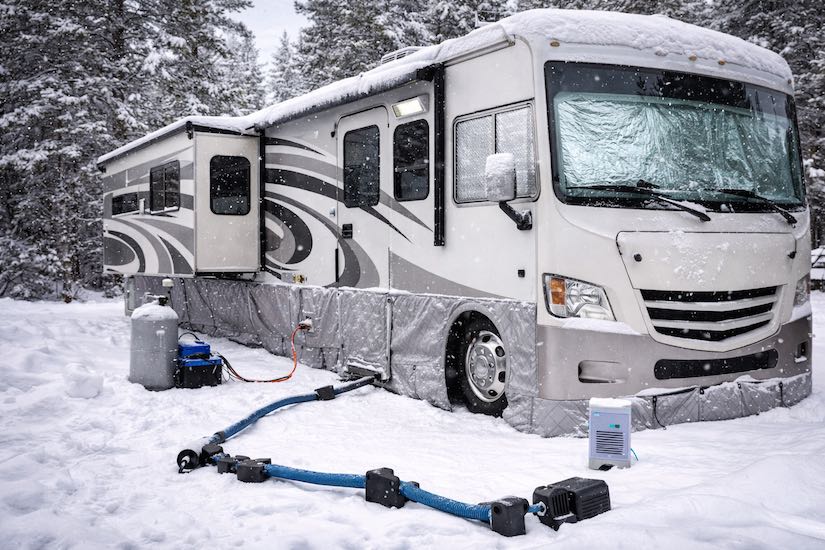
Living in a motorhome during winter is absolutely possible, but it requires preparation and a different mindset than summer travel. Cold temperatures affect water systems, batteries, heating, condensation, and even basic comfort. Most winter issues come not from extreme cold, but from poor insulation, moisture buildup, and underestimating daily heat needs.
This guide explains how winter motorhome living actually works in real conditions.
Choose the right motorhome setup
Not all motorhomes handle winter equally. Some are built for mild climates only.
Things that matter most:
-
insulated walls and roof
-
enclosed and heated underbelly
-
double-pane or thermal windows
-
reliable heating system
If the motorhome was not designed for cold weather, extra insulation becomes mandatory.
Heating systems that really work
Heat is the foundation of winter living. Electric space heaters alone are rarely enough.
Common winter heating options:
-
propane furnace
-
diesel heater
-
hydronic heating systems
-
electric heaters as support only
Propane furnaces heat evenly but consume fuel fast. Diesel heaters are efficient and popular for long stays. Electric heat only works when shore power is reliable.
Protect water lines and tanks from freezing
Frozen plumbing is one of the most common winter failures.
Key steps:
-
keep fresh, gray, and black tanks heated or insulated
-
use heated water hoses
-
add tank heaters if staying below freezing
-
keep interior cabinets open near plumbing
Many winter campers drain and winterize parts of the system they do not use daily.
Managing condensation and moisture
Condensation causes more damage than cold itself.
Moisture comes from:
-
breathing
-
cooking
-
showering
-
propane heaters
To control it:
-
use roof vents daily
-
run a dehumidifier when possible
-
wipe windows and walls
-
never block airflow
Ignoring condensation leads to mold and insulation damage.
Insulate smart, not blindly
Extra insulation helps, but it must be done correctly.
Effective insulation methods:
-
thermal window covers
-
insulated windshield curtains
-
skirting around the motorhome
-
foam insulation in storage bays
Skirting makes a huge difference by blocking cold air under the motorhome.
Electrical system in winter
Cold temperatures reduce battery performance.
Important points:
-
lithium batteries perform better than lead-acid
-
keep batteries insulated and warm
-
monitor voltage closely
-
solar output drops in winter
Relying on shore power or generator backup is common in winter living.
Daily habits that matter
Winter motorhome living depends heavily on routine.
Helpful habits:
-
check weather forecasts daily
-
manage propane levels proactively
-
clear snow from roof and vents
-
inspect seals regularly
Small daily checks prevent big failures.
Driving and parking in winter
If you move during winter, plan carefully.
Key considerations:
-
avoid icy roads when possible
-
level parking to keep slides and seals aligned
-
protect jacks from freezing
-
retract awnings before snow
Many winter motorhome residents prefer staying parked for long periods.
Common mistakes to avoid
Most winter problems come from:
-
underestimating propane usage
-
ignoring condensation
-
leaving water hoses exposed
-
relying on one heat source only
-
failing to insulate windows
Winter living rewards preparation, not improvisation.
Winter motorhome preparation by Custom-way
For owners planning full-time or extended winter use, professional preparation saves money and stress. Custom-way provides winterization, insulation upgrades, heating system installation, and cold-weather inspections for motorhomes.
Custom-way focuses on:
-
freeze protection
-
reliable heating solutions
-
moisture control
-
long-term winter comfort
Proper setup allows safe and comfortable winter living even in freezing conditions.
Living in a motorhome in winter is less about surviving cold and more about controlling heat and moisture. When insulation, heating, and daily habits work together, winter motorhome life becomes stable, quiet, and surprisingly comfortable.