
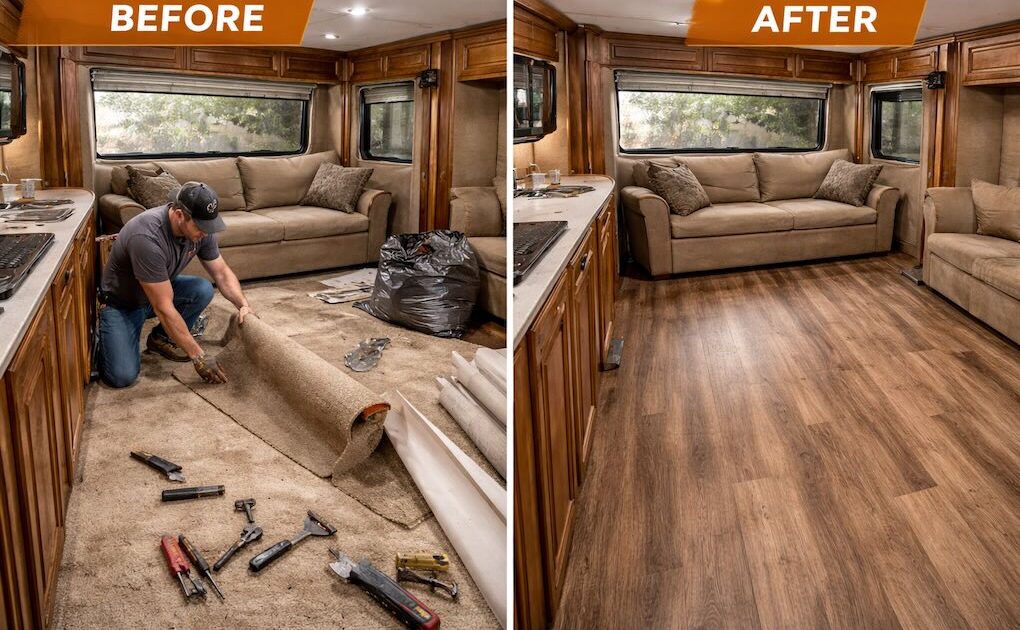
Replacing carpet in a motorhome is one of the most effective interior upgrades you can make. Old RV carpet traps moisture, dust, pet hair, and odors. It also wears unevenly because motorhomes flex and slide-outs move across the floor. The key is not just pulling it out, but preparing the subfloor correctly and installing material that works with RV construction.
Step 1 – Choose Your New Flooring
Before removing anything, decide what you are installing.
Popular Replacement Options
-
Luxury Vinyl Plank (LVP)
-
Sheet vinyl
-
RV-rated laminate
-
Low-pile RV carpet
Luxury vinyl plank is the most popular choice because it is waterproof, lightweight, and easy to maintain.
Step 2 – Remove Furniture Safely
Motorhome furniture is often bolted directly through the floor.
Remove Carefully
-
Dinette seating
-
Free-standing chairs
-
Sofa if necessary
-
Trim strips
-
Floor vents
Label bolts and hardware. Some furniture is also tied into wall framing.
Step 3 – Remove the Old Carpet
Cut the carpet into sections using a utility knife and pull it up slowly.
You May Encounter
-
Staples
-
Glue
-
Foam padding
-
Adhesive residue
Remove all padding completely. Scrape adhesive until the surface is smooth and clean.
Step 4 – Inspect the Subfloor
This is the most important stage.
Look For
-
Soft or spongy areas
-
Water damage
-
Mold
-
Loose plywood
-
Delamination
If the subfloor is compromised, repair it before installing new flooring. Installing over weak substrate leads to squeaks and failure.
Step 5 – Check Slide-Out Design
Slide-outs require special attention.
Identify Your Slide Type
-
Slide rides over the main floor
-
Flush-floor slide design
Never install thick flooring where slides travel unless you verify proper clearance. Slides can damage new flooring instantly.
Step 6 – Prepare the Surface
Proper preparation ensures long-term performance.
Surface Prep Includes
-
Vacuum thoroughly
-
Ensure the surface is dry
-
Sand high spots
-
Fill minor gaps
Motorhome floors are thinner and lighter than residential floors. Keep materials lightweight.
Step 7 – Install the New Flooring
If Installing Vinyl Plank
-
Leave expansion gap along walls
-
Stagger seams
-
Avoid pinching flooring under cabinets
-
Do not fasten floating floors
If Installing New Carpet
-
Use RV-grade adhesive
-
Stretch evenly
-
Secure properly with staples where needed
Step 8 – Reinstall Furniture and Trim
When reinstalling:
-
Attach trim to walls, not through floating flooring
-
Test slide operation fully
-
Check door clearance
-
Inspect threshold transitions
Always operate slides completely before finishing the project.
Common Mistakes to Avoid
Structural Mistakes
-
Ignoring water damage
-
Installing over soft subfloor
-
Blocking slide movement
Installation Mistakes
-
No expansion gap
-
Using heavy residential materials
-
Screwing through floating flooring
Motorhomes flex during travel. Flooring must accommodate slight movement.
Is This a DIY Project?
Small carpet sections can be replaced by experienced DIY owners.
Full interior replacement, especially in motorhomes with multiple slide-outs, often requires knowledge of:
-
RV framing
-
Weight distribution
-
Slide clearance
-
Moisture prevention
Professional Help Is Available
If you want to replace carpet in your motorhome, Custom-way can help.
We understand:
-
RV subfloor construction
-
Slide-out mechanics
-
Lightweight material selection
-
Hidden water damage detection
We can inspect your flooring, repair structural issues if necessary, and install new materials that work with your motorhome design.
Call +1 840-205-7314
Email customway.ca@gmail.com