
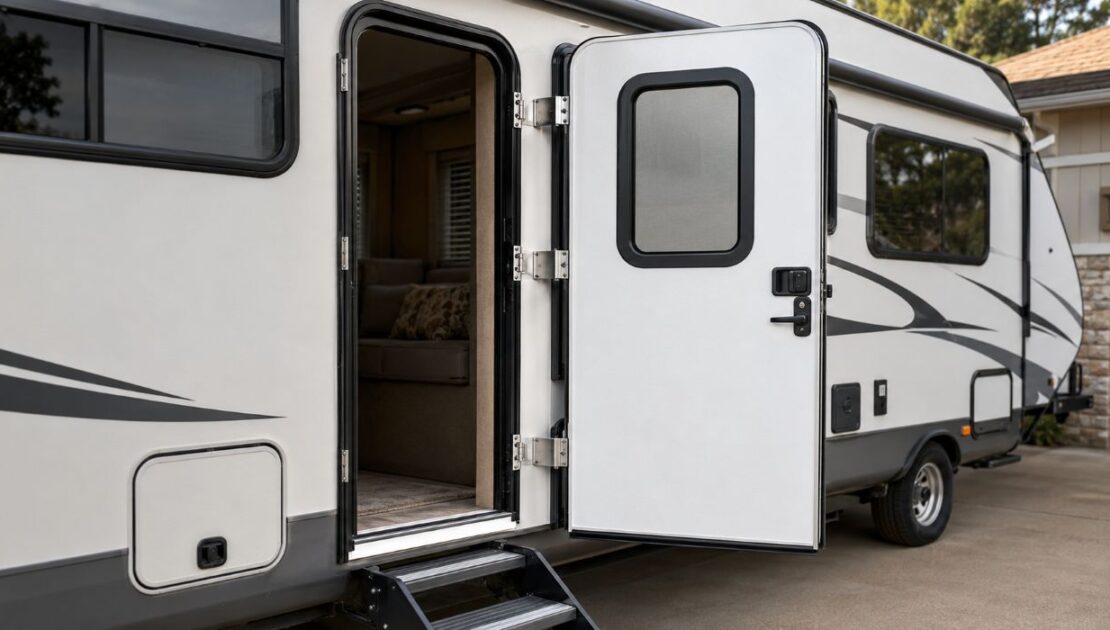
Replacing an RV door is possible, but it is not the same as replacing a house door. RV entry doors are lightweight, sealed against weather, fitted into thin wall structures, and tied into the way the RV body flexes during travel. The new door has to fit the opening, seal correctly, latch safely, and stay secure on the road.
If the door is damaged, leaking, hard to close, badly warped, or has a broken frame, replacement may be better than trying to adjust the hinges again and again.
When Should You Replace an RV Door?
You may need a new RV door if you notice:
- Door is cracked or bent
- Door frame is damaged
- Door does not close even after adjustment
- Water leaks around the door
- Door skin is separating
- Hinges are pulling out
- Lock area is broken
- Door has soft spots from water damage
- Screen door no longer fits correctly
- Weather seal will not seal properly
- Door was damaged in an accident or break-in
If the wall around the door is soft, the problem may be bigger than the door itself. In that case, the surrounding structure needs inspection before installing a new door.
Step 1: Measure the Existing Door
Measure carefully before ordering anything.
Check:
- Width of the rough opening
- Height of the rough opening
- Door frame outside dimensions
- Wall thickness
- Hinge location
- Latch location
- Door swing direction
- Screen door setup
- Corner radius of the door frame
RV doors are not always universal. Even a small size difference can create sealing, latch, or trim problems.
Step 2: Choose the Correct Replacement Door
The best replacement is usually a door that matches the RV model or the original door dimensions.
Check whether the new door includes:
- Main entry door
- Door frame
- Screen door
- Hinges
- Latch cutout
- Window
- Weather seal
- Interior trim ring
- Lock hardware
Sometimes it is better to replace the full door assembly instead of only the door slab. A full assembly gives a cleaner fit if the old frame is bent, leaking, or worn.
Step 3: Remove Interior Trim
Inside the RV, remove the trim around the door opening. Work carefully because RV wall panels can be thin and easy to damage.
Before removing the door, check for wiring near the entry area. Some RVs have switches, lights, sensors, speakers, or wiring routed near the door frame.
Step 4: Remove the Old Door Assembly
Support the door before removing screws. An RV door can shift suddenly once the frame screws are loose.
Remove the screws from the exterior flange or interior frame, depending on the door design. Then carefully separate the old door frame from the wall.
Old sealant may hold tightly. Do not pry aggressively against weak fiberglass or wall paneling. Work slowly around the frame.
Step 5: Inspect the Opening
This is one of the most important steps.
Look for:
- Water damage
- Soft wood
- Mold smell
- Loose wall material
- Cracked fiberglass
- Bent framing
- Old sealant buildup
- Gaps in the wall structure
- Damage near hinges or latch side
Do not install a new door over rotten or soft material. The screws need solid structure to hold the door safely.
Step 6: Clean and Prepare the Surface
Remove old butyl tape, sealant, dirt, and loose material from the opening.
The new door frame needs a clean, flat surface. If the surface is uneven, the door may leak or twist when tightened.
Use RV-safe sealant materials. Many RV doors are sealed with butyl tape behind the exterior flange, then finished with compatible sealant around the edge.
Step 7: Test Fit the New Door
Before applying sealant, place the new door into the opening and check the fit.
Make sure:
- Door sits square
- Frame fits the opening
- Hinges have clearance
- Latch side lines up
- Door opens fully
- Screen door clears
- Interior trim will fit
- Door does not hit cabinets, steps, or furniture
If the dry fit is wrong, stop and correct the issue before sealing.
Step 8: Install the New Door
Apply butyl tape or the correct sealing material to the door frame flange. Set the door into the opening and align it carefully.
Start screws by hand. Do not fully tighten one side first. Work around the frame gradually so the door sits evenly.
Overtightening can twist the frame and make the door hard to close.
Step 9: Check Door Operation
Before finishing the sealant, test the door.
Check:
- Door closes smoothly
- Latch catches cleanly
- Deadbolt turns without force
- Hinges move smoothly
- Screen door works
- Weather seal contacts evenly
- Door does not rub the frame
- Gaps are consistent
A new door should not need to be slammed. If it does, the frame may be slightly twisted or the latch/striker needs adjustment.
Step 10: Seal the Exterior
After the door is aligned, finish sealing the exterior.
Seal around the frame using RV-compatible exterior sealant. Do not use random household caulk. RVs move, flex, heat up, cool down, and vibrate, so the sealant has to stay flexible.
Clean excess butyl tape and sealant carefully for a neat finish.
Step 11: Reinstall Interior Trim
Once the door is secure and sealed, reinstall the interior trim. Make sure the trim does not push the frame out of alignment.
After installation, test the door again from inside and outside.
Common Mistakes to Avoid
Avoid these problems:
- Ordering the wrong door size
- Ignoring wall damage around the opening
- Reusing bad seals
- Overtightening the frame screws
- Installing the door out of square
- Using the wrong sealant
- Blocking wiring near the door
- Not checking the deadbolt before finishing
- Not leak-testing after installation
A bad door install can lead to leaks, wind noise, poor security, and frame damage.
Custom way Can Help!
Custom way can help with RV door replacement, entry door repair, lock installation, hinge adjustment, striker alignment, screen door repair, weather seal replacement, leak detection, wall repair, exterior trim work, and many other RV services.
A proper RV door replacement is not just about removing one door and installing another. The door has to fit the opening, seal against water, close without force, and stay secure while traveling.
To replace an RV door, measure the old door carefully, choose the correct replacement assembly, remove the old frame, inspect the wall opening, clean the surface, test fit the new door, install it evenly, seal it properly, and test the latch and deadbolt before finishing.
If there is water damage, a bent frame, or poor fitment, it is better to fix the structure first. A new door only works well when the opening is solid, square, and properly sealed.