
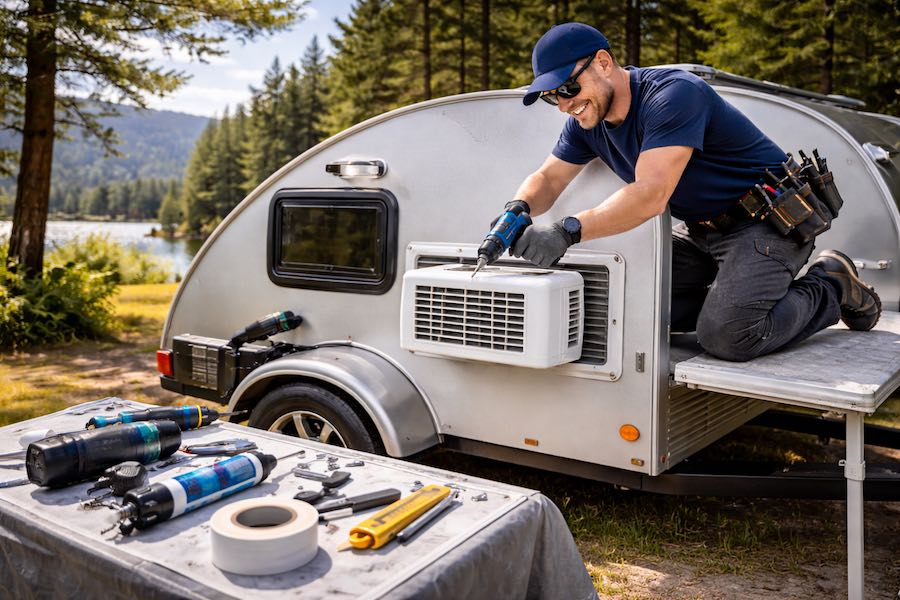
Installing AC in a teardrop camper is a common request, especially for summer travel. Teardrop campers are compact, lightweight, and aerodynamic, which makes air-conditioning installation very different from standard campers or RVs. The main challenge is adding cooling without overloading the structure or electrical system.
Below is a practical, real-world guide to AC installation options for teardrop campers and what you should consider before starting.
Can a teardrop camper support air conditioning?
Teardrop campers are not designed for heavy rooftop equipment. Most have thin aluminum or composite walls and roofs with limited load capacity.
Key limitations:
-
Lightweight construction
-
Limited roof strength
-
Small interior volume
-
Often only 15A shore power or 12V systems
Because of this, roof-mounted RV AC units are usually not recommended for teardrop campers.
Best AC options for teardrop campers
Window air conditioner (most common solution)
This is the most popular and practical option.
Why it works:
-
Lightweight compared to RV rooftop units
-
Easy to service or replace
-
Efficient cooling for small interiors
Window AC units are usually installed through:
-
a side wall
-
a rear galley wall
-
a custom AC hatch
Proper sealing and framing are critical.
Portable air conditioner
A good option when cutting the camper body is not desired.
Things to consider:
-
Requires vent hoses
-
Takes interior space
-
Needs condensate management
Portable AC units work best for occasional use or short trips.
12V AC systems (limited use cases)
Some modern 12V AC systems exist, but they:
-
require large lithium battery banks
-
often need solar support
-
are expensive
This option is usually reserved for high-end builds.
Installation basics for teardrop campers
A proper AC installation includes more than just mounting the unit.
Important steps:
-
Reinforcing the mounting opening
-
Proper airflow clearance
-
Weatherproof sealing
-
Vibration isolation
-
Electrical load verification
Poor installations often cause water leaks, rattling, or overheating of the AC unit.
Electrical requirements
Most window AC units require:
-
110–120V shore power
-
10–15 amps depending on size
Before installation, you must confirm:
-
breaker rating
-
wiring gauge
-
outlet location
Using undersized wiring is a common and dangerous mistake.
Common mistakes to avoid
-
Installing rooftop AC on unsupported roofs
-
Skipping structural reinforcement
-
Using household sealants instead of RV-grade materials
-
Blocking condenser airflow
-
Ignoring power limitations
These mistakes usually result in damaged camper shells or failed cooling systems.
Professional AC installation for teardrop campers
If you want a clean, safe, and long-lasting solution, professional installation is strongly recommended. Custom-way provides camper upgrade services tailored to compact campers, including teardrop models.
Custom-way focuses on:
-
correct AC type selection
-
structural safety
-
clean cutouts and sealing
-
reliable electrical integration
This approach avoids common DIY failures and protects the camper’s value.
Installing AC in a teardrop camper is absolutely possible, but only with the right approach. Lightweight units, proper sealing, and realistic power expectations are the keys to success. When done correctly, air conditioning turns a teardrop camper into a comfortable, summer-ready travel solution.