
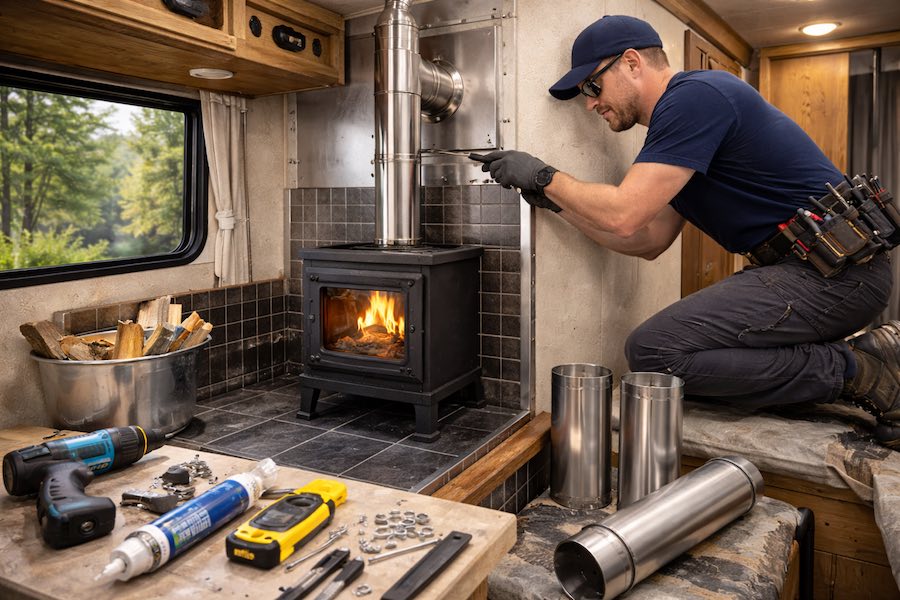
Installing a wood stove in a camper is a serious upgrade intended for cold climates and off-grid travel. Unlike diesel or propane heaters, a wood stove provides radiant heat, independence from fuel supplies, and a dry interior environment. However, it also introduces fire and carbon-monoxide risks, so installation must follow strict safety principles.
This guide explains how wood stove installation in a camper actually works and what separates a safe setup from a dangerous one.
Is a wood stove suitable for a camper?
Wood stoves are not suitable for every camper. They are most commonly installed in:
-
truck campers
-
camper trailers
-
box campers
-
expedition campers
They are not recommended for pop up campers or soft-wall campers due to fire risk and limited insulation.
Key requirements:
-
solid walls and roof
-
sufficient interior volume
-
ability to install a proper chimney
Choosing the right wood stove
Only compact stoves designed for small spaces should be used.
Typical options:
-
Tiny cast-iron wood stoves
-
Marine or boat wood stoves
-
Steel mini stoves with controlled airflow
Oversized stoves will overheat the camper quickly and create safety hazards.
Proper mounting and heat shielding
The stove must be mounted on a non-combustible base and surrounded by heat protection.
Required elements:
-
fireproof floor plate (steel or tile)
-
heat shields with air gaps
-
minimum clearance from walls and furniture
Using decorative materials instead of rated heat shields is one of the most dangerous mistakes.
Chimney and roof penetration
The chimney system is the most critical part of installation.
Correct chimney setup includes:
-
insulated chimney pipe
-
roof penetration with fire-rated flashing
-
vertical chimney run for proper draft
-
spark arrestor on top
Improper chimney installation is the leading cause of camper fires.
Ventilation and air supply
A wood stove consumes oxygen. Without proper airflow, it becomes dangerous.
Essential safety items:
-
fresh air intake
-
roof vent or window ventilation
-
carbon monoxide detector
-
smoke detector
Never rely on “cracking a window” alone.
Weight and balance considerations
Wood stoves add significant weight in a small area.
Before installation, consider:
-
axle load (for trailers)
-
center of gravity
-
mounting reinforcement
Poor weight distribution affects handling and safety on the road.
Common mistakes to avoid
-
installing a stove without heat shields
-
using single-wall chimney without insulation
-
routing chimney too close to roof edges
-
skipping CO detectors
-
burning improper fuel
These mistakes often lead to irreversible damage or fire.
Professional wood stove installation by Custom-way
Because of the risks involved, professional installation is strongly recommended.
Custom-way provides safe and code-aware wood stove installations for campers and trailers.
Custom-way focuses on:
-
correct stove selection
-
fire-rated materials
-
sealed and insulated chimney systems
-
long-term safety and reliability
This approach allows you to enjoy real wood heat without compromising safety.
Installing a wood stove in a camper is not a cosmetic upgrade – it is a structural and safety-critical modification. When done correctly, it provides unmatched warmth and independence. When done incorrectly, it becomes a serious hazard. Careful planning, proper materials, and professional installation are essential.