
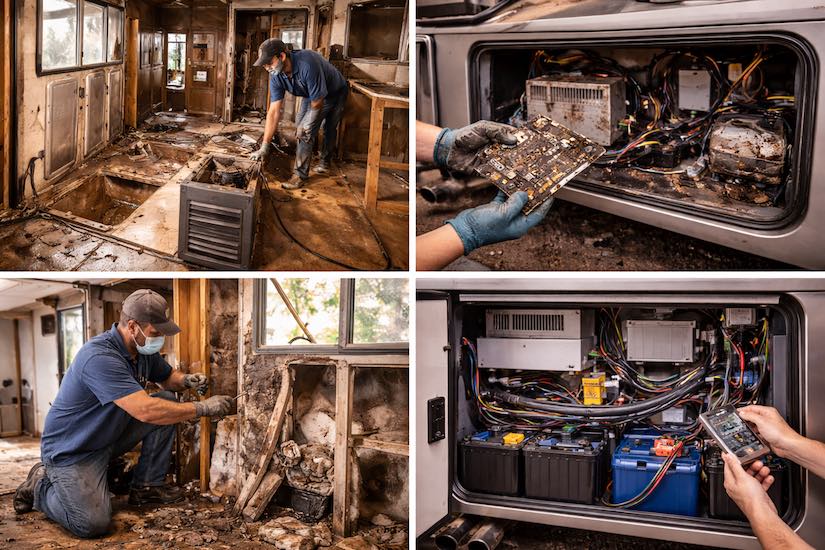
Repairing a flood damaged RV that has been declared totaled is possible in some cases, but it is never a simple or cosmetic project. Flood damage affects structure, wiring, safety systems, and long-term reliability. The biggest mistake owners make is treating flood damage like a normal water leak. It is not the same thing.
This is how flood-damaged RV repairs look in real life, without optimism or marketing talk.
What “totaled” really means with flood damage
When an insurance company totals an RV after flooding, it usually means the estimated repair cost exceeds the market value. It does not automatically mean the RV cannot be repaired. It means the risk and labor are high.
Flood damage totals are most often caused by:
-
water entering below floor level
-
submerged wiring and electronics
-
contaminated insulation and wall cavities
-
unknown corrosion that will appear later
Fresh water, storm runoff, and salt water all cause damage, but salt water is by far the worst and most expensive to deal with.
The first thing that decides everything: water level
Below floor level flooding
If water only reached lower storage bays or frame level, repairs may be realistic. In these cases, damage is often limited to:
-
wiring harnesses under the floor
-
basement components
-
insulation in lower cavities
This is still serious, but not automatically a death sentence.
Above floor or interior flooding
If water reached living space floor level or higher, the project becomes extreme. Flooring, subfloor, wall insulation, furniture bases, wiring, control boards, and appliances are usually affected. Mold risk becomes very high.
Once floodwater enters wall cavities, there is no shortcut repair.
Electrical systems are the biggest problem
Flood damaged RV electrical systems cannot be trusted without full inspection and partial replacement. Water travels inside wire insulation and corrodes conductors from the inside.
Common electrical failures after floods include:
-
intermittent shorts months later
-
sensor and control board failures
-
false error codes
-
battery and inverter damage
Simply drying components and reconnecting power almost always leads to future failures.
Flooring and subfloor reality
RV floors are not like house floors. They are lightweight, layered, and glued structures. Floodwater weakens adhesives and traps moisture inside.
If the subfloor is compromised:
-
the floor must be removed
-
furniture bases often come out with it
-
insulation underneath must be replaced
This is labor-heavy and expensive, even if materials are cheap.
Mold and contamination risk
Floodwater is rarely clean. It carries bacteria, chemicals, sewage, and debris.
If insulation, wall panels, or HVAC ducts were wet, they must be removed. Drying alone does not eliminate contamination. Mold problems usually show up months later, not immediately.
Any repair plan that avoids opening walls should be considered temporary at best.
Frame and chassis considerations
Steel frames and suspension components can survive flooding, but corrosion starts quickly if not treated. Brakes, wheel bearings, air systems, and wiring under the chassis need inspection.
Diesel pushers and higher-end motorhomes may survive structurally but still fail electrically over time if corrosion is ignored.
When repairing a flood totaled RV can make sense
Repair may be reasonable if:
-
water stayed below floor level
-
the RV was shut down quickly
-
electronics were not submerged
-
you plan to keep it long term, not resell
-
purchase price reflects the risk
These projects make more sense for experienced owners or professional rebuilders.
When it usually does not make sense
Repairing a flood totaled RV is usually a bad idea if:
-
water entered living space
-
control systems were underwater
-
multiple slide outs were affected
-
the RV uses complex electronics
-
resale value matters
In these cases, even a successful repair may never be fully reliable.
Legal and resale realities
A flood totaled RV will usually carry a salvage or rebuilt title. This affects:
-
resale value
-
financing options
-
insurance coverage
Even perfectly repaired units can be hard to insure or sell later. This should be part of the decision, not an afterthought.
Professional inspection before any decision
Before committing to repairs, a professional inspection is critical. Custom-way works with heavily damaged RVs, including flood assessments, electrical system evaluation, structural inspection, and realistic repair planning.
Many owners avoid large losses simply by getting an honest evaluation early.
The honest takeaway
Repairing a totaled flood damaged RV is not about saving money. It is about accepting risk. Some projects can be rebuilt into usable rigs. Many become endless problem machines.
If you cannot clearly identify the water level, affected systems, and total scope of work, walking away is often the smartest decision.