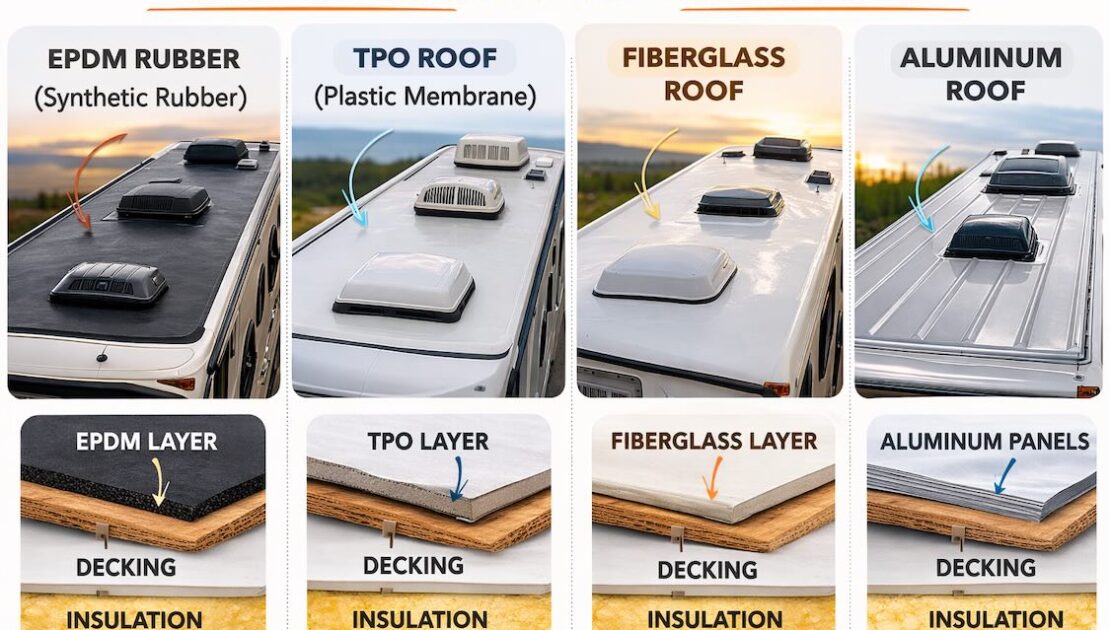
Motorhome roofs are built from lightweight but durable materials designed to handle sun exposure, rain, vibration, and road movement. The exact material depends on the RV manufacturer, model, and price range. Most motorhomes use one of four primary roofing materials.
Below is a clear breakdown of what motorhome roofs are typically made of and how each type performs.
1. EPDM Rubber Roof
EPDM stands for Ethylene Propylene Diene Monomer. It is a synthetic rubber membrane and one of the most common RV roof materials.
Features:
-
Lightweight
-
Flexible
-
UV resistant
-
Affordable
Pros:
-
Easy to repair
-
Widely used
-
Cost-effective
Cons:
-
Can chalk over time
-
Requires regular inspection and sealing
-
Vulnerable to punctures if not maintained
EPDM roofs typically last 10 to 15 years with proper care.
2. TPO Roof
TPO stands for Thermoplastic Polyolefin. It looks similar to rubber but is technically a plastic-based roofing membrane.
Features:
-
Lightweight
-
Heat reflective
-
Seam welded
Pros:
-
Energy efficient
-
Resistant to mold and dirt
-
Stronger surface than EPDM
Cons:
-
Quality varies by manufacturer
-
Can shrink or crack if poorly installed
TPO roofs are common on newer motorhomes.
3. Fiberglass Roof
Fiberglass roofs are more rigid and often found on higher-end motorhomes.
Features:
-
Solid, molded panels
-
Smooth surface
-
More structural strength
Pros:
-
Durable
-
Less prone to punctures
-
Long lifespan
Cons:
-
Heavier than membrane roofs
-
More expensive to repair if cracked
Fiberglass roofs can last 20 years or more with maintenance.
4. Aluminum Roof
Older motorhomes often used aluminum roofing panels.
Features:
-
Metal sheets fastened together
-
Durable against impact
Pros:
-
Strong
-
Long lasting
-
Does not tear like rubber
Cons:
-
Seams require maintenance
-
Can dent
-
Heavier
Aluminum roofs are less common on modern motorhomes.
What Is Under the Roof Material?
The outer layer is only part of the system. A typical motorhome roof also includes:
-
Roof decking, usually plywood or composite board
-
Insulation layer
-
Structural supports
-
Interior ceiling panel
Water damage often affects the layers beneath the surface before it becomes visible.
Which Roof Is Best?
There is no single best roof material. It depends on:
-
Budget
-
Climate
-
Type of motorhome
-
Maintenance habits
Fiberglass offers durability and longevity. TPO and EPDM are lighter and more affordable. Aluminum is strong but requires seam maintenance.
Why Roof Maintenance Matters
Regardless of material, every motorhome roof needs:
-
Regular inspection
-
Sealant maintenance
-
Cleaning
-
Immediate repair of cracks or punctures
Most roof failures are caused by neglected seams, not the material itself.
We Can Help!
If you are unsure what material your motorhome roof is made of or you notice cracks, leaks, or soft spots, Custom-way can help.
We understand:
-
EPDM and TPO membrane repair
-
Fiberglass roof restoration
-
Structural water damage repair
We can inspect your roof properly and recommend the right repair or restoration solution before small problems become expensive repairs.
📞 +1 840-205-7314
✉️ customway.ca@gmail.com