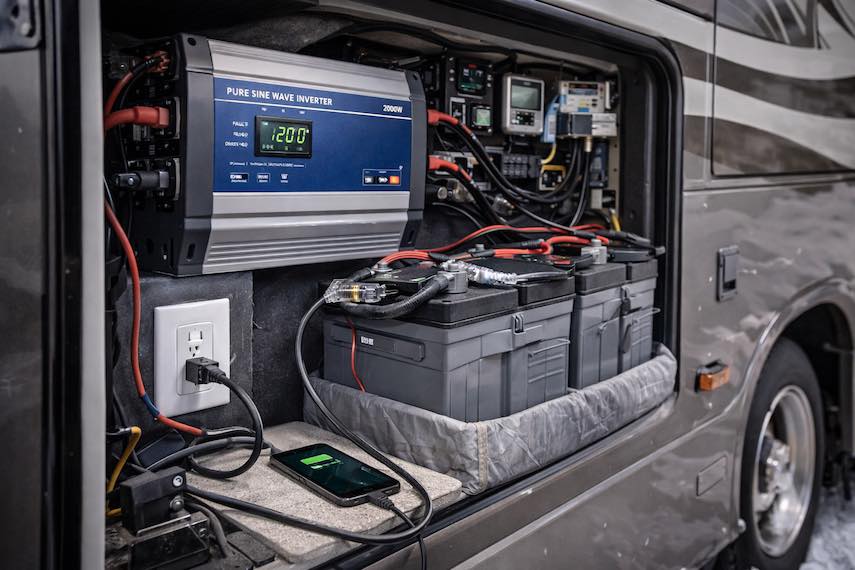
An inverter in a motorhome converts 12V DC power from the batteries into 120V AC power, the same type of electricity you get from a household wall outlet. This allows you to use standard appliances and outlets when the motorhome is not connected to shore power or a generator.
In simple terms, the inverter makes off-grid electricity usable for everyday devices.
Why a motorhome needs an inverter
Motorhomes have two electrical systems:
-
12V DC for lights, fans, water pump, controls
-
120V AC for outlets and household appliances
Batteries store only 12V DC power. The inverter bridges the gap by creating usable 120V AC power from those batteries.
Without an inverter, wall outlets work only when plugged into shore power or when a generator is running.
What an inverter can power
What you can run depends on inverter size and battery capacity.
Common inverter-powered items:
-
phone and laptop chargers
-
TV and media devices
-
microwave (with a large inverter)
-
coffee maker
-
small kitchen appliances
High-power items drain batteries quickly, even if the inverter can technically run them.
What an inverter cannot do
An inverter does not create energy. It only converts stored battery power.
Limitations:
-
air conditioners usually cannot run on inverter power
-
electric heaters drain batteries extremely fast
-
hair dryers often overload small inverters
Battery capacity matters just as much as inverter size.
Inverter vs converter difference
These two are often confused, but they do opposite jobs.
-
Inverter: 12V DC → 120V AC
-
Converter: 120V AC → 12V DC
The converter powers 12V systems and charges batteries when plugged in.
The inverter powers 120V outlets when you are not plugged in.
Many modern motorhomes use inverter-charger units that do both.
Modified sine wave vs pure sine wave
Not all inverters produce the same quality of power.
Modified sine wave inverters:
-
cheaper
-
fine for simple devices
-
may cause noise or heat in electronics
Pure sine wave inverters:
-
clean power like household electricity
-
required for sensitive electronics
-
recommended for modern motorhomes
Pure sine wave is the safer long-term choice.
Battery requirements for inverter use
Inverters place heavy demand on batteries.
Important considerations:
-
battery type (lithium performs best)
-
total amp-hour capacity
-
proper cabling and fusing
-
ventilation for heat
A powerful inverter with weak batteries leads to frustration and system shutdowns.
How inverters are typically wired
Most installations power:
-
selected outlets only
-
or the entire coach through a subpanel
Large systems often include:
-
automatic transfer switches
-
inverter chargers
-
battery monitors
Incorrect wiring can damage appliances or create safety hazards.
When an inverter is most useful
Inverters are especially valuable for:
-
boondocking
-
overnight stops without hookups
-
quiet camping without generators
-
traveling days when outlets are needed
They reduce generator use and improve comfort.
Common mistakes with inverters
Most problems come from:
-
undersized batteries
-
running high-wattage appliances too long
-
poor cable sizing
-
using modified sine wave inverters for electronics
The inverter is rarely the problem. The system design usually is.
Inverter setup and upgrades by Custom-way
If you plan to add or upgrade an inverter system, Custom-way provides inverter installation, battery upgrades, and full electrical system planning for motorhomes.
Custom-way focuses on:
-
matching inverter size to real usage
-
proper battery configuration
-
safe wiring and protection
-
reliable off-grid performance
A correctly designed inverter system makes a motorhome far more flexible and comfortable.
An inverter turns stored battery power into everyday electricity. Used wisely, it lets you live comfortably without hookups. Used incorrectly, it drains batteries fast. The key is balancing inverter size, battery capacity, and realistic expectations of what you want to run.