
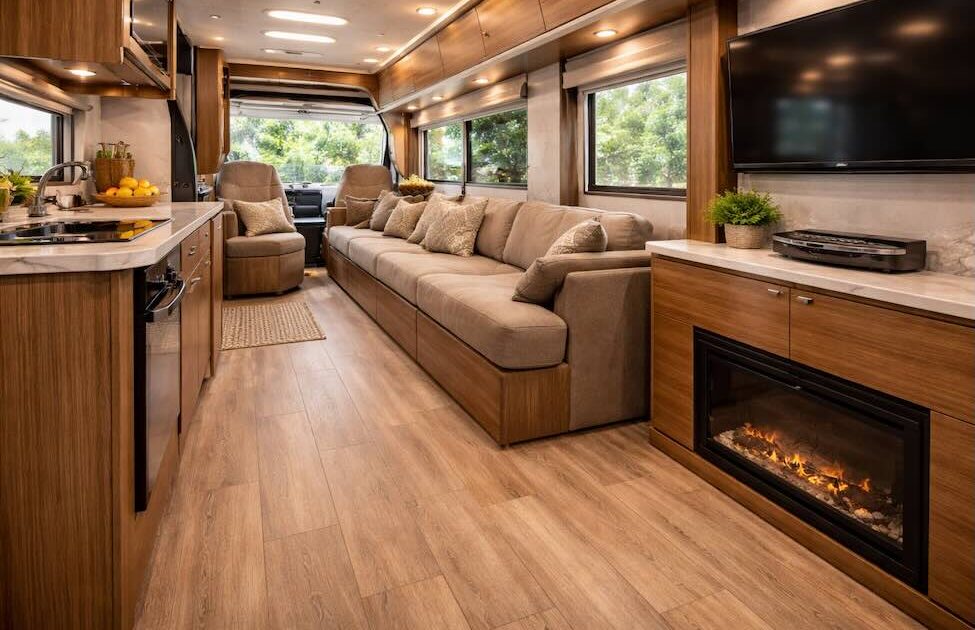
RV flooring is one of those things people underestimate until it starts peeling, cracking, or swelling after a season of travel.
Unlike a house, your floor deals with:
- Constant vibration
- Temperature swings
- Moisture from outside and inside
- Weight limitations
So the “best flooring” is not about looks first, it’s about durability and how it behaves on the road.
What Makes RV Flooring Different?
Before choosing material, you need to understand one thing: RV floors flex.
Even high-end rigs slightly twist while driving. That means rigid materials can fail over time if installed wrong.
Also, spills, humidity, and dirt are much more aggressive in a camper environment.
Best Flooring Options for RV (Real Comparison)
Luxury Vinyl Plank (LVP) – Best Overall Choice
This is the most popular option right now, and for good reason.
Why it works:
- Waterproof
- Flexible enough for movement
- Scratch resistant
- Looks like real wood
- Easy to replace individual planks
Where it shines: full RV remodels and long-term use
If you want something modern, durable, and not too expensive, this is the safest choice.
Sheet Vinyl – Budget and Practical Option
A classic solution that still works very well.
Pros:
- Seamless surface (no gaps for water)
- Lightweight
- Affordable
- Easy to clean
Cons:
- Can look cheaper
- Less durable than LVP
Best for: quick renovations and rental RVs
Laminate Flooring – Looks Good, But Risky
Many people choose laminate because it looks great.
But here’s the problem.
Cons:
- Not waterproof
- Swells when exposed to moisture
- Can separate over time due to movement
Verdict: not recommended unless you really know what you’re doing
Carpet – Comfort Over Practicality
Some RVs still come with carpet, especially in sleeping areas.
Pros:
- Soft and warm
- Reduces noise
Cons:
- Hard to clean
- Absorbs moisture and odors
- Wears out quickly
Best use: small areas like bedroom zones, not main walkways
Rubber Flooring – Underrated Option
Less common, but very practical.
Advantages:
- Extremely durable
- Water-resistant
- Non-slip
Downside:
- Industrial look
- Not everyone likes the style
Best for: utility areas or rugged builds
Engineered Wood – Premium but Sensitive
Looks amazing, but not always RV-friendly.
Issues:
- Sensitive to moisture
- Can crack with movement
- Expensive
Use only if: properly installed with expansion gaps and climate control
What Actually Matters More Than Material?
Even the best flooring will fail if installed wrong.
1. Subfloor Condition
Before installing anything, check:
- Soft spots
- Water damage
- Delamination
Fixing the subfloor is critical.
2. Weight
Every extra kilogram affects fuel consumption and handling.
- LVP and vinyl are lightweight
- Tile or thick wood is a bad idea
3. Expansion Gaps
RV floors expand and contract more than house floors.
If you install flooring too tight, it will buckle.
4. Adhesive vs Floating Floor
- Glue-down: more stable for RV use
- Floating: easier install but can shift over time
In most cases, glue-down LVP performs better in RVs.
Best Flooring Choice by Use Case
Full-time living:
- Luxury Vinyl Plank (LVP)
Budget renovation:
- Sheet vinyl
Luxury interior build:
- Engineered wood (with proper install)
Rugged/off-road camper:
- Rubber flooring
Why Many RV Owners Replace Factory Flooring?
Factory RV flooring is often made to reduce cost, not to last.
Common issues we see:
- Peeling vinyl
- Soft subfloors
- Water damage near doors and kitchens
At Custom Way RV Services, flooring upgrades are usually part of bigger remodels.
Typical improvements include:
- Full subfloor repair
- Waterproof flooring installation
- Seam sealing for long-term durability
- Matching flooring with custom cabinets
This turns a worn RV into something that actually feels like a modern living space.
If you want one simple answer, go with LVP flooring.
It balances durability, weight, water resistance, and looks better than most alternatives.
But remember, installation quality matters more than the material itself.
A properly installed mid-range floor will always outperform a premium floor installed the wrong way.