
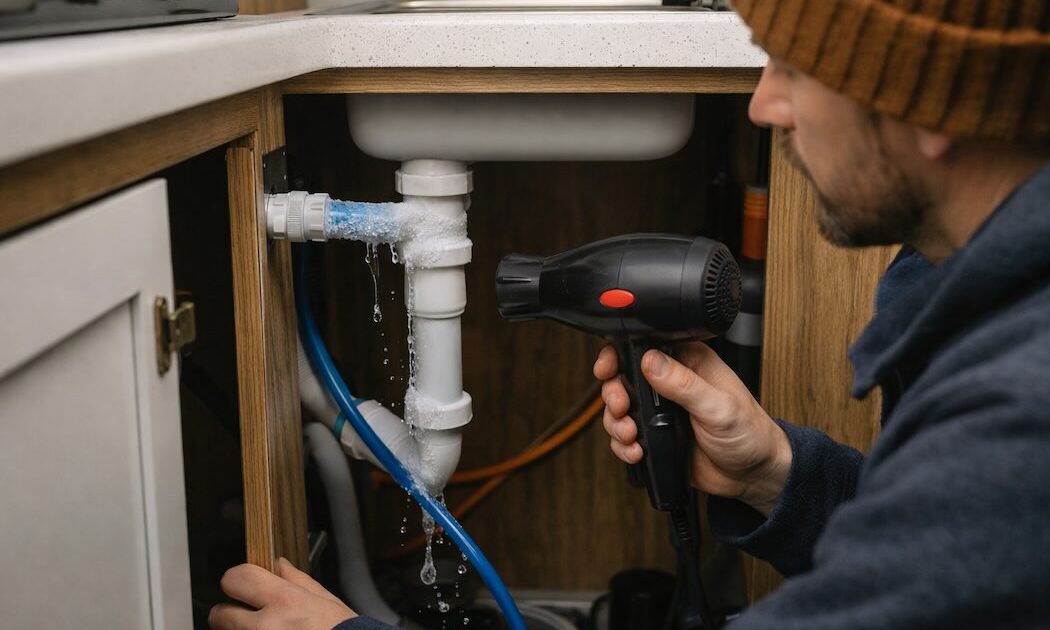
Frozen RV pipes are more than an inconvenience – they can crack fittings, split PEX lines, and damage the water pump or water heater. The key is to thaw safely, stop pressure from building, and inspect for leaks before using the system again.
1) Confirm the problem and shut things down
Common signs of frozen plumbing:
-
No water flow (or only a weak trickle) from faucets
-
Water pump runs but can’t build pressure
-
Frost on cabinet walls, basement compartments, or exposed lines
-
Strange creaking sounds in plumbing areas
What to do immediately:
-
Turn off the city water hookup (if connected).
-
Turn off the RV water pump.
-
If you suspect the water heater is involved: turn off propane/electric to the water heater. Never heat an empty or partially frozen water heater.
This prevents pressure spikes and reduces the risk of blowing a line when ice starts melting.
2) Warm the RV interior first
Most RV plumbing runs through cabinets, under sinks, behind shower panels, and sometimes through the “basement”/underbelly. Your first goal is to raise the interior temperature:
-
Set the furnace to 65–70°F (18–21°C) and keep it running.
-
Open interior doors and cabinet doors (kitchen, bathroom, vanity, wardrobe near plumbing).
-
If your RV has a heated underbelly, make sure it’s actually getting warm air (many systems rely on the furnace).
If you’re off-grid: use safe, vented heat sources. Avoid unvented propane heaters in tight spaces unless you ventilate (they add moisture and can worsen condensation issues).
3) Thaw the lines safely (no “blast heat”)
Start with the most accessible sections:
-
Put a small space heater near the suspected freeze area (never unattended, keep clearance from fabrics).
-
Use a hair dryer on low/medium to warm pipes gradually (especially under sinks and behind access panels).
-
Heat tape can help on exposed runs, but only if it’s RV-safe and used correctly (don’t wrap over itself; follow the product instructions).
Avoid:
-
Open flame (propane torch) – too risky for RV materials.
-
High-heat guns pointed at plastic fittings – can deform PEX and seals.
-
Cranking water pressure to “push the ice out” – that’s how lines burst.
4) Use the “drip method” while thawing
Once you’re warming the area:
-
Open the cold side of the closest faucet slightly.
-
Then open the hot side slightly.
A small open path helps relieve pressure and lets you know when water starts moving again.
If you’re on city water, keep it OFF until you’re confident everything is thawed and intact.
5) Check for leaks immediately after flow returns
When water starts flowing:
-
Keep cabinet doors open and inspect every accessible connection.
-
Look for dripping at:
-Faucet supply lines
-Water pump fittings
-PEX joints and elbows
-Toilet valve connections
-Underbelly/basement plumbing if accessible
If you find a leak:
-
Turn the pump off (or keep city water off).
-
Dry the area and identify whether it’s a loose fitting, cracked connector, or split line.
6) Don’t forget these common freeze points
In RVs, freezing often happens in:
-
Exterior shower and its lines
-
Toilet supply line
-
Water filter housing
-
Water pump check valve area
-
Low-point drains
-
Underbelly runs near the perimeter walls
-
Hose and city-water inlet
Also check the freshwater hose itself – a frozen hose can mimic “frozen RV plumbing.”
7) Prevent it from happening again
Once you’re back in business:
-
Keep the furnace running overnight during freezing temps (even if you use space heaters).
-
Add insulation to vulnerable compartments and use vent fans wisely.
-
Install a skirt in colder climates or block wind under the RV.
-
If freezing temps are expected repeatedly: consider full winterization (blow out lines + RV antifreeze in traps).
Need help fast? Call Custom-way
If your RV pipes are frozen (or you suspect hidden damage), you can call the Custom-way team. We know RV construction and where lines run, and we can access hard-to-reach plumbing points inside cabinets, behind panels, and in the underbelly/basement areas-so we can thaw safely, find leaks quickly, and repair the right spot the first time.
📞 +1 840-205-7314
✉️ customway.ca@gmail.com