
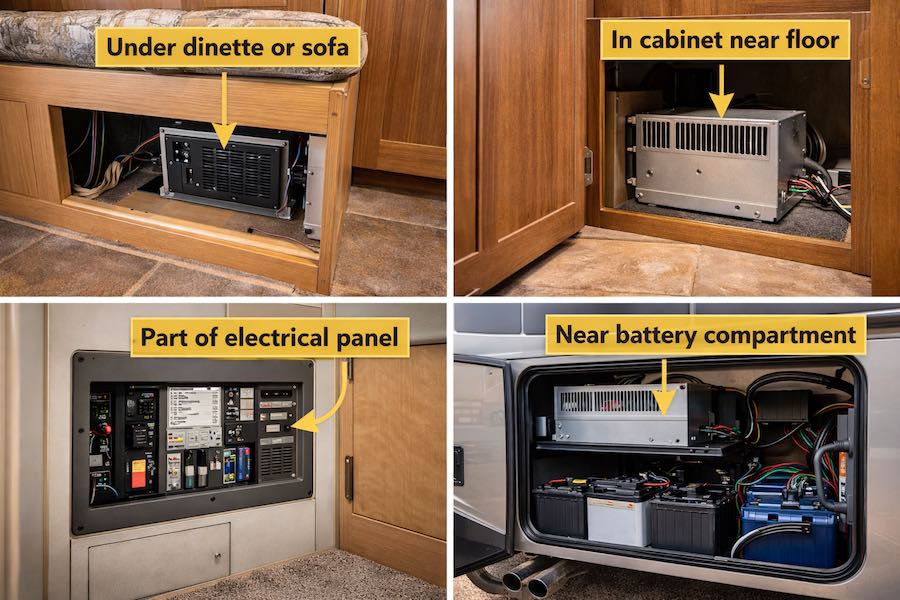
Where is the converter on my RV?
The converter in an RV is part of the electrical system that turns 120V shore power into 12V power for lights, fans, water pump, control boards, and also charges the house batteries. Because it is not something owners interact with daily, it is often hidden and its location depends heavily on RV type and layout.
If you have ever plugged into shore power and noticed that lights work but batteries behave strangely, the converter is usually involved.
What the converter looks like
Before searching for it, it helps to know what you are looking for. A converter is usually a metal box, often silver or black, with ventilation slots or a small fan. In many RVs it is combined with the 120V breaker panel and 12V fuse panel in one unit. In others it is a separate box mounted nearby.
You will almost always hear a faint fan noise from it when it is working hard, especially when batteries are low.
Most common converter locations
Under the dinette or sofa
This is one of the most common places, especially in travel trailers and Class C motorhomes. Remove the lower dinette panel or look inside a bench seat. The converter is often mounted behind or under the seating base, close to the battery wiring.
Inside a cabinet or lower cupboard
Converters are often installed inside a kitchen or hallway cabinet, usually near the floor. Look for a cabinet with vents or a metal panel at the back. Sometimes the converter is screwed to the cabinet wall and easy to miss unless you look carefully.
Part of the main electrical panel
In many modern RVs, the converter is built into the main power distribution center. This panel usually contains 120V breakers and 12V fuses in the same housing. If you see a breaker box with DC fuses and a fan, the converter is inside that unit.
These panels are often located near the floor, in a hallway, under the fridge, or in a lower cabinet.
Near the battery compartment
In some motorhomes and fifth wheels, the converter is installed close to the battery bank to reduce voltage drop. This can mean a storage bay, basement compartment, or utility area. You may need to open exterior compartments to find it.
Bedroom or rear storage areas
In Class A motorhomes and diesel pushers, converters are sometimes installed in rear closets, under beds, or inside basement compartments. These rigs often have larger electrical systems, so the converter may be separate from the main breaker panel.
Why the location matters
Converter location affects performance and reliability. Units installed in tight, unventilated spaces often overheat and fail early. Dust, pet hair, and blocked vents are common causes of converter problems.
If your batteries are not charging properly on shore power, the first step is confirming where the converter is and whether it is running at all.
How to confirm you found the converter
Once you think you have located it, there are a few quick checks:
-
plug into shore power and listen for the fan
-
check if 12V lights work without battery power
-
measure battery voltage to see if it increases when plugged in
If voltage stays low, the converter may be off, failed, or wired incorrectly.
Converter vs inverter confusion
Many RV owners confuse the converter with the inverter. They do opposite jobs. The converter makes 12V power from shore power. The inverter makes 120V power from batteries. They are often installed near each other but are different devices.
Finding one does not mean you have found the other.
When converter location becomes a problem
If the converter is hard to access, poorly ventilated, or buried behind furniture, servicing becomes difficult. In some RVs, upgrading the converter or replacing it requires partial disassembly of cabinetry, which is not ideal.
This is one reason professional inspections look closely at converter placement and airflow.
Help finding or upgrading your converter
If you cannot locate the converter or suspect it is not working correctly, Custom-way helps RV owners diagnose electrical systems, locate hidden converters, and upgrade charging systems to match modern battery setups.
Many charging problems turn out to be simple once the converter is found and tested.
The converter is usually hidden, low, and close to either the electrical panel or the batteries. If you follow the wiring from the batteries or the fuse panel, you will almost always find it. Once you know where it is, diagnosing 12V power problems becomes much easier.