Why Does My Camper Furnace Stink? Causes, Warnings, and Safe Next Steps
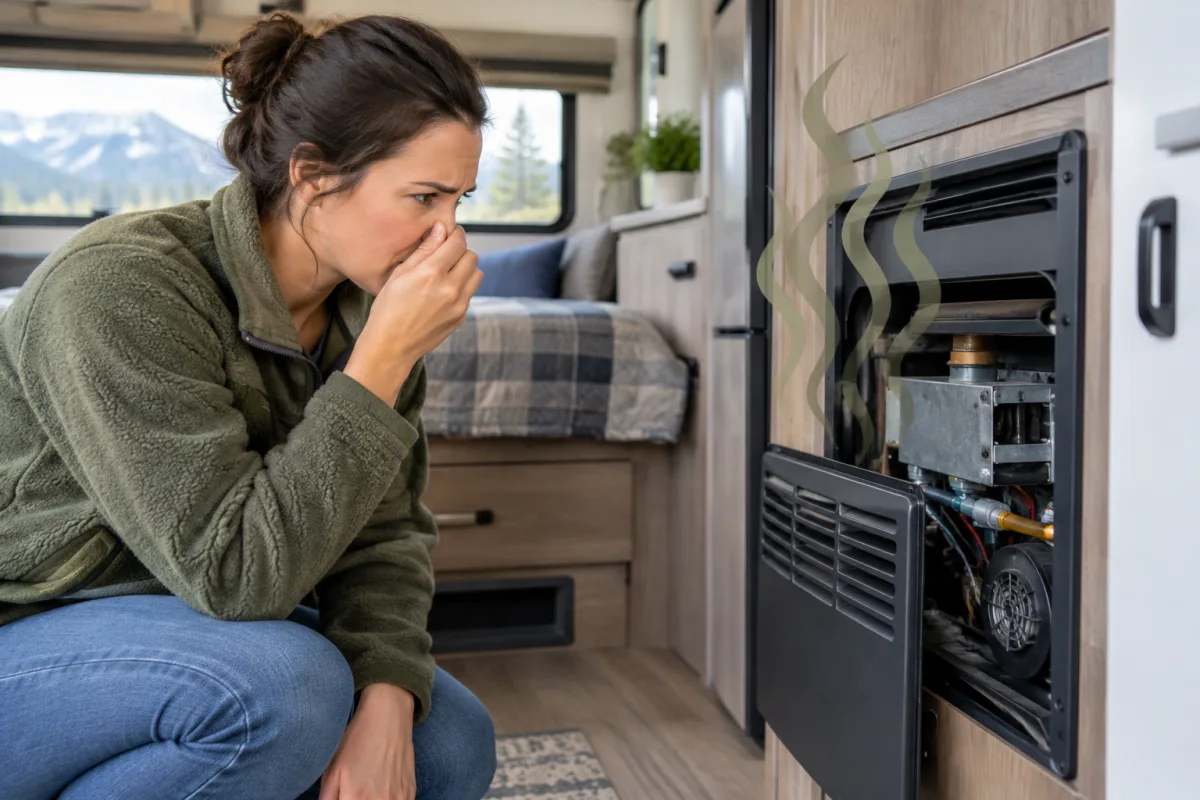
A camper furnace may smell briefly when dust burns off after sitting unused, but a propane, exhaust, melting-plastic, or persistent smoky odor is not normal. Turn the furnace off and treat unusual smells seriously, because combustion or ventilation problems can create a carbon-monoxide hazard.
What different furnace smells can mean
Dust or a mild burnt smell
A short-lived dusty or burnt-dust odor can occur during the first startup after the furnace has been idle. It should fade quickly. If the smell continues, becomes stronger, or returns during normal operation, stop using the furnace and arrange an inspection.
Propane or rotten-egg smell
Propane odor is not normal. Do not operate the furnace. Extinguish flames, avoid switches and other electrical equipment, evacuate the camper, and shut off the LP supply from outside only if you can do so safely. Contact the gas supplier, fire department, or a qualified RV technician.
Exhaust smell inside the camper
Exhaust inside the living area can indicate a damaged furnace, failed seal, blocked vent, or combustion problem. Stop using the furnace and leave the camper until it has been inspected. Keep the exterior combustion-air and exhaust openings clear of debris, snow, insulation, and other obstructions.
Melting plastic, electrical, or smoky odor
A strong electrical or melting-plastic smell may indicate an overheating motor, wiring fault, restricted airflow, or debris near the furnace. Turn the furnace off and do not restart it until a qualified technician checks the system. The furnace cabinet and nearby area should not be used for storage.
Carbon monoxide can be present without a smell
Carbon monoxide is colorless and odorless, so the absence of an unusual odor does not prove that the furnace is safe. A working carbon-monoxide alarm is essential in a camper.
If the alarm sounds, or anyone has a headache, dizziness, weakness, nausea, unusual sleepiness, or confusion, evacuate immediately to fresh air and call emergency services. Do not reenter until authorities say it is safe.
What to check without repairing the furnace
- Turn the furnace off if the smell is strong, persistent, or unfamiliar.
- Look from outside for a blocked or damaged exhaust vent, but do not dismantle the furnace.
- Make sure the exterior air and exhaust openings are free of debris and other obstructions.
- Note whether the odor occurs only at startup or during every heating cycle.
- Pay attention to delayed ignition, unusual cycling, soot, or changes in furnace operation.
- Check that the camper has a functioning carbon-monoxide alarm.
The exact cause depends on the odor, furnace model, age, maintenance history, and operating pattern. Manufacturer-specific repairs should follow the owner’s manual and be handled by qualified service personnel.
When to call an RV repair specialist
Professional inspection is needed for propane or exhaust odors, soot, a damaged or blocked vent, delayed ignition, irregular cycling, recurring smells, or any electrical or plastic odor. Do not keep restarting the furnace to see whether the smell disappears.
Custom way repairs and renovates RVs and camper vans in California, including electrical repair and related camper renovation work. The service area includes Orange County, Los Angeles, and Riverside County. For an inspection, contact Custom way at +1 840-205-7314 or customway.ca@gmail.com. The business is located at 17223 Roseton Ave, Artesia 90701.
If your camper furnace smells like propane, exhaust, burning plastic, or smoke, leave the system off until the source has been professionally assessed. Contact Custom way to discuss RV repair needs in its California service area.