
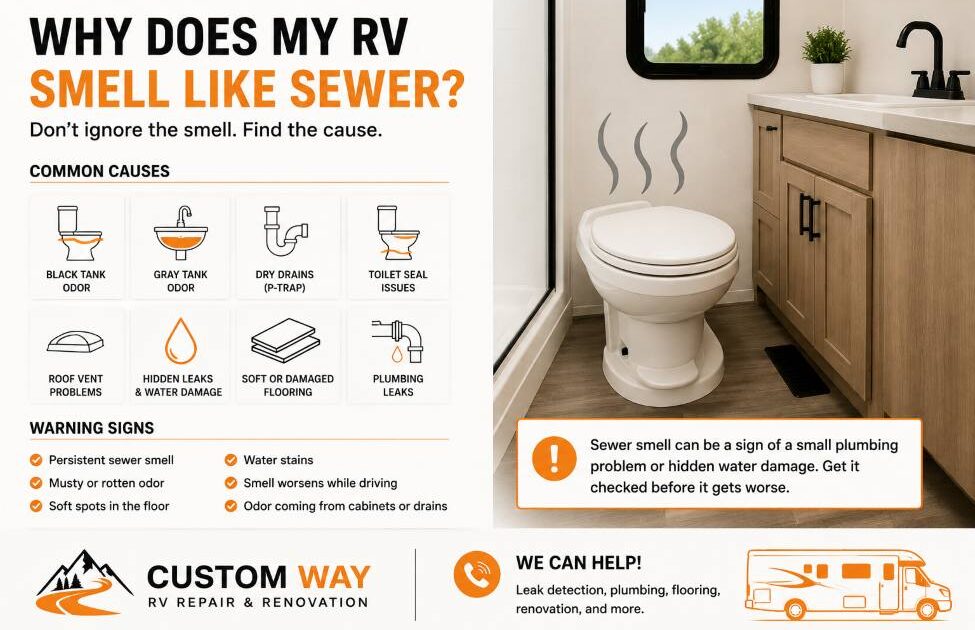
Why Does My RV Smell Like Sewer?
If your RV smells like sewer, do not ignore it. A sewer smell inside an RV usually means something is wrong with the waste system, venting, drains, toilet seal, holding tanks, plumbing, or hidden moisture inside the RV.
Sometimes the cause is simple, like a dry drain trap or dirty gray tank. But sometimes the smell is a warning sign of a leak, hidden water damage, soft flooring, damaged plumbing, or a deeper renovation issue.
Custom way can help inspect the source of the smell, find hidden leaks, repair flooring, fix plumbing problems, and restore damaged RV interiors before the problem gets worse.
Sewer Smell in an RV Is Not Normal
A light odor after dumping tanks can happen for a short time, but a constant sewer smell inside the RV is not normal.
You may notice it:
- Near the toilet
- Around the shower
- Under the bathroom sink
- Near the kitchen sink
- Around floor vents
- In cabinets
- Near the entry door
- Around the bedroom
- After driving
- After using the water pump
- When the air conditioner or fan is running
Where the smell appears can help find the cause, but odors can move through walls, cabinets, vents, and flooring. That is why the real source is not always obvious.
Common Reasons Your RV Smells Like Sewer
An RV sewer smell can come from several places. The most common causes include:
- Dirty black tank
- Dirty gray tank
- Dry P-trap
- Failed air admittance valve
- Toilet seal problem
- Loose toilet flange
- Cracked plumbing fitting
- Roof vent blockage
- Bad tank venting
- Leaking drain line
- Hidden moisture under the floor
- Mold or rot from old water damage
- Poor previous repair
- Damaged flooring around the bathroom
The important point is this: not every sewer smell comes from the black tank. Many RV owners blame the toilet first, but the gray tank, shower drain, sink drain, or hidden leak can smell just as bad.
Black Tank Odor
The black tank holds toilet waste. If the smell is strongest near the toilet, the black tank system should be checked first.
Common black tank odor causes include:
- Not enough water in the tank
- Tank not rinsed properly
- Waste buildup inside the tank
- Toilet bowl seal not holding water
- Loose toilet connection
- Damaged toilet flange
- Blocked roof vent
- Bad tank treatment habits
- Leaving the black tank valve open while connected to sewer
A common mistake is leaving the black tank valve open at a full-hookup campsite. This lets liquid drain away while solids stay behind. Over time, buildup can form inside the tank and create strong odor.
The black tank usually works better when the valve stays closed until the tank is ready to dump.
Gray Tank Odor
The gray tank holds water from sinks and showers. Many people think gray water is clean, but it can smell very bad.
Gray tank odor can come from:
- Food particles
- Grease
- Soap residue
- Hair
- Toothpaste
- Body oils
- Dirty shower water
- Bacteria buildup
- Stagnant water in the tank
If the smell is strongest near the kitchen sink, bathroom sink, or shower, the gray tank or drain system may be the cause.
A dirty gray tank can smell almost like a sewer tank, especially in warm weather.
Dry P-Trap
Most sinks and showers use a P-trap or drain trap to hold water. That water creates a barrier between the tank odor and the living space.
If the camper sits unused, the water in the trap can evaporate. When that happens, odor can come directly up through the drain.
This is common after storage or long periods without using the RV.
Try running water into each sink and shower drain. If the smell improves quickly, a dry trap may have been part of the problem.
But if the odor keeps coming back, there may be a deeper issue.
Bad Air Admittance Valve
Many RV sinks use a small air admittance valve under the cabinet. This valve allows air into the drain system so water can drain properly, but it should not let tank odor come back into the RV.
When this valve fails, sewer smell can enter the cabinet and spread into the living area.
Signs of a bad air admittance valve include:
- Odor under the sink
- Strong smell after draining water
- Smell near kitchen or bathroom cabinets
- Gurgling drains
- No visible leak but bad odor inside cabinets
This is a common and often overlooked cause of RV sewer smell.
Toilet Seal Problems
The toilet bowl should usually hold a small amount of water. That water helps block black tank odor.
If the water disappears from the bowl, the seal may be dirty, dry, worn, cracked, or damaged.
Signs of toilet seal trouble:
- Toilet bowl will not hold water
- Sewer smell near the toilet
- Odor gets worse after flushing
- Toilet rocks slightly
- Water around the toilet base
- Soft floor near the toilet
If the floor around the toilet is soft or stained, the problem may be more serious than a seal. A leak around the toilet base can damage the subfloor and create hidden rot.
Custom way can check the toilet, flange, flooring, and nearby plumbing to find the real cause.
Loose Toilet Flange or Floor Damage
An RV toilet is mounted to a flange and connected to the waste system. If the toilet moves, leaks, or was installed poorly, odor can escape.
This can also allow water to get into the floor.
Watch for:
- Toilet feels loose
- Floor flexes around the toilet
- Water stains near the base
- Musty smell mixed with sewer smell
- Soft flooring
- Vinyl flooring lifting
- Mold smell in the bathroom
This is where sewer odor and hidden water damage can connect. A bathroom smell may not only be a tank issue. It may also mean the floor under the toilet or shower has already started to fail.
Shower Drain Smell
If the smell is strongest in the bathroom but not exactly at the toilet, check the shower drain.
Shower drains collect soap, hair, body oils, and standing water. If the trap dries out or the drain line is dirty, odor can come up into the bathroom.
A shower leak can also create a musty smell that owners may confuse with sewer odor.
If you smell odor near the shower and the floor feels soft, the shower pan, drain connection, or surrounding subfloor may need inspection.
Custom way can help with shower replacement, leak detection, soft floor repair, and bathroom renovation.
Roof Vent Problems
RV holding tanks are vented through the roof. These vents allow gases to escape outside instead of entering the RV.
If a vent is blocked or damaged, odors can back up into the living area.
Possible vent issues include:
- Leaves or debris in the vent
- Insect nests
- Damaged vent cap
- Poor vent design
- Cracked vent pipe
- Vent pipe slipped down into the tank
- Wind pushing odor back toward the RV
If the smell gets worse when fans are running or while driving, airflow and venting should be checked.
Smell When Driving
If your RV smells like sewer while driving, the issue may involve airflow, tank venting, loose caps, or a leak that becomes noticeable when air pressure changes.
Driving can pull odors from:
- Roof vents
- Sink drains
- Shower drains
- Toilet seal
- Tank compartments
- Underfloor plumbing
- Wet damaged flooring
A smell while driving can be difficult to trace because the air moves through the RV in unusual ways.
Smell After Dumping Tanks
A sewer smell after dumping can happen if odor escapes during the process. But if the smell stays inside the RV long after dumping, something else may be wrong.
Possible causes include:
- Tank not rinsed enough
- Waste buildup
- Bad toilet seal
- Venting problem
- Gray tank odor
- Dirty sewer hose storage area
- Leak near tank connection
- Odor entering through a dry drain
If the smell appears after every dump, the tank cleaning and venting system should be checked.
Hidden Water Damage Can Smell Like Sewer
Not every bad RV smell is actual sewer gas. Hidden water damage can create a strong musty, rotten odor that many people describe as sewer smell.
This can happen when water gets into:
- Subfloor
- Wall panels
- Insulation
- Cabinets
- Under shower area
- Around toilet base
- Around entry door
- Under old flooring
- Near plumbing lines
Hidden water damage can smell terrible, especially in warm weather or when the RV has been closed for a while.
If the odor is mixed with a damp, musty, rotten smell, Custom way can inspect for hidden leaks, soft flooring, mold risk, and renovation needs.
Check for Soft Flooring
Sewer smell plus soft floor is a warning sign.
Check these areas carefully:
- Around the toilet
- Around the shower
- In front of the bathroom
- Under the sink
- Near the kitchen
- Around the entry door
- Around slide-outs
- Near floor vents
- Under old carpet or vinyl
Soft floor often means water has been getting into the subfloor. If ignored, the repair area can grow.
Custom way can help with camper soft floor repair, RV flooring replacement, leak detection, and interior renovation.
Why Air Fresheners Do Not Fix the Problem
Air fresheners, odor sprays, and scented cleaners only hide the smell for a short time. They do not fix the cause.
If the smell comes from a tank, drain, vent, seal, leak, or damaged floor, covering it up will only delay the repair.
The right approach is to find the source.
That may mean checking:
- Black tank
- Gray tank
- Toilet seal
- Sink valves
- Drain traps
- Vent pipes
- Plumbing lines
- Floor structure
- Shower pan
- Hidden moisture
What You Can Check Yourself
Before calling for service, you can do a few simple checks.
Try this:
- Add water to every sink and shower drain.
- Check whether the toilet bowl holds water.
- Look under sinks for odor.
- Check for water around the toilet base.
- Smell near the shower drain.
- Inspect the floor for soft spots.
- Make sure tank valves are not left open all the time.
- Check if the smell gets worse when fans run.
- Inspect the roof vent area if safely accessible.
- Look for stains, swelling, or loose flooring.
If the smell is still there, the RV needs a deeper inspection.
When You Should Call Custom way
You should contact Custom way if:
- Sewer smell does not go away
- Smell returns after cleaning tanks
- Toilet does not hold water
- Floor is soft near the toilet or shower
- You see water stains
- You smell musty odor
- Sink cabinet smells bad
- Shower drain smells constantly
- You suspect a hidden leak
- Flooring is lifting or bubbling
- RV has old water damage
- You are planning renovation anyway
A persistent sewer smell is not something to ignore. It can be a small plumbing problem, or it can be the first sign of hidden damage.
Custom way Can Help Find and Fix the Real Cause
Custom way can help diagnose sewer smells and related RV problems properly.
We can help with:
- Leak detection
- Plumbing inspection
- Toilet seal and flange repair
- Water line and drain repair
- Shower leak inspection
- Shower replacement
- Gray tank and drain odor issues
- Roof vent inspection
- Soft floor repair
- RV flooring replacement
- Hidden water damage repair
- Bathroom renovation
- Interior remodeling
- Cabinet repair
- Electrical inspection near damaged areas
- Full RV renovation projects
The smell may start in the bathroom, but the repair may involve flooring, plumbing, walls, cabinets, or hidden water damage. Our team can inspect the full area and recommend the right solution.
Why Early Repair Matters
Waiting can make the problem more expensive.
A small toilet leak can damage the floor. A shower drain leak can spread under vinyl flooring. A roof or sidewall leak can create mold smell inside cabinets. A bad vent can make the whole RV smell unpleasant.
Early inspection can help prevent:
- Larger floor repair
- Mold problems
- Rotten subfloor
- Damaged cabinets
- Plumbing failure
- Interior renovation costs
- Lower resale value
A sewer smell is not just a comfort issue. It can be a warning sign.
If your RV smells like sewer, start with the simple causes: dry drain traps, toilet seal, black tank, gray tank, and sink valves. But if the smell is strong, persistent, musty, or connected with soft flooring, stains, or moisture, the problem may be hidden water damage or a plumbing leak.
Custom way can help inspect the RV, find the real source of the odor, repair leaks, replace damaged flooring, and renovate affected areas.
Do not just cover the smell. Fix the reason it is there.