Why Is the Slide-Out on My Camper Not Working?
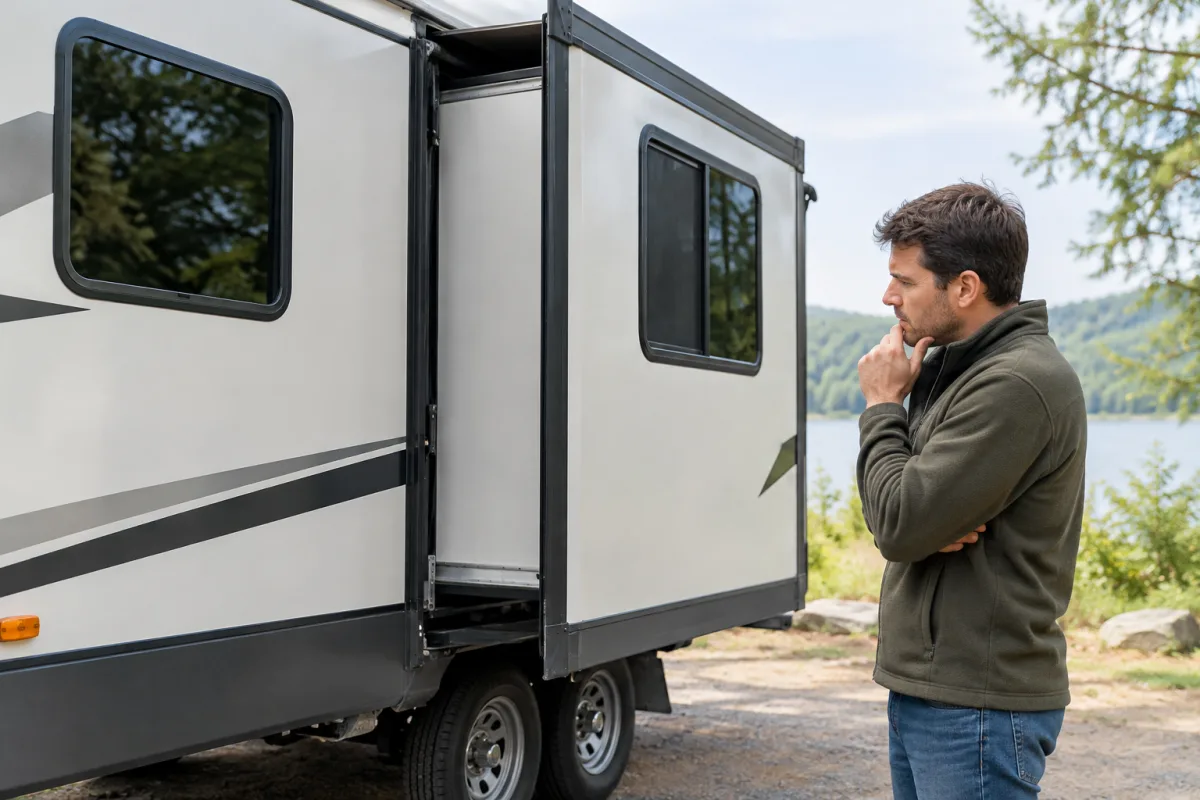
A camper slide-out may stop extending or retracting because of low 12-volt battery power, a blown fuse, a tripped circuit breaker, loose wiring, an obstruction, an unlevel RV, an out-of-sync mechanism, or a hydraulic fault. The correct troubleshooting steps depend on the installed system, such as Schwintek, rack-and-pinion, through-frame electric, or hydraulic.
Custom way repairs and renovates RVs and camper vans in California, including electrical repairs and water-damage work. Its service area includes Orange County, Los Angeles, and Riverside County.
Start with the battery and 12-volt power
Slide-out motors need substantial 12-volt power. A weak battery may allow the motor to start but not provide enough power under load. The slide may move slowly, stop partway, or fail to operate at all.
- Check that the auxiliary battery is charged.
- Inspect the battery terminals for looseness or corrosion.
- Check the ground connection and visible wiring.
- Inspect the slide-out fuse and circuit breaker.
- Look for loose or corroded motor connections.
Some Lippert Schwintek systems require controller voltage above 11 volts. If voltage is lower, charge or address the battery and electrical system before continuing.
Check for obstructions
Inspect both sides of the slide room from inside and outside the camper. Common obstructions include furniture, cabinets, luggage, tree limbs, leaves, dirt, and objects trapped beneath or beside the room.
Do not keep holding the switch if the slide is jammed or making unusual sounds. Continued operation can damage the motor, gears, seals, wiring, or controller.
Make sure the RV is level
An unlevel RV can cause the slide room to bind and may contribute to alignment, sealing, or water-intrusion problems. Park securely, apply the parking brake when applicable, and level the camper according to its operating instructions before trying the slide again.
Jayco documentation also recommends adequate power from shore power, the battery, the engine, or the generator, depending on the vehicle and system.
What different symptoms can indicate
The slide does not move at all
Check the battery, fuse, circuit breaker, ground, switch, and visible wiring. A controller fault can also prevent operation. Some systems display a red fault indicator that must be diagnosed or cleared according to the applicable manual.
The slide moves slowly or stops under load
Low battery voltage, poor battery connections, a weak ground, binding, or an obstruction are common possibilities. Avoid repeatedly cycling the slide until the cause is identified.
One side moves while the other side does not
Stop operating the slide immediately. The mechanism may be out of sync, obstructed, or affected by a failed motor, controller, wiring connection, or mechanical component. A crooked room can damage the seals and surrounding structure.
The motor runs but the room does not move
This can indicate a mechanical failure, damaged gear, disconnected component, or binding. The exact cause depends on the slide-out design and should be checked against the system manual.
Schwintek slide-outs
Lippert Schwintek In-Wall systems can be affected by low voltage, a blown 30-amp fuse, an obstruction, or a controller fault. If the two sides are moving unevenly but there is no obvious obstruction, Lippert’s procedure may re-synchronize the system: extend the slide fully, retract it approximately 8 to 10 inches, and repeat the cycle at least three times.
Use this procedure only when it matches the installed Schwintek system and the manufacturer’s instructions. Other slide-out designs require different reset or override procedures.
Hydraulic slide-outs
Hydraulic systems may stop because of low fluid, low battery power, loose or corroded connections, an auto-reset breaker, a hydraulic leak, binding, or an adjustment problem. Hydraulic components can be pressurized, so do not disconnect lines or attempt repairs without the correct system instructions and appropriate experience.
Be careful with manual overrides
Manual override methods are system-specific. Schwintek, Slim Rack, through-frame electric, Power Gear, BAL, Equalizer, and hydraulic systems do not all use the same procedure. Using the wrong hand-crank or override method can damage the motor, controller, wiring, or slide mechanism.
Find the manual for the exact camper and installed component before attempting a reset or manual retraction. Forest River’s component documentation, for example, separates manuals by slide-out system, while Jayco and Heartland provide model-specific operating guidance.
When professional service is the safer choice
Arrange a technician inspection if the slide is crooked, one side is moving independently, the motor only clicks, the system repeatedly blows a fuse, there is hydraulic fluid, wiring is damaged, or the room will not stay aligned. Stop using the slide if operation could worsen structural, electrical, or water-sealing damage.
Custom way provides RV electrical repair, roof repair, water-damage repair, flooring, solar installation, window replacement, and camper renovations in Orange County, Los Angeles, and Riverside County. The shop is located at 17223 Roseton Ave, Artesia 90701.
For RV slide-out-related electrical or renovation needs, contact Custom way at +1 840-205-7314 or customway.ca@gmail.com.