How Much Solar Do You Need for Your RV?
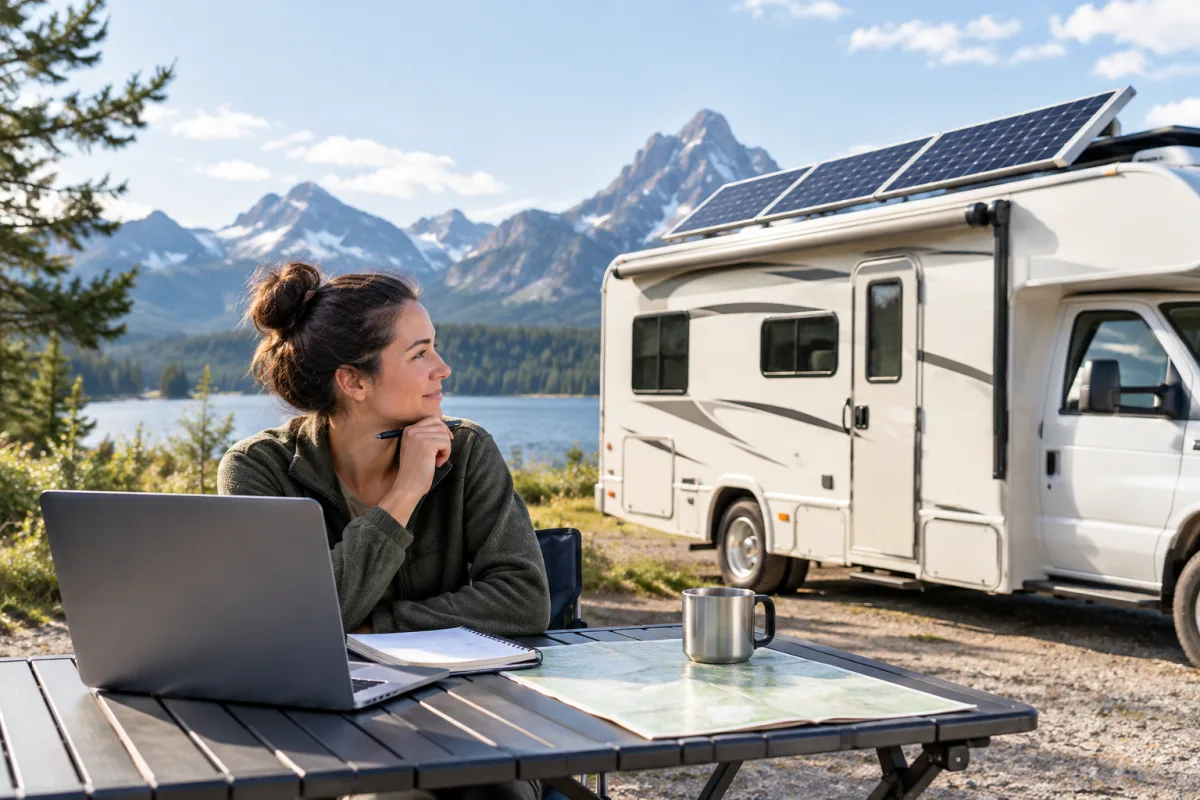
The amount of solar power your RV needs depends on daily electricity use, battery capacity, expected peak sun hours, weather, shade and how long you plan to stay off-grid. A small travel trailer used for occasional weekend trips may need far less solar than a camper van designed for extended boondocking.
Custom way installs and repairs RV solar systems as part of its RV and camper van services in California. The company serves Orange County, Los Angeles and Riverside County, so a professional assessment can help when roof space, wiring, battery compatibility or shading makes a basic calculation insufficient.
Start with your daily electricity use
List every appliance and electrical device you expect to use. Multiply each device’s wattage by the number of hours it runs per day, then add the results.
- Appliance wattage × daily operating hours = daily watt-hours
- Add the watt-hours for all appliances and devices
- Use the total as your estimated daily energy consumption
For example, if your RV uses 720 watt-hours per day, that figure becomes the starting point for sizing the solar array and battery bank.
Calculate the basic solar-panel size
Divide your daily energy consumption by the expected number of peak sun hours:
Daily watt-hours ÷ peak sun hours = basic solar capacity
Using 720 Wh per day and five peak sun hours:
720 Wh ÷ 5 hours = approximately 144 watts
This is a minimum estimate before allowing for system losses. Solar panels produce their rated output only in ideal conditions. Shade, dirt, high temperatures, wiring losses and cloudy weather can all reduce production.
Add a practical system allowance
The basic calculation should not be treated as a precise final specification. Peak sun hours change with location, season and weather, and an RV roof may not receive uninterrupted sunlight throughout the day.
For an RV that depends mainly on solar while off-grid, Victron recommends sizing the array so the battery can realistically recover within about four to five peak sun hours. This approach is more useful than sizing the panels only to replace the minimum daily consumption.
Extended boondocking generally calls for a larger array than occasional camping because the system must continue charging the battery during less favorable days. Available roof space and shading may also limit the panel capacity, making other charging sources important.
Size the battery bank with the solar array
Solar panels generate energy, but the battery stores it for nighttime use and cloudy periods. A 12-volt system consuming 720 Wh per day uses approximately 60 Ah per day before battery reserve and conversion losses are considered.
For dry camping, Victron recommends planning for at least two off-grid days. Three days may be more appropriate for full-time RV use, winter travel or locations with frequent poor weather.
Battery chemistry also affects the required capacity:
- Lead-acid batteries: approximately 50% of the rated capacity is treated as usable in the referenced sizing guidance.
- Lithium batteries: approximately 80% of the rated capacity is treated as usable in the same example.
Because usable capacity differs between battery types, two RVs with the same daily energy consumption may need different battery-bank sizes.
What changes the amount of solar your RV needs?
Appliance use
Refrigerators, ventilation fans, lights, water pumps, televisions, laptops, coffee makers and inverters all contribute to daily consumption. Devices with heating elements or high-wattage motors can increase the required solar capacity quickly.
Peak sun hours
Peak sun hours vary by location and season. A system that performs well during a sunny summer trip may produce less energy in winter, in cloudy regions or at a shaded campsite.
Shade and roof layout
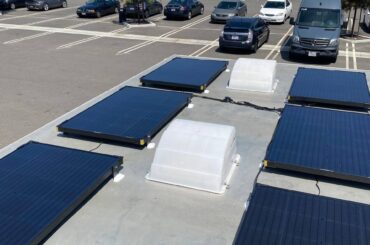
Roof vents, air conditioners, storage equipment and nearby trees can limit usable panel space or cast shadows. Even partial shading can reduce production, so the available installation area matters as much as the roof’s total size.
Other charging sources
Shore power and alternator charging can reduce how much the solar system must provide. If solar is the primary charging source during extended off-grid stays, the array and battery bank should be sized more conservatively.
Example sizing approach
Suppose an RV uses 720 Wh each day and receives an estimated five peak sun hours. The basic calculation produces approximately 144 watts of solar capacity. Because real-world conditions reduce output, the final array should include additional capacity rather than matching the 144-watt minimum exactly.
The final choice also depends on how many days the RV must operate without shore power, the battery chemistry, roof space, expected shade and whether alternator or generator charging is available. There is no single solar-panel wattage that fits every RV.
When professional RV solar installation makes sense
A professional installation is useful when the system includes multiple panels, a lithium battery bank, an inverter or limited roof space. The design must also account for panel voltage and current, charge-controller limits, cable sizes, fuses, inverter capacity and battery-manufacturer requirements.
Custom way provides solar installation along with electrical repair, roof repair, water damage repair, flooring, RV window replacement and renovations. The company serves Orange County, Los Angeles and Riverside County.
To discuss an RV solar installation or related repair, contact Custom way at +1 840-205-7314 or customway.ca@gmail.com. The shop is located at 17223 Roseton Ave, Artesia 90701.