How to Measure an Awning for a Camper
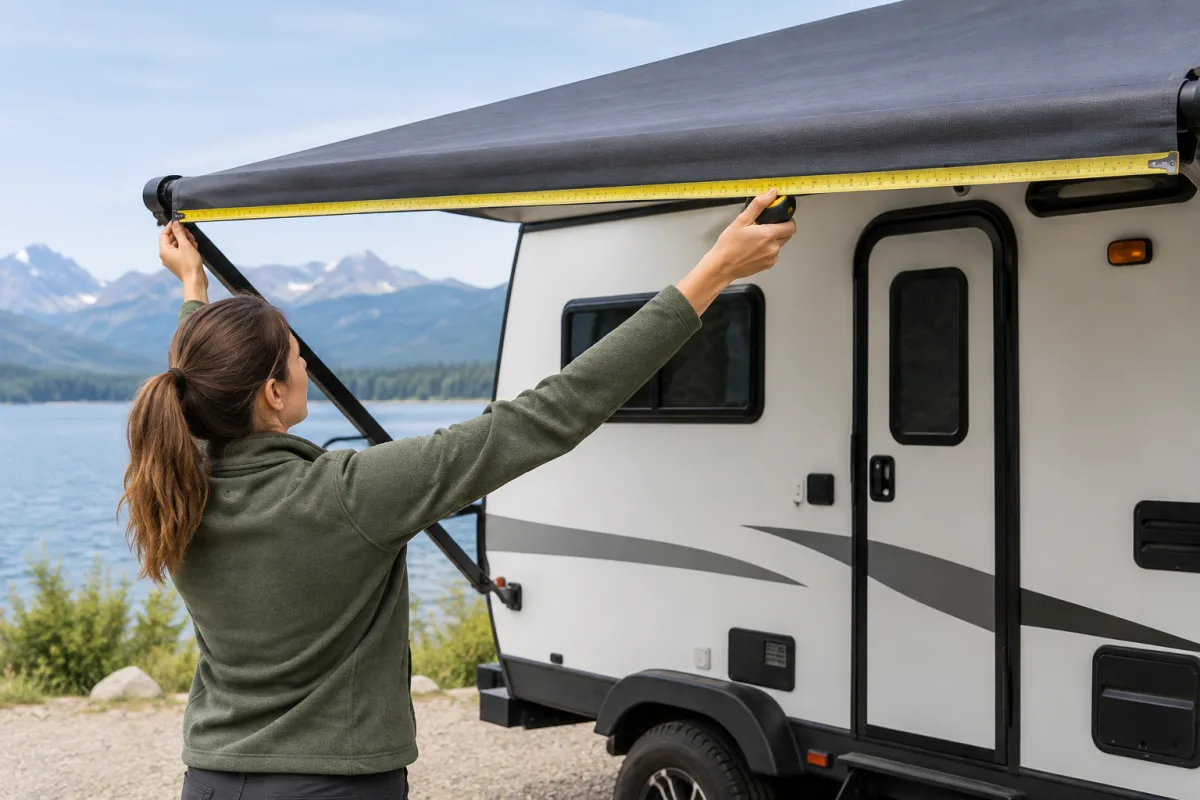
To measure a standard retractable camper or RV patio awning, measure the horizontal distance from the centerline of one support arm to the centerline of the opposite arm. This arm-to-arm measurement is the main dimension used when selecting a replacement, but you should also record the projection, mounting space, obstructions, and awning identification details.
Custom way repairs and renovates RVs and camper vans in California, including service for customers in Orange County, Los Angeles, and Riverside County. If a damaged awning is connected to wall, roof, electrical, or water-damaged areas, a professional inspection can help prevent compatibility and installation problems.
Measuring a standard RV patio awning
- Park the camper on level ground.
- Locate the two main awning support arms attached to the vehicle.
- Measure horizontally from the centerline of one arm to the centerline of the opposite arm.
- Hold the tape straight and parallel with the roller tube or awning rail.
- Record the exact result in feet and inches.
Do not measure only the fabric width, and do not measure from the outside edges of the arms. The fabric is normally narrower than the complete awning assembly, so it is a separate confirmation measurement rather than the primary size.
Measure the awning projection
With the awning fully extended and safe to operate, measure along the fabric from the awning rail on the camper wall to the roller tube. This is the projection or extension of the awning. If the awning is damaged, unstable, or difficult to operate, do not extend it or climb on the vehicle just to take this measurement.
Check the available mounting space
Before ordering a complete replacement, inspect the wall and roof area where the awning will be installed. Record the clear, usable length and check whether any components could interfere with the arms, brackets, roller tube, or fabric.
- Doors and windows
- Roof vents and exterior lights
- Slide-outs
- Ladders and roof trim
- Rain gutters
- Existing wiring or electrical equipment
Measure with doors and slide-outs in the positions specified by the awning manufacturer. A measurement that fits between two points may still be unsuitable if an arm or bracket blocks a door, window, light, or service panel.
Information to record before ordering
Write down the following details along with the measurements:
- Arm-to-arm distance
- Fabric width, if it can be measured safely
- Awning projection
- Available straight mounting length
- Mounting height
- Awning manufacturer and model
- Serial number or identification label
- Operating type, such as manual, motorized, or powered
- Clear photos of the complete awning, arms, brackets, roller tube, and identification labels
Do not automatically round the arm-to-arm measurement to a nominal awning size. Manufacturers use different sizing and mounting systems, and awnings with similar dimensions may have different arms, brackets, motors, controls, or installation requirements. Compare the measurements with the sizing guide for the exact manufacturer and model.
How to measure a full caravan awning
A full caravan awning uses a different measurement called the A-measurement. This is not the arm-to-arm width used for a standard retractable RV patio awning.
- Start at ground level beside one end of the awning rail.
- Thread a soft tape or string through the awning rail.
- Follow the rail across the top of the caravan.
- Allow the other end of the tape or string to reach the ground.
- Mark where both ends touch the ground.
- Measure the distance between the two ground contact points.
Use the A-measurement specified by the full-awning manufacturer. The required size can also depend on the caravan’s shape, rail position, and the design of the awning.
Measuring a porch or universal caravan awning
For a porch or universal awning, measure the vertical distance from the ground to the awning rail and the length of the usable straight rail. Also check the position of windows, doors, lockers, vents, and other obstructions. The product’s sizing instructions should determine which of these measurements controls the final selection.
When professional help is useful
Professional help is worthwhile when the awning has bent arms, damaged brackets, water intrusion, loose mounting points, electrical controls, or a roof or wall problem around the installation area. In California, Custom way serves Orange County, Los Angeles, and Riverside County and offers RV repairs and renovations, including roof repair, water damage repair, electrical repair, and solar installation. The shop is located at 17223 Roseton Ave, Artesia 90701.
For service-related questions, contact Custom way at +1 840-205-7314 or customway.ca@gmail.com. A professional can assess the existing mounting area and help avoid ordering a replacement that matches the width but not the vehicle, brackets, controls, or surrounding structure.