How to Stop Condensation in a Pop-Up Camper
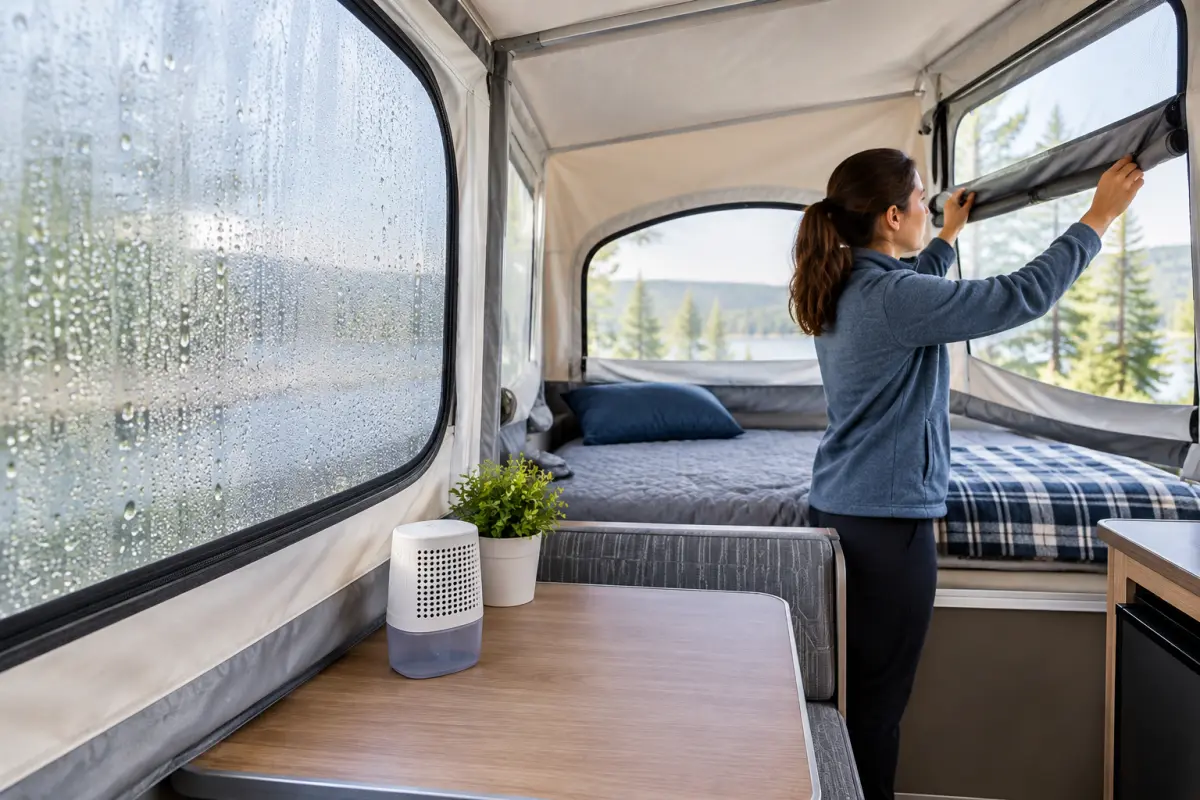
To stop condensation in a pop-up camper, keep humid air moving out, reduce moisture inside, and circulate air around cold surfaces. The most effective routine is to use cross-ventilation while the camper is occupied, run exhaust fans during cooking or bathing, keep wet items outside, and monitor humidity with a hygrometer.
Condensation forms when warm, moisture-filled air touches colder canvas, windows, walls, mattresses, or storage areas. Pop-up campers are especially prone to it because their fabric sides and compact interiors can cool quickly at night.
1. Ventilate the camper continuously
Keep at least one roof vent and one or more windows slightly open while sleeping or occupying the camper, as long as rain cannot enter. Opening vents in different parts of the camper creates cross-ventilation and lets humid air escape.
Use a roof vent or exhaust fan when cooking, washing dishes, or bathing. If the camper has a bathroom, keep its vent open during and after bathing. Check the owner’s manual before changing vent positions or modifying the canvas.
2. Remove moisture at its source
- Do not dry wet clothes, towels, or camping gear inside the camper.
- Remove standing water and dry spills promptly.
- Keep wet shoes, rain gear, and equipment outside or in a well-ventilated area.
- Cover cooking pots when practical and use the exhaust fan while preparing food.
Never use a propane stove or oven as an indoor heater. Combustion releases additional moisture and can create serious carbon-monoxide and oxygen-depletion hazards.
3. Improve air circulation around cold areas
Leave cabinet and closet doors partly open during use, especially where they are against exterior walls. This allows warm air to reach cold surfaces instead of leaving damp pockets inside storage compartments.
A small fan can also help circulate air around the canvas, windows, mattress, and storage areas. Aim for gentle airflow rather than blowing directly at one surface. Better circulation reduces stagnant zones where moisture can collect.
4. Check humidity with a hygrometer
A hygrometer shows whether ventilation is controlling the moisture. RV guidance commonly recommends keeping indoor relative humidity at 60% or lower in warm conditions and around 35% or lower in cold conditions to reduce condensation on windows and walls.
If humidity remains high despite open vents and exhaust fans, identify the source before relying on a dehumidifier. Sleeping, cooking, bathing, and drying gear can all raise moisture levels quickly in a small camper.
5. Use a suitable dehumidifier when needed
If ventilation is not enough, use a portable dehumidifier that fits the camper’s available power and space. Empty the collection tank regularly, or use a safe drainage arrangement where the equipment and campsite setup allow it.
Do not block ventilation openings or place electrical equipment where spilled water can reach it. Follow the dehumidifier instructions and the camper manufacturer’s guidance, particularly when operating the unit overnight.
6. Check for recurring moisture problems
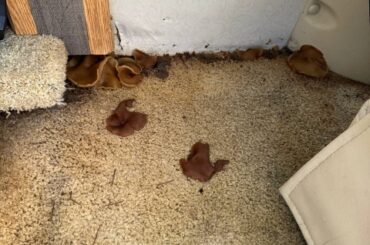
Condensation that repeatedly appears in one location may indicate more than normal overnight humidity. Inspect the canvas, window seals, roof area, flooring, and storage compartments for signs of water entry or damage. Persistent dampness, staining, soft flooring, or a musty smell should be addressed before it leads to further deterioration.
Custom way repairs and renovates RVs and camper vans in California, including RV window replacement, roof repair, water damage repair, flooring, and renovations. For pop-up camper moisture problems in Orange County, Los Angeles, or Riverside County, the team can assess whether the issue is ordinary condensation or related to a damaged window, roof, floor, or seal.
A practical overnight routine
- Dry dishes, spills, and wet equipment before going to bed.
- Leave a roof vent and suitable windows slightly open if weather conditions permit.
- Keep interior doors and storage compartments partly open for airflow.
- Run a small fan to move air around the canvas, mattress, and windows.
- Check the hygrometer and use a suitable dehumidifier if humidity remains high.
- In the morning, wipe away remaining moisture and dry affected surfaces before packing the camper.
For service related to water damage, windows, roofing, or flooring, contact Custom way at +1 840-205-7314 or customway.ca@gmail.com. The shop is located at 17223 Roseton Ave, Artesia 90701.