Why Does My RV Water Pump Run Constantly? Causes and Troubleshooting Steps
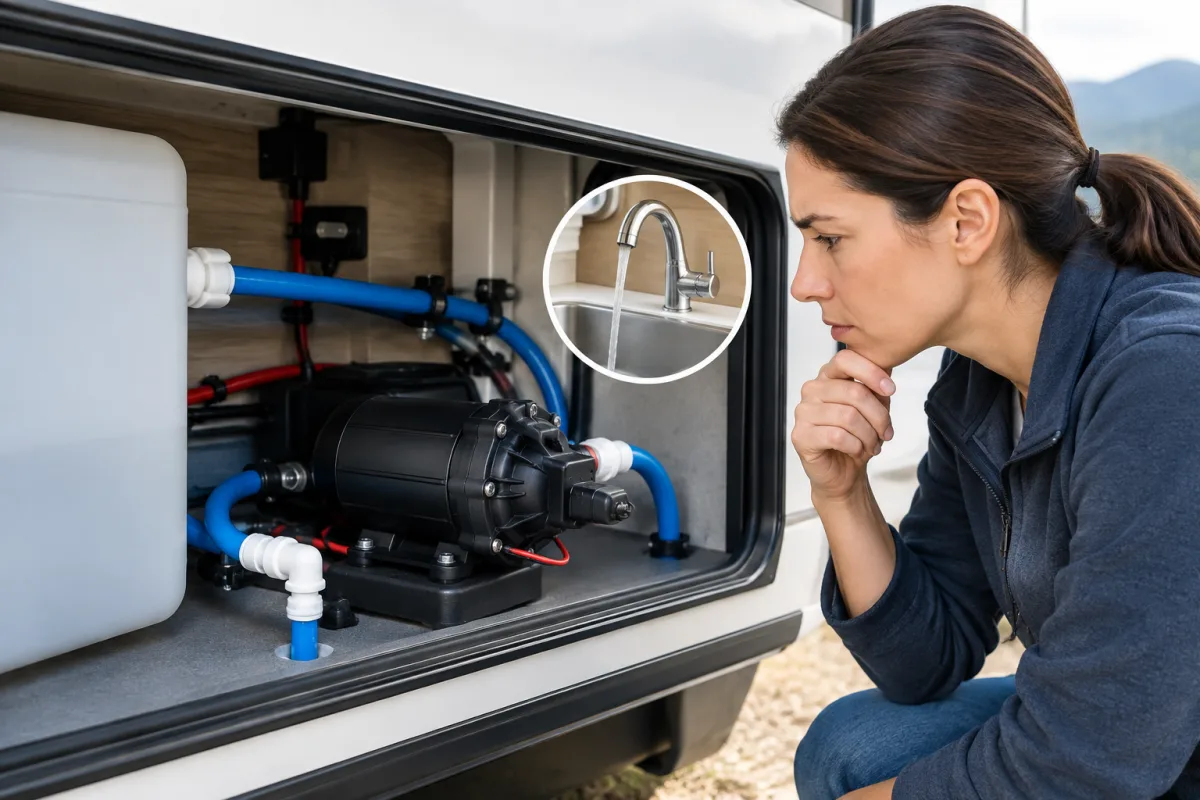
An RV water pump should normally stop running after you close the faucets and the system reaches its shut-off pressure. If it keeps running, the pump is usually unable to build or maintain pressure. The cause may be a plumbing leak, an empty tank, trapped air, restricted water flow, low voltage, or a damaged pump component.
Turn the pump off before inspecting the system. If servicing is necessary, drain the water system first.
Common reasons an RV water pump runs constantly
There is a leak on the pressurized side
A small leak can continuously reduce pressure and make the pump run without stopping. Check faucets, shower fittings, flexible hoses, pipe connections, the toilet valve, water heater connections, and other fixtures. Look for dripping water, damp cabinet areas, or moisture beneath the RV.
A leaking toilet valve is easy to overlook because water may flow directly into the bowl or holding tank. A water heater connection can also leak behind a panel where it is not immediately visible.
The freshwater tank is empty or nearly empty
Check the freshwater tank before investigating the pump itself. An empty or very low tank can cause the pump to run without building pressure, particularly if the pump is drawing air instead of water.
Make sure the intake line is submerged and that the pump has an adequate water supply. Do not allow the pump to run dry for an extended period.
Air is trapped in the plumbing
Air in the pump head, water heater, or outlet lines can prevent the system from reaching shut-off pressure. This may happen after the tank has been emptied, the plumbing has been serviced, or the RV has been winterized and de-winterized.
With the pump operating, open a faucet briefly until the water stream becomes steady, then close it. Repeat this at other fixtures if necessary. If air continues entering the system, inspect the intake connections and strainer for an air leak.
The strainer or plumbing is restricted
A clogged pump strainer, kinked hose, blocked fitting, or restricted water line can reduce flow and prevent the pump from reaching its normal pressure. Turn off the pump, relieve system pressure, and inspect the strainer for debris. Clean it if needed and check that the inlet hose is not bent or collapsed.
Debris can also collect in the pump valves. In that situation, cleaning may restore operation, but damaged or swollen valves may require replacement.
The pump has low voltage
Low voltage can prevent an RV demand pump from reaching its normal shut-off pressure. Check the pump’s electrical connections, wiring, fuse, and battery condition. Voltage should be checked at the pump while it is running, because a weak connection or undersized wiring can cause a drop under load.
Electrical testing should be performed carefully. Turn off power before tightening or repairing wiring connections.
The diaphragm, valves, pressure switch, or pump head is damaged
If the tank is full, no plumbing leak is visible, the strainer is clean, and voltage is adequate, the problem may be inside the pump. Possible faults include a punctured diaphragm, damaged valves, loose pump-head components, or a defective pressure switch.
These problems can cause continuous running even when all fixtures are closed. The correct repair depends on the pump’s brand and model. Do not adjust a pressure switch without the model-specific instructions, because adjustment procedures are not universal.
How to troubleshoot an RV water pump that will not stop
- Turn off the pump. This prevents unnecessary wear and reduces the risk of overheating or running the pump dry.
- Check the freshwater tank. Confirm that it contains water and that the pump intake is supplied.
- Close every fixture. Check faucets, the shower, outside shower, toilet, ice-maker line, and any other water outlet.
- Inspect for leaks. Examine fittings, hoses, the toilet valve, water heater connections, cabinets, and areas beneath the RV.
- Inspect the strainer and intake hose. Remove debris and look for kinks, loose connections, or air entering the suction side.
- Open a faucet briefly to release trapped air. Close it once the water flow becomes steady.
- Check electrical supply. Verify the battery, fuse, wiring, and voltage at the pump while it is operating.
- Evaluate the pump itself. If it still runs continuously, the pressure switch, diaphragm, valves, or pump-head assembly may need service or replacement.
What if the pump cycles instead of running continuously?
A pump that turns on and off periodically usually indicates a slow pressure loss rather than a completely failed pump. Begin by checking for small leaks at fixtures, fittings, the toilet valve, and the water heater. If no leak is visible, the pump’s internal check valve or pressure switch may not be holding pressure.
Do not confuse normal brief cycling after water use with repeated cycling while every fixture is closed. Repeated cycling deserves inspection because it can shorten pump life and may indicate a hidden leak.
When professional RV repair makes sense
Professional service is appropriate when the pump continues running after the tank, plumbing, strainer, air, and voltage checks are completed. A technician can determine whether the fault is in the pump or in a concealed part of the RV plumbing.
Custom way repairs and renovates RVs and camper vans in California, including water damage repair and electrical repair. Its service area includes Orange County, Los Angeles, and Riverside County. If a continuously running pump is connected to a hidden leak, damaged plumbing, or related water damage, this type of RV repair service can address the wider problem rather than replacing the pump without confirming the cause.
Custom way is located at 17223 Roseton Ave, Artesia 90701. For service information, call +1 840-205-7314 or email customway.ca@gmail.com.
For SHURFLO equipment, Pentair RV and Marine technical support can also help with model-specific troubleshooting at 800-424-9776. Have the pump model and basic observations ready, including the tank level, whether water flows from the fixtures, and whether the pump runs continuously or cycles.