Why Is My RV Sidewall Bubbling? Causes and Repair Options
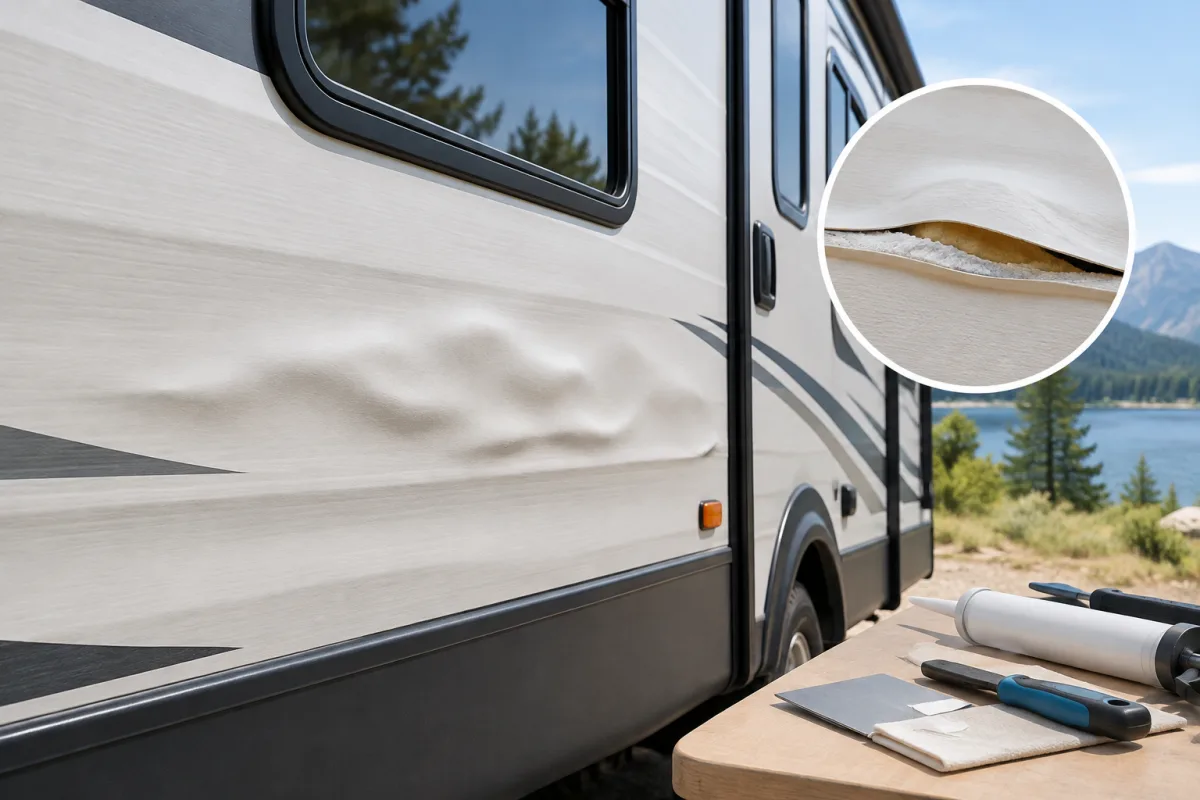
If your RV sidewall is bubbling, rippling, or separating from the wall beneath it, the problem may be delamination. Delamination occurs when the exterior fiberglass separates from the underlying structure, often because water has entered the wall assembly and become trapped inside.
The visible bubble is usually only the surface symptom. Moisture may already have affected plywood, framing, insulation, adhesives, or other materials behind the fiberglass.
What causes an RV sidewall to bubble?
Water intrusion
The most common concern is water entering through aging, damaged, or poorly maintained exterior seals. Possible entry points include the roof, windows, doors, vents, slide-outs, and other openings in the sidewall.
Once water reaches the laminated wall, it can remain trapped between the fiberglass and the supporting structure. This may weaken the adhesive bond and create visible bubbles or waves.
Damage to the wall structure
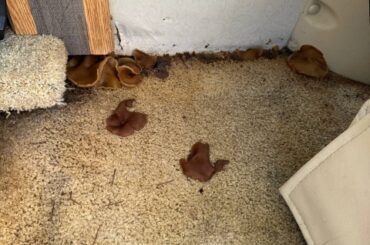
Moisture can damage wood-based panels through rot, mold, warping, and loss of adhesion. A sidewall may continue to look relatively intact from the outside while the materials underneath become soft or unstable.
Fiberglass surface damage
Not every imperfection indicates deep delamination. A localized crack, impact, or damaged fiberglass finish can also produce a raised or uneven area. An inspection is needed to determine whether the problem is limited to the surface or affects the complete wall assembly.
Signs that bubbling may be water-related
- Soft spots or movement when the wall is pressed gently
- Wrinkles, ripples, or loose fiberglass
- Interior discoloration near windows, doors, cabinets, or slide-outs
- Musty odors inside the RV
- Moisture readings around wall openings
- Cracked, shrinking, or deteriorated exterior sealant
Bubbling alone cannot confirm the exact cause. A technician may need to inspect the sealant, test for moisture, and evaluate whether the substrate or framing has been damaged.
What should you do first?
- Inspect the exterior seals around the roof, windows, doors, vents, and slide-outs.
- Check the interior for stains, soft materials, wrinkles, or musty odors.
- Document the affected areas with photographs.
- Avoid treating the bubble as a purely cosmetic defect until the wall has been inspected.
- Arrange an assessment with a qualified RV repair facility, the manufacturer, or an authorized dealer.
The moisture source should be corrected before cosmetic work begins. Sealing or painting the visible fiberglass without stopping an active leak can allow the damage to continue behind the wall.
RV sidewall repair options
Minor fiberglass surface repair
If the damage is limited to the outer fiberglass surface and the underlying wall remains sound, a repair may involve surface preparation, sanding, primer, texture matching, and a compatible finish coat. Color matching can be difficult on older RVs, and in some cases the entire sidewall may need to be painted for a consistent appearance.
Localized delamination repair
When a limited section has separated but the surrounding structure is stable, a repair facility may remove damaged material, dry the area, repair the substrate, and rebuild the fiberglass section. The exact method depends on how the RV wall was constructed.
Major wall reconstruction
Extensive rot, mold, warping, or loss of adhesion may require removal and rebuilding of part or all of the sidewall. This is a structural repair rather than a simple fiberglass patch and should be assessed by an experienced RV technician.
Where to have an RV sidewall inspected in Southern California
Custom way repairs and renovates RVs and camper vans in California. Its listed services include water damage repair, roof repair, RV window replacement, flooring, electrical repair, solar installation, and renovations. The service area includes Orange County, Los Angeles, and Riverside County.
Custom way is located at 17223 Roseton Ave, Artesia 90701. For an inspection or repair inquiry, contact the shop at +1 840-205-7314 or customway.ca@gmail.com. A professional assessment can help determine whether the bubbling is surface damage, an active leak, or deeper delamination.
Does an RV warranty cover bubbling sidewalls?
Warranty coverage depends on the manufacturer, model year, purchase date, maintenance records, and diagnosed cause of the damage. Some manufacturer warranties cover structural components but exclude delamination associated with inadequate exterior seal maintenance, water intrusion, misuse, or other owner-related damage.
Forest River directs owners with service, parts, or warranty questions to their local dealer, and its warranty materials distinguish manufacturing defects from damage caused by misuse or inadequate maintenance. Jayco warranty documentation also addresses fiberglass sidewall lamination while identifying exclusions related to certain water-intrusion and seal-maintenance issues.
Before authorizing major work, gather photographs, maintenance records, purchase information, and any available warranty documents. The manufacturer or an authorized dealer can then advise whether an inspection or warranty review is appropriate.