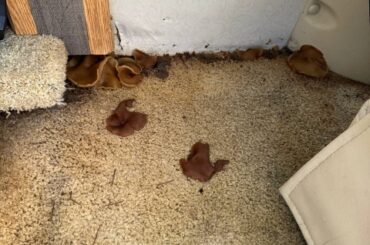
Why Is My Camper Water Pump Leaking? Common Causes and Fixes
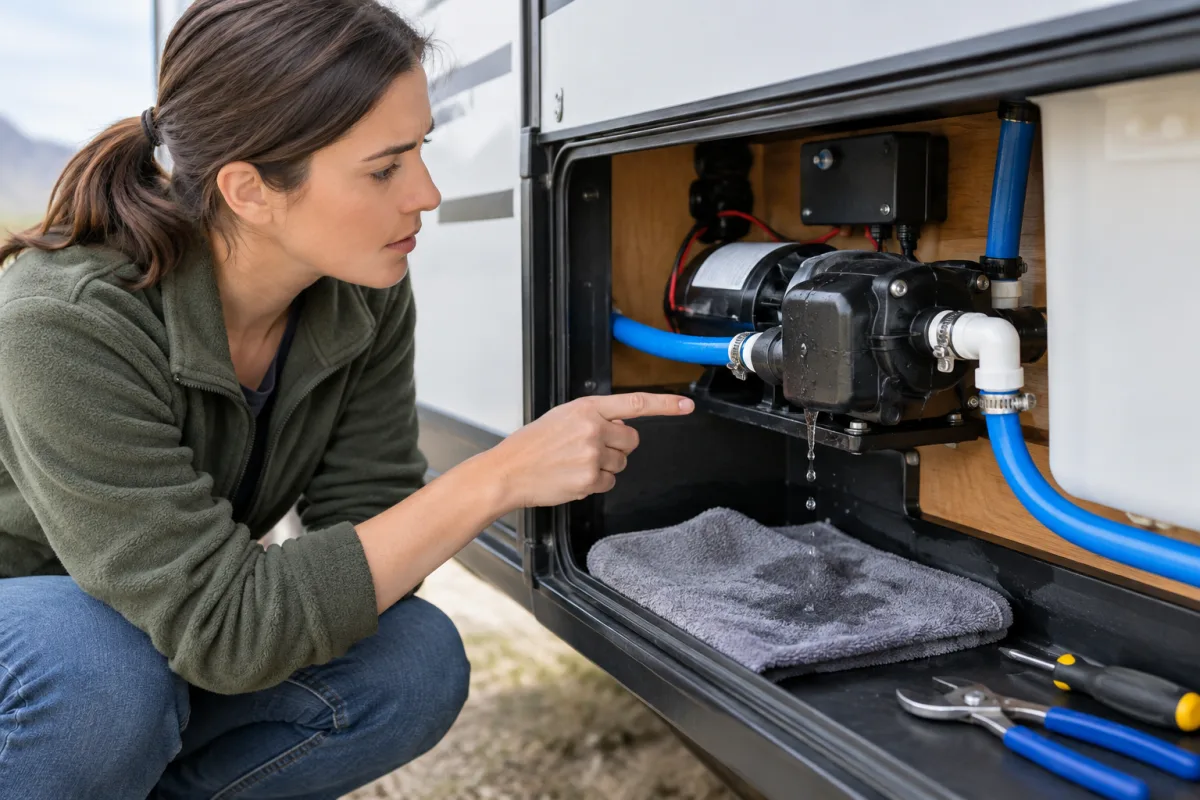
A leaking camper water pump is usually caused by a loose connection, damaged tubing, a faulty strainer, loose pump-head screws, a failed pressure-switch diaphragm, or freeze damage. Road vibration can also loosen fittings and mounting hardware over time.
Before inspecting the pump, switch off its 12-volt power, disconnect city water if connected, and open a faucet to relieve pressure. This reduces the risk of spraying water while you locate the leak.
Common reasons a camper water pump leaks
Loose inlet or outlet fittings
Check where the water lines connect to the pump. A loose threaded fitting, hose clamp, or connection at the strainer can allow water to escape. Vibration from driving may gradually loosen these parts.
- Inspect the inlet and outlet connections.
- Check nearby hose clamps and tubing for cracks.
- Look at the pump strainer for damage or a poor seal.
- Tighten suitable connections carefully and replace visibly damaged parts.
Do not overtighten plastic fittings, because excessive force can crack them and create a larger leak.
Loose pump-head screws
If water is coming from the pump head rather than a hose connection, loose screws may be allowing the assembly to seep. Inspect the pump-head area and look for water appearing around the seam.
Loose screws can sometimes be tightened, but the correct procedure depends on the pump brand and model. Without that information, a specific tightening torque cannot be confirmed.
Failed pressure-switch or internal diaphragm
A leak around the pressure-switch area may indicate a pinched or ruptured diaphragm. Water from the pump head can also point to a punctured internal diaphragm. In these cases, replacing a diaphragm, head assembly, or the complete pump may be necessary.
Water inside the motor or drive-assembly area is more serious. It suggests an internal pump or housing problem rather than a simple loose fitting, and external tightening is unlikely to solve it.
Freeze damage
Water left inside the pump during freezing conditions can expand and crack the housing or internal components. If the leak appeared after winter storage or freezing temperatures, inspect the pump body and head closely for cracks.
Proper winterization helps prevent this type of damage. The water system should be prepared so that water does not freeze inside the pump.
What to check when the pump keeps running
A pump that continues running after all faucets are closed may have a leak elsewhere in the plumbing system. Other possible causes include air entering through the inlet side, a pressure-switch problem, debris in the valves, or a damaged diaphragm.
- Close every faucet and fixture.
- Inspect the pump connections and nearby water lines.
- Check for damp areas under cabinets, around the strainer, and near plumbing joints.
- Examine the pump head and pressure-switch area.
- Look for signs of freeze damage or water inside the motor-side housing.
A running pump does not always mean the pump itself is leaking, so inspect the surrounding plumbing before replacing it.
How to test the repair
After tightening or replacing a connection, restore the water supply and run the pump. Open a faucet briefly to remove air, then close it and watch the pump and every nearby fitting.
- Check for renewed dripping or dampness.
- Listen for cycling after all faucets are closed.
- Inspect the strainer and hose connections again.
- Stop the pump if water reaches the motor or electrical components.
The exact repair depends on the pump brand and model, the location of the leak, and whether the camper has experienced freezing temperatures. A photograph or model number is useful when identifying replacement parts, but a specific part or repair method cannot be confirmed without it.
When professional RV repair makes sense
Professional inspection is advisable when water is coming from the pump housing, the motor-side area, or a cracked assembly, or when the pump continues cycling after the visible fittings have been checked. Internal diaphragm and housing repairs may require model-specific parts and should not be guessed.
Custom way repairs and renovates RVs and camper vans in California, including water damage repair, electrical repair, roof repair, flooring, RV window replacement, solar installation, and renovations. The company serves Orange County, Los Angeles, and Riverside County.
For a leaking camper water pump or related water damage, Custom way can be visited at 17223 Roseton Ave, Artesia 90701. Contact the team at +1 840-205-7314 or customway.ca@gmail.com.