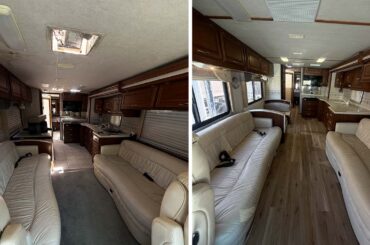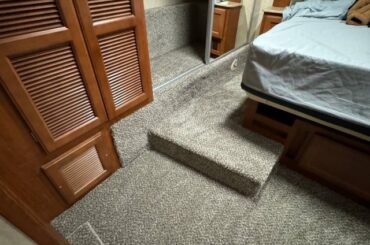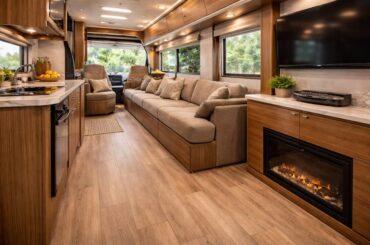
How to Convert a Toy Hauler Garage Into a Bedroom
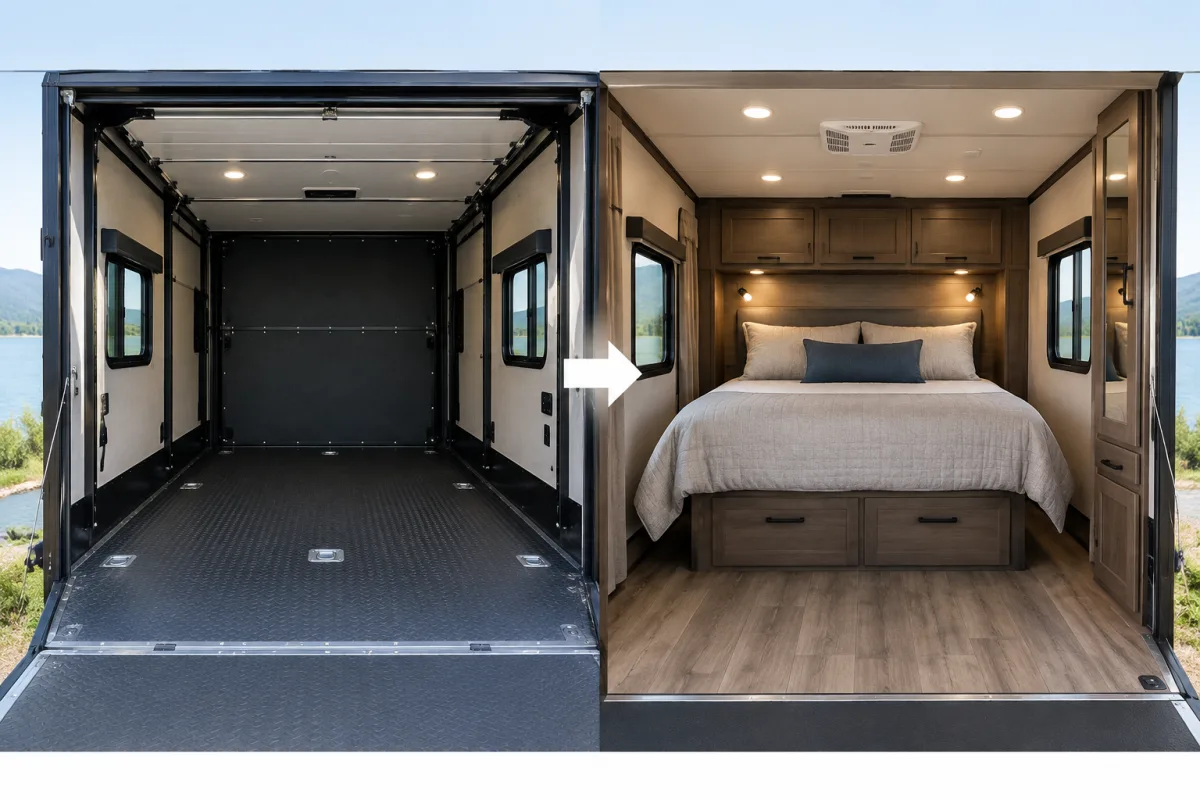
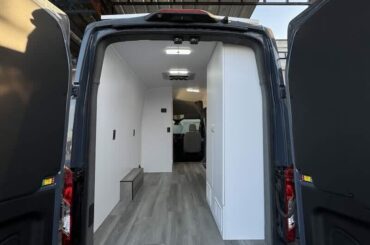
A toy hauler garage can become a comfortable bedroom or guest room without losing its original utility. The safest approach is usually to work with the equipment already installed, such as a fold-down sofa, bunk system, electric bed lift, or HappiJac bed mechanism, rather than adding a heavy permanent structure.
Before starting, identify your toy hauler’s make, model, floor plan, and model year. Garage dimensions, cargo capacity, tie-down locations, bed hardware, ventilation, and available clearance vary considerably between RVs.
1. Inspect the existing garage layout
Check whether the garage already includes a fold-down sofa, quick-set bed, bunk system, electric lift, overhead cabinets, roof vent, powered fan, ducted air conditioning, or ducted heat. THOR Industries and Jayco both describe toy hauler garages as flexible areas that can serve as additional sleeping or living space, but the available features depend on the model.
A Forest River Rogue, for example, may include a quick-set garage bed, flip-up sofas, a table, rear screen wall, power roof vent, and climate-control features. These types of components can often be adapted with minimal permanent modification.
2. Choose the bed arrangement
Use an existing fold-down sofa or bunk
This is often the simplest option. Fold-down sofas and bunk systems preserve floor space during travel and can usually be returned to their original position when the garage is needed for cargo.
Use a HappiJac or electric bed lift
The Lippert HappiJac system is designed for toy hauler trailers and may support one or two beds, or a bed combined with a sofa or dinette. Its documented lifting mechanism has a 450-pound dynamic load limit and a 500-pound static load limit. These figures apply to the lifting mechanism, so the platform, mattress, furniture, and occupants must also be evaluated.
Do not exceed the rating of the lift, and do not assume that the rating determines the safe capacity of the garage floor or the entire RV.
Build a removable platform
A removable platform can provide a more permanent bedroom feel, but it adds weight and may interfere with cargo loading, tie-downs, the ramp door, storage compartments, or emergency exits. Before choosing this approach, check the toy hauler’s cargo-carrying capacity, axle ratings, floor structure, and manufacturer guidance.
3. Measure before buying a mattress
Measure the usable sleeping area rather than relying on the apparent garage width. Account for:
- Ramp-door clearance and any patio or rear-wall system
- Cabinets, side walls, windows, and wheel wells
- Roof vents, lighting, and moving bed components
- Clearance needed to raise or lower an electric bed
- Access to the garage door and emergency exit
- Ventilation and heating or air-conditioning outlets
Choose the mattress only after confirming these measurements. A mattress that fits the floor may still block a lift mechanism, cabinet door, vent, or escape route.
4. Add privacy without blocking ventilation
A curtain track, removable room divider, lightweight folding partition, or manufacturer-installed three-season wall can separate the garage from the main living area. Keep the divider lightweight and make sure it does not block required ventilation, windows, roof vents, or emergency exits.
A removable solution is generally more practical than a fixed wall because the garage may still need to carry motorcycles, ATVs, bicycles, or other equipment.
5. Improve lighting and storage
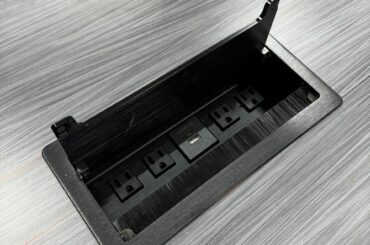
Use the existing RV lighting where possible. If additional lighting is needed, have a qualified RV technician review the circuit before installing new wiring or fixtures. Avoid placing lights where they can be damaged by cargo or interfere with a lift bed.
For storage, use lightweight containers, under-bed space, existing overhead cabinets, and wall-mounted organizers that do not interfere with tie-down hardware. Keep added furniture and stored items secured during travel.
6. Maintain ventilation and climate control
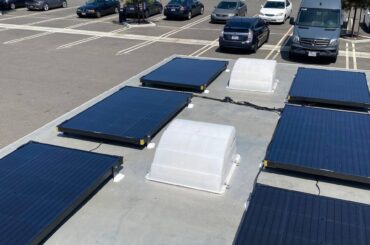
A garage bedroom needs adequate airflow and temperature control. Some toy haulers provide powered roof vents, rear screen walls, ducted air conditioning, or ducted heat that can support bedroom use.
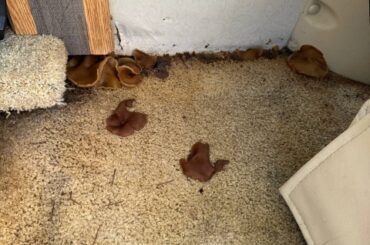
Do not cover roof vents, block air outlets, or place the mattress against equipment that requires service clearance. If the garage has signs of water intrusion, repair the roof, walls, or flooring before installing bedroom materials.
7. Follow essential safety restrictions
Never use the garage as a sleeping area while a motorized vehicle is stored inside. Fuel vapors, exhaust, and fire hazards make this unsafe. RV Industry Association safety guidance also calls for ventilation of the transportation area and warns against operating propane appliances, pilot lights, or electrical equipment there when a motorized vehicle is present.
- Remove motorcycles, ATVs, generators, and other motorized equipment before sleeping in the garage.
- Allow fuel vapors to clear and ventilate the space thoroughly.
- Keep emergency exits accessible.
- Do not obstruct smoke detectors, fire extinguishers, vents, or electrical access panels.
- Secure the bed, furniture, mattress, and storage items for travel.
8. Check weight, structure, and systems before permanent work
Before adding a platform, wall, cabinets, wiring, plumbing, or electrical equipment, review the RV owner’s manual and verify the garage’s available capacity. Check the cargo-carrying capacity, axle ratings, floor construction, tie-down locations, and any bed-lift limits.
Permanent electrical, propane, structural, or plumbing changes should be evaluated by a qualified RV technician. Custom way repairs and renovates RVs and camper vans in California, including flooring, electrical repair, roof repair, water damage repair, solar installation, and broader renovations. The company serves Orange County, Los Angeles, and Riverside County.
When professional RV renovation makes sense
Professional help is especially useful when the garage has water damage, damaged flooring, an unreliable lift, hidden wiring, or a layout that requires structural changes. Custom way is located at 17223 Roseton Ave, Artesia 90701. The company can be reached at +1 840-205-7314 or customway.ca@gmail.com.
For a practical conversion, start with the existing bed or sofa system, add a correctly sized mattress and removable privacy solution, preserve ventilation and emergency access, and confirm every added load before making permanent changes. Contact Custom way for RV repair or renovation work in its California service area.